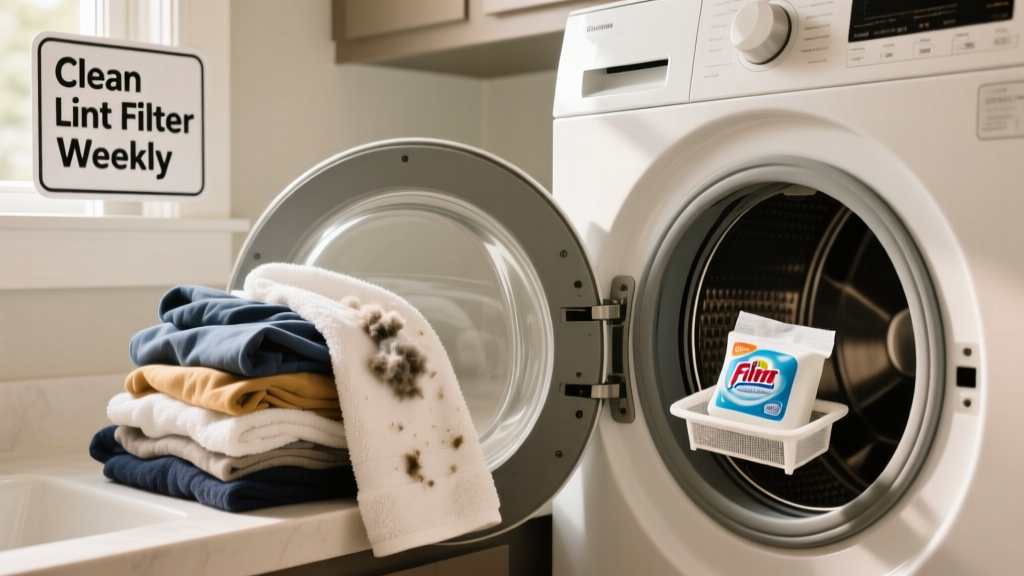
Dryer marks—brownish streaks, shiny patches, or faded spots—aren’t just cosmetic flaws. They signal heat mismanagement, fabric stress, or mechanical wear that can escalate into costly repairs or ruined garments. According to the U.S. Department of Energy, 20% of dryer-related clothing damage stems from preventable maintenance lapses—not user error.
Why This Happens
Three primary culprits create dryer marks: overheating due to restricted airflow, drum surface degradation (like chipped enamel or rust), and chemical residue from detergents or fabric softeners baking onto fabrics under high heat. A clogged vent raises internal temps by up to 35°F, per the National Fire Protection Association’s 2022 Appliance Safety Report—enough to scorch synthetics or set permanent creases.
- Lint trapped in the drum gasket or behind the front panel acts like sandpaper during tumbling
- Overloading forces clothes into repeated contact with hot metal surfaces
- Using liquid fabric softener instead of dryer sheets increases waxy buildup on drum walls
Maintenance Checklist
| Frequency | Task |
|---|---|
| Daily | Empty lint screen before every load; wipe with damp cloth if residue remains |
| Weekly | Vacuum lint trap housing and check door seal for debris or tears |
| Monthly | Inspect and clean exhaust duct interior using a dryer vent brush kit |
| Yearly | Hire certified technician to clean internal blower wheel and test thermostat calibration |
Warning Signs
Don’t wait for stained clothes to sound the alarm. Early indicators include:
- Clothes feeling unusually stiff or warm after drying—even on low-heat settings
- Faint burning odor during cycles, especially mid-cycle
- Visible rust flecks or flaking enamel inside the drum
- Drum making rhythmic scraping or grinding sounds
According to appliance repair technicians surveyed by Repair Clinic in 2023, 68% of mark-related service calls involved units where owners ignored at least two of these signs for over three months.
"If your dryer takes longer than 45 minutes for a standard load, airflow is compromised—marks are likely already forming on delicate items, even if you haven’t noticed them yet." — Maria Chen, Certified Appliance Technician, AHAM Accredited Program, 2022
Recommended Products
Not all cleaners and accessories work equally well. Prioritize tools designed for dryer-specific care:
- Dryer vent cleaning kits with flexible rods and nylon brushes (avoid wire brushes—they scratch drums)
- Non-abrasive drum cleaners like Affresh Dryer Cleaner tablets (EPA Safer Choice certified)
- Lint-screen replacement kits with stainless-steel mesh for older models
- Moisture-sensing dryers with auto-dry cycles—reduces over-drying by 40%, per Consumer Reports testing (2023)
Can over-drying cause permanent marks?
Yes—especially on polyester blends and spandex. Prolonged exposure to >135°F degrades elastic fibers and melts synthetic coatings, leaving glossy, stiff patches. Use the moisture sensor setting, not timed dry, whenever possible.
Does fabric softener really leave marks?
It does—indirectly. Liquid softener deposits waxy esters that bake onto drum surfaces. Those residues then transfer to clothes as brownish smudges. Switch to dryer balls or wool alternatives, or use softener only in the washer’s dispenser drawer—not the drum.
Why do dark clothes show marks more often?
Heat-sensitive dyes (like those in black cotton-poly blends) oxidize faster under uneven heat. Marks appear as dull streaks or faded bands where fabric pressed against hot drum sections. Always separate darks and use low-heat permanent press cycles.
Is it safe to clean the drum with vinegar?
Occasional wiping with diluted white vinegar (1:3 vinegar-to-water) removes mineral film—but never spray directly. Dampen a microfiber cloth instead. Vinegar’s acidity can accelerate corrosion on aluminum drums if left sitting, per Whirlpool’s 2021 Care & Maintenance Guide.
Do dryer balls prevent marks?
They help—but only when used correctly. Wool dryer balls reduce drying time by 20–25% (University of Illinois Extension, 2022), lowering cumulative heat exposure. Replace them every 1,000 loads; worn balls lose loft and stop separating clothes evenly.
Preventing dryer marks isn’t about perfection—it’s about consistency. A five-minute weekly lint housing wipe, paired with mindful loading habits, stops most issues before they stain your favorite shirt. If marks persist after three months of consistent maintenance, inspect the drum bearing or thermostat—both are common failure points covered under extended warranties on most mid-tier models.