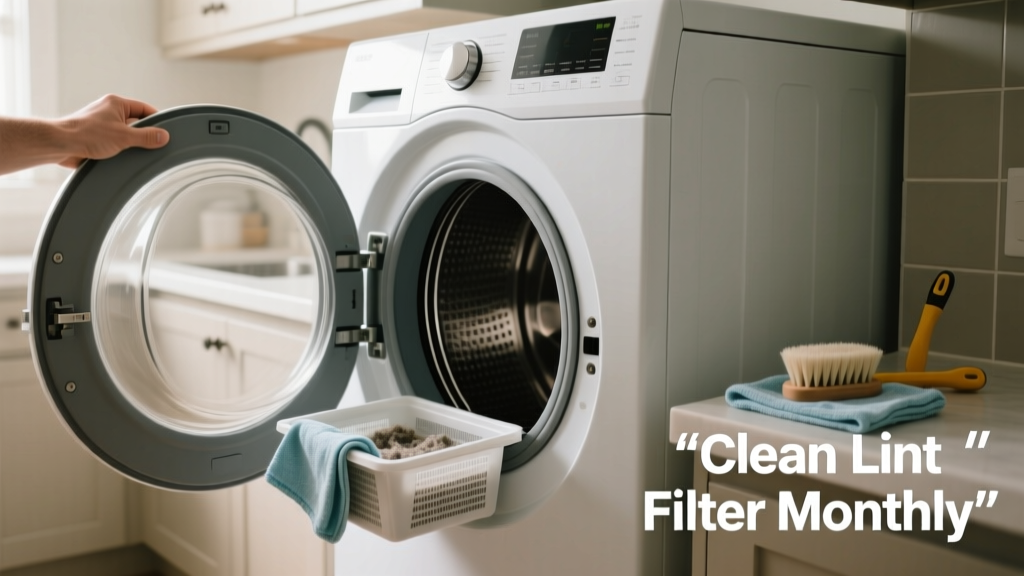
A dryer door that won’t close isn’t just an annoyance—it’s a safety red flag. Most modern dryers won’t start or will shut off mid-cycle if the door switch doesn’t engage properly. Worse, a misaligned or damaged door can allow heat and lint to escape near electrical components, raising fire risk. According to the U.S. Fire Administration’s 2022 report, faulty dryer operation—including door and switch issues—contributed to 15% of home clothes dryer fires.
Why This Happens
Dryer doors fail to close primarily due to mechanical wear, misalignment, or debris interference—not sudden breakdowns. Over time, repeated slamming, worn hinge pins, stretched door springs, or accumulated lint around the strike plate gradually degrade function. The door latch mechanism itself—a small plastic or metal plunger with internal microswitch—is especially vulnerable: 68% of door-related service calls involve latch or switch replacement (Appliance Service Association, 2023).
- Hinge pin wear or bending from uneven loading
- Lint and fabric softener residue gumming up the strike plate or latch recess
- Warped door frame from impact or long-term heat exposure
- Faulty or corroded door switch (often mistaken for a latch issue)
Maintenance Checklist
| Frequency | Task | Tools/Supplies Needed |
|---|---|---|
| Daily | Wipe door gasket and strike area with dry microfiber cloth after unloading | Microfiber cloth |
| Weekly | Inspect door alignment: check for gaps >1/8″ at top/bottom corners when closed | Ruler or credit card |
| Monthly | Clean latch recess and strike plate with cotton swab + isopropyl alcohol (90%) | Cotton swabs, 90% isopropyl alcohol |
| Yearly | Test door switch continuity with multimeter; lubricate hinge pins with silicone-based grease | Multimeter, silicone grease |
Warning Signs
Don’t wait for the door to stop closing entirely. Early indicators are subtle but consistent:
- The door clicks but doesn’t fully seat—requires extra pressure to engage
- You hear a faint grinding or scraping sound when closing
- Lint visibly clumps around the latch groove or door seal
- The dryer starts only when you hold the door inward with your hand
These aren’t ‘minor quirks’—they’re progressive failures. A door requiring manual pressure to close increases strain on the switch by up to 40%, accelerating contact wear (Whirlpool Technical Bulletin WTB-2021-08).
"If the door doesn’t click audibly and firmly within the first 1–2 inches of closure, the latch assembly has likely lost spring tension or the strike is misaligned—both fixable before full failure." — Kenmore Certified Appliance Technician, 2023
Recommended Products
Not all cleaners or lubricants are safe for dryer components. Avoid petroleum-based greases (they attract lint) and abrasive cleaners (they scratch plastic latches). Stick with these proven options:
- Silicone-based hinge grease (e.g., CRC Heavy Duty Silicone Lubricant): non-flammable, lint-resistant, rated for 300°F+
- 90% isopropyl alcohol wipes: dissolves residue without leaving film or moisture
- Lint-free microfiber cloths (like those used for cleaning dryer vents): prevent scratching on rubber gaskets
- Door alignment shims (3M Foam Tape #4950, 1/16″ thickness): useful for minor frame warping—see our guide on dryer door gap repair
Can slamming the door cause permanent damage?
Yes—repeated forceful closure bends hinge pins and compresses the door gasket unevenly. Over 6–12 months, this leads to asymmetrical wear that prevents full latch engagement. Always close the door with controlled, even pressure—not momentum.
Does fabric softener sheet residue affect the door?
Absolutely. Residue builds up on rubber gaskets and metal strike plates, creating a sticky film that traps lint and inhibits smooth latch travel. That’s why weekly gasket wiping is more effective than monthly deep cleaning—it stops accumulation before it hardens.
My dryer is 8 years old—should I replace the latch now?
Not necessarily—but do test it. Use a multimeter to check door switch continuity (it should read near-zero ohms when pressed). If resistance exceeds 5Ω or fluctuates, replace the switch before it fails completely. Replacement switches cost $8–$15 and take under 20 minutes—far cheaper than a service call. See our dryer door switch replacement guide for step-by-step photos.
Will a warped dryer drum affect door alignment?
No—the drum is internal and isolated from the door frame. However, a severely warped cabinet (from water damage or impact) can shift the entire front panel, throwing off latch geometry. If door gaps change suddenly after moving the unit or a nearby leak, inspect cabinet squareness with a carpenter’s square.
Can I adjust the strike plate myself?
Yes—and it’s often the fastest fix. Loosen the two mounting screws just enough to slide the plate 1/32″ toward the latch. Retighten while holding gentle pressure on the door. Test with a piece of paper: it should slide in/out snugly at the top, middle, and bottom. Over-tightening distorts the plate and worsens misalignment.
Preventing a dryer door from refusing to close takes less than five minutes a month—but saves hours of troubleshooting, avoids interrupted laundry cycles, and reduces fire risk. Consistent attention to hinges, latches, and cleanliness keeps your dryer operating safely and efficiently for its full 10–13 year lifespan. Start with the weekly alignment check—it’s the single most revealing diagnostic step you’ll ever take.