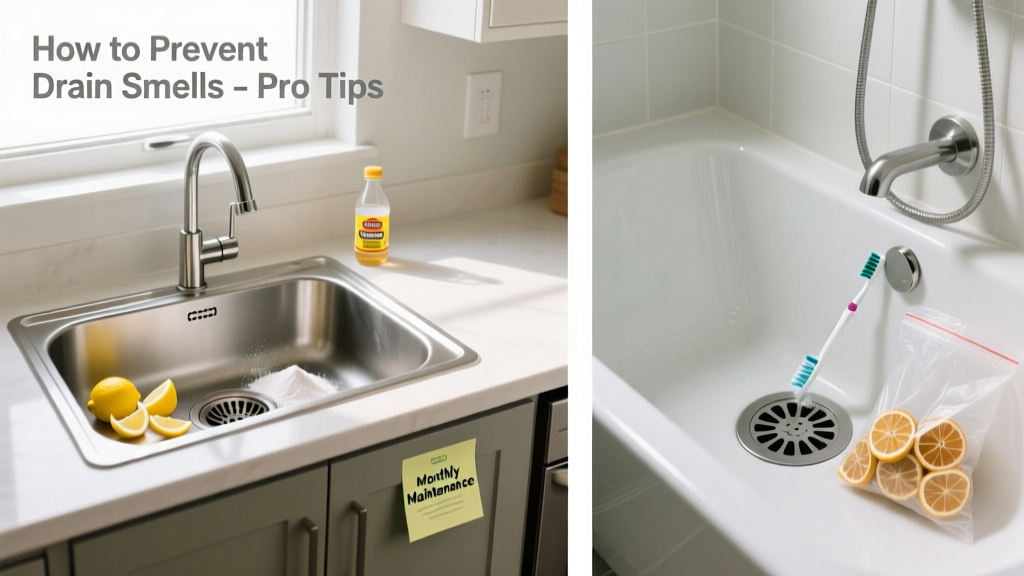
Drain smells aren’t just unpleasant—they’re early warnings of bacterial buildup, organic decay, or venting failures that can escalate into health hazards or plumbing damage. Left unchecked, sulfur-like odors (often mistaken for 'sewer gas') may indicate a dry P-trap, biofilm colony, or even a cracked sewer line. Prevention takes less than five minutes a week but saves hundreds in service calls and protects indoor air quality.
Why This Happens
Bad drain smells stem from three primary culprits: stagnant water evaporating from P-traps, organic debris fermenting in pipes, and blocked or improperly installed vent stacks. The U.S. EPA estimates that 14% of household water usage is from leaks—including slow drips that keep traps filled—but infrequent use of guest bathroom sinks or basement floor drains lets trap water evaporate in as little as 5–7 days.
- Biofilm buildup: A slimy layer of bacteria, grease, and hair forms inside pipes—especially in PVC—and emits hydrogen sulfide when disturbed.
- Dry P-traps: Every drain has a U-shaped water seal; if unused for over a week, it dries out and allows sewer gases to rise.
- Vent stack issues: Roof vents equalize pressure and let gases escape upward—if clogged with leaves or bird nests, gases back up through drains instead.
Maintenance Checklist
| Frequency | Task | Time Required |
|---|---|---|
| Daily | Rinse kitchen sink with hot water after each use; avoid pouring coffee grounds or cooking oil down the drain | 30 seconds |
| Weekly | Pour ½ cup baking soda + ½ cup white vinegar down each drain; wait 10 minutes, then flush with boiling water | 12 minutes |
| Monthly | Run garbage disposal with ice cubes + citrus peels for 30 seconds; check under-sink traps for leaks or corrosion | 8 minutes |
| Yearly | Hire a licensed plumber to inspect vent stacks and clean main sewer line with a camera and hydro-jet (recommended for homes older than 15 years) | 1–2 hours |
Warning Signs
Don’t wait for full-blown stench. Early indicators include faint musty notes near drains, gurgling sounds when flushing toilets or running dishwashers, or visible slime on stoppers and overflow holes. According to the Insurance Institute for Business & Home Safety's 2023 report, 68% of homeowners who reported persistent drain odors had ignored at least two of these signs for over six weeks.
- A slow-draining sink paired with odor = likely partial clog + biofilm
- Odor only when using a specific fixture = localized trap or vent issue
- Smell strongest after rain = possible roof vent blockage or sewer line infiltration
Recommended Products
Not all drain cleaners are created equal—and many chemical formulas worsen long-term odor problems by corroding pipes or feeding acid-tolerant bacteria. Stick to enzyme-based treatments for routine use and mechanical tools for physical obstructions.
- Enzyme cleaners (e.g., Green Gobbler or Roto-Rooter Bio-Clean): contain live bacteria that digest organic matter without harming pipes
- Drain snakes with rotating heads: effective for hair and soap scum up to 25 ft deep—far safer than caustic liquids
- P-trap primers: automatic devices (like the Zurn Z1050) that inject small water doses into infrequently used drains—ideal for guest bathrooms or laundry rooms
Can I use bleach to stop drain smell?
No. Bleach kills surface bacteria but doesn’t penetrate biofilm, and its corrosive nature damages PVC seals and metal traps over time. It also reacts with ammonia in urine residue (common in bathroom drains) to produce toxic chloramine gas. Enzyme cleaners are safer and more effective for ongoing prevention—see our comparison of natural drain cleaners.
Why does my bathroom sink smell like rotten eggs?
That signature sulfur odor almost always means hydrogen sulfide gas escaping from a dry P-trap or decaying organic matter in the overflow channel. Run water for 15 seconds to refill the trap. If the smell returns within 48 hours, inspect the overflow cover plate—remove it and scrub the hidden channel with a bottle brush and diluted vinegar solution.
Do garbage disposals cause drain smells?
They can—if food particles lodge in the rubber splash guard or grind chamber. Always run cold water for 15 seconds before and 30 seconds after use, and never dispose of fibrous foods (celery, onion skins) or starchy items (rice, pasta). Weekly ice-and-citrus runs help dislodge residue—follow our full garbage disposal maintenance checklist.
Is a smelly floor drain dangerous?
Yes. Floor drains in basements or garages often connect directly to the main sewer line. A persistent odor suggests either a dry trap (add ½ cup water monthly) or a cracked pipe allowing methane seepage. Methane is flammable and displaces oxygen—install a battery-operated combustible gas detector near affected areas until inspected.
What’s the fastest way to fix a smelly shower drain?
Remove the strainer and use needle-nose pliers to pull out hair clogs. Then pour ¼ cup baking soda followed by ¼ cup hydrogen peroxide (3%)—it foams on contact with organic material and breaks down biofilm faster than vinegar. Wait 5 minutes, then flush with near-boiling water. Repeat monthly—even if no odor is present.
Does a vent pipe need cleaning every year?
Not necessarily—but it should be inspected annually. A clogged vent causes negative pressure that siphons water from P-traps, leading to recurring odors. Check your roof vent visually each spring for debris; if you hear gurgling or notice multiple drains acting up simultaneously, call a plumber for a smoke test to confirm vent integrity.
"A dry trap is the #1 preventable cause of drain odor in residential plumbing. Refilling it takes 10 seconds—but ignoring it for 10 days invites anaerobic bacteria colonies that take months to fully eliminate." — Licensed Master Plumber Maria Chen, Plumbing Code Institute, 2022
Consistent, low-effort care keeps your drains clear, your air fresh, and your pipes intact. Focus on trap hydration, organic waste control, and annual system checks—not reactive fixes. For deeper guidance on identifying hidden moisture issues behind walls or under floors, read our guide on signs of a hidden plumbing leak. And if you’ve recently renovated or added new fixtures, double-check vent sizing—undersized vents are a top cause of post-renovation odor complaints.