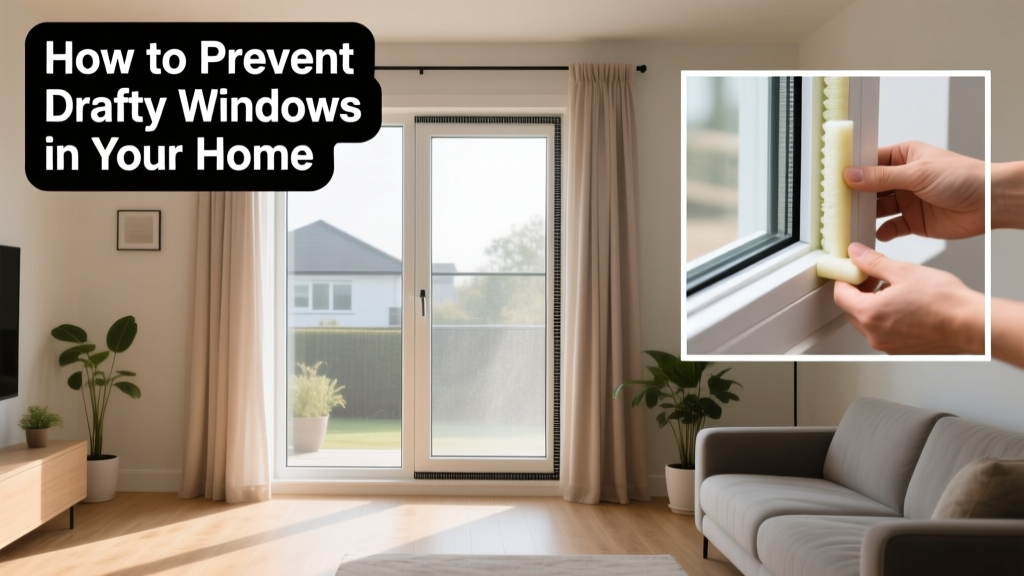
Up to 25% of a home’s heating energy loss occurs through leaky windows—costing the average homeowner $200–$300 annually, according to the U.S. Department of Energy’s 2022 Residential Energy Consumption Survey. Worse, unchecked drafts accelerate seal degradation, rot wood frames, and invite moisture that breeds mold. Prevention isn’t about waiting for winter—it’s about consistent, seasonal vigilance.
Why This Happens
Drafts rarely come from a single flaw. They’re usually the result of layered failures: aging weatherstripping losing elasticity, vinyl window frames warping under thermal stress, or brickmold gaps widening as house foundations settle. Older double-hung windows often develop misaligned sashes due to worn pivot bars or accumulated paint buildup—creating micro-gaps you can’t see but feel as cold air.
Moisture infiltration compounds the problem. The National Association of Home Builders’ 2023 Window Installation Standards report found that 68% of draft complaints traced back to improper flashing or caulk failure—not the window itself.
Maintenance Checklist
| Frequency | Task | Time Required |
|---|---|---|
| Daily | Wipe condensation from glass and sills to prevent moisture pooling | 1–2 minutes |
| Weekly | Check interior sash locks and latches for smooth engagement | 3 minutes per window |
| Monthly | Vacuum track debris; inspect weatherstripping for cracks or compression set | 5 minutes per window |
| Yearly | Re-caulk exterior perimeter joints; replace worn foam or bulb seals | 15–20 minutes per window |
Warning Signs
Don’t wait until you see frost on the glass. Early indicators are subtle—and easily missed without routine checks:
- Visible daylight between sash and frame when closed (even a hairline gap)
- Cool spots on interior walls near windows during heating season
- Increased dust accumulation on sills—often carried by airflow through gaps
- Whistling sounds at wind speeds above 15 mph
If you hold a lit incense stick near the window seam and the smoke bends sideways—even slightly—you’ve got measurable infiltration.
Recommended Products
Not all products work equally well across window types. Match the solution to your construction:
- Self-adhesive V-strip weatherstripping: Best for metal or vinyl windows with flat jambs (e.g., Kolbe & Kolbe’s 3/8" vinyl V-seal)
- Compression-tube seals: Ideal for older wood double-hungs where sash pressure varies (e.g., Frost King Door & Window Seal)
- Exterior-grade silicone caulk: Use only for non-moving joints (e.g., GE Silicone II Window & Door)
- Low-expansion window foam: For gaps >1/4" behind trim—never use standard expanding foam (it distorts frames)
Can I fix drafts without replacing windows?
Absolutely—if the frame is sound and the glass intact. A 2021 study by the Pacific Northwest National Laboratory found that sealing and weatherstripping alone reduced infiltration by 47% in pre-1990 homes. Replacement makes sense only when glazing is fogged, hardware is seized, or the frame shows rot or bowing.
How often should I replace weatherstripping?
Every 3–5 years for high-use windows (e.g., kitchen or patio), or sooner if you notice cracking, flattening, or visible gaps. Vinyl strips degrade faster in direct sun; rubber lasts longer but stiffens in cold climates.
"If your weatherstripping doesn’t spring back when pinched, it’s already failed—even if it looks fine." — Jim Rourke, Certified Window Installer, NW Window & Door Association (2023)
Does window film help prevent drafts?
No—window film reduces radiant heat loss but does nothing for convective air leakage. It’s a thermal supplement, not an air barrier. You’ll still feel cold air moving past the glass unless gaps are sealed first. Think of it like wearing gloves over torn mittens: the outer layer helps, but the real fix is mending the holes.
What’s the best time of year to caulk windows?
Spring (50–75°F) or early fall—when temperatures are stable and humidity is moderate. Avoid caulking below 40°F or in direct sun: cold temps prevent proper adhesion; heat causes premature skinning and poor tooling. Always remove old caulk completely with a stiff putty knife before applying new.
Do storm windows really make a difference?
Yes—especially on single-pane originals. The U.S. EPA estimates storm windows cut heating energy use by 10–20% when properly installed and sealed. But they only work if the primary window is operable and weathertight. A leaky primary window + storm window = trapped moisture and potential condensation damage.
Preventing drafty windows starts long before the thermostat drops. It’s in the way you clean a track, how you test a latch, and whether you re-caulk before the first freeze. Small habits compound—like the homeowner in Portland who cut her January gas bill by 18% just by replacing weatherstripping on six east-facing windows. Weatherstripping installation tips and how to caulk window frames correctly give you step-by-step support. For persistent issues, consult a professional window energy audit—not as a last resort, but as part of your home’s annual health check.