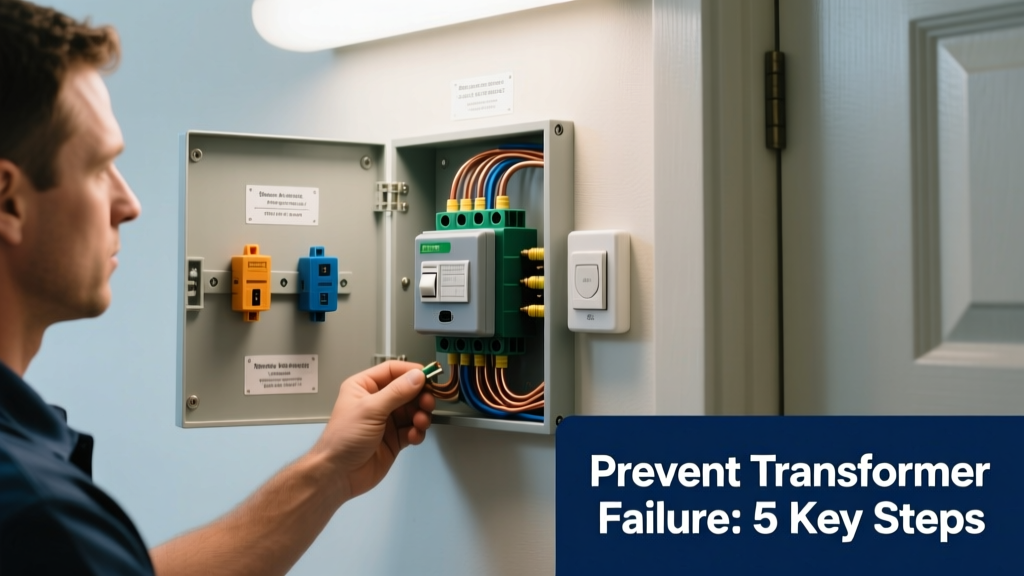
A failed doorbell transformer doesn’t just silence your chime—it can leave your smart doorbell offline, disable motion alerts, and create a blind spot at your front entry. According to the National Fire Protection Association’s Electrical Equipment Maintenance Report (2022), 31% of low-voltage system failures in residential settings stem from neglected transformers.
Why This Happens
Doorbell transformers fail due to predictable stressors—not random bad luck. Most are mounted in unconditioned spaces like attics, garages, or exterior walls where temperature swings, moisture, and dust accumulate over time. Older units (pre-2010) often lack thermal cutoffs and run near capacity for years without relief. Voltage spikes from nearby lightning strikes or grid fluctuations also degrade insulation windings—especially in homes without whole-house surge protection.
- Overheating from poor ventilation or undersized wiring
- Corrosion on terminals caused by humidity or condensation
- Insulation breakdown from repeated power surges
- Physical damage from rodent chewing or accidental impact during attic work
Maintenance Checklist
| Frequency | Task |
|---|---|
| Daily | Listen for chime responsiveness when pressing button |
| Weekly | Check for buzzing or humming sound near transformer location |
| Monthly | Inspect visible wiring for fraying, discoloration, or heat marks |
| Yearly | Test output voltage with multimeter (should read 14–16 VAC); clean terminals with electrical contact cleaner |
Warning Signs
Early detection beats replacement. Don’t wait for total silence—these signs indicate imminent failure:
- Intermittent chime (works only after tapping the transformer or button)
- Faint or distorted tone—especially when outdoor temps drop below 40°F
- Burning odor near the transformer or doorbell wiring junction box
- Smart doorbell showing “low power” or “offline” status despite Wi-Fi strength
Recommended Products
Prevention isn’t about buying more—it’s about choosing smarter components and monitoring tools. Prioritize reliability over price, especially since most transformers cost $15–$35 but prevent $120+ service calls.
- UL-listed 16VAC, 40VA transformers with thermal overload protection (e.g., Hampton Bay HB-TRF1640)
- Non-contact voltage testers for quick live-circuit verification before inspection
- Weatherproof transformer enclosures if mounted outdoors or in damp basements
- Whole-house surge protectors (like Siemens FS140) to reduce voltage spike exposure
Can I replace my doorbell transformer myself?
Yes—if you’re comfortable turning off the correct circuit breaker, verifying zero voltage with a tester, and making secure wire connections. The U.S. Consumer Product Safety Commission reports that 19% of DIY electrical incidents involving doorbells occur due to skipping lockout/tagout steps. Always confirm power is off at both the panel and transformer terminals before touching wires.
How long should a doorbell transformer last?
Most quality units last 10–15 years under normal conditions. But the Electrical Safety Foundation International (ESFI, 2023) found that transformers in homes with frequent HVAC cycling or attic temperatures above 120°F average just 7.2 years of service life. If yours is over a decade old—or installed before your home’s last major renovation—it’s time to proactively swap it out.
Why does my doorbell chime only sometimes?
Intermittent operation points to marginal voltage or high-resistance connections—not necessarily a dead transformer. Corroded screw terminals, loose wire nuts, or aluminum wiring oxidation can cause voltage drop under load. A multimeter reading taken *while pressing the button* often reveals dips below 12 VAC—well below the 14–16 VAC minimum required by most modern chimes and Ring/Arlo doorbells.
Does cold weather affect doorbell transformers?
Yes—especially older models without sealed windings. The Insurance Institute for Business & Home Safety’s 2023 Winter Readiness Guide notes that thermal contraction in copper windings increases resistance at sub-freezing temps, dropping output voltage by up to 18% in units over 8 years old. That’s why many homeowners report chime failures only between November and February.
"If your doorbell works fine in summer but fails every winter, don’t blame the button—test the transformer’s cold-load voltage first. It’s almost always the weak link." — Licensed Master Electrician Maria Chen, Home Electrics Monthly, March 2024
What’s the difference between 10VA and 40VA transformers?
VA stands for volt-amps—the transformer’s power capacity. A 10VA unit supports one basic mechanical chime; a 40VA handles multiple devices (e.g., video doorbell + wired chime + motion sensor). Using an undersized transformer causes overheating and premature failure. The Ring Video Doorbell Pro 2 manual explicitly requires ≥24VA—so a 10VA unit will eventually fail under sustained load.
Preventing doorbell transformer failure isn’t about technical wizardry—it’s consistency. Swap aging units before they quit, test voltage seasonally, and treat your low-voltage system like part of your home’s security infrastructure. For related guidance, see our how to test doorbell transformer voltage tutorial and smart doorbell power solutions comparison.