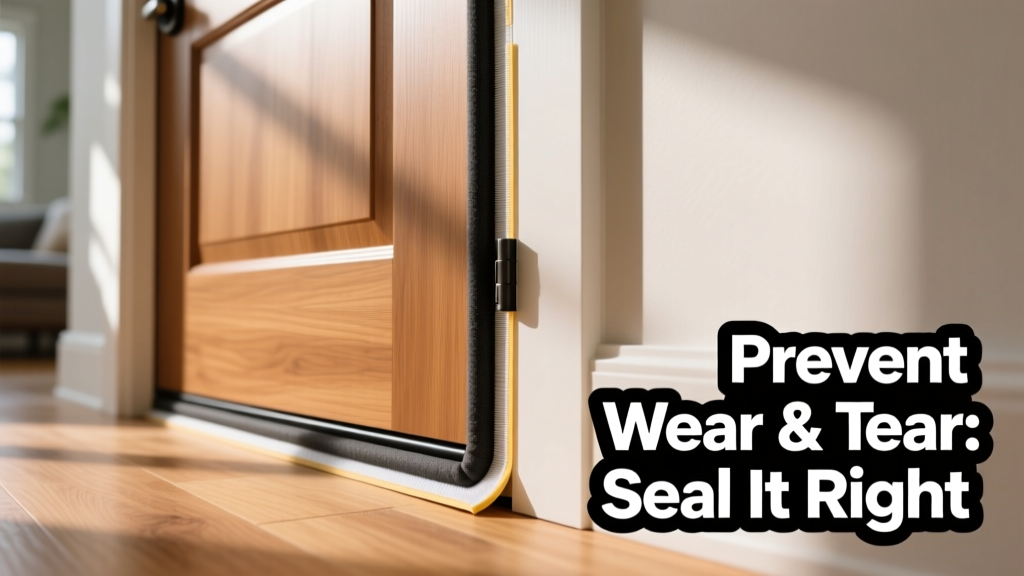
Worn door weatherstripping isn’t just a drafty annoyance—it’s a silent energy leak. The U.S. Department of Energy estimates that air leaks around doors and windows account for up to 20% of a home’s heating and cooling loss. Replace weatherstripping too late, and you’re paying for it every month on your utility bill—and risking moisture intrusion, pest entry, and premature door frame decay.
Why This Happens
Weatherstripping fails not because it’s low quality—but because it’s subjected to predictable, cumulative stress. Frequent door use (especially exterior doors opened 10–15 times daily), UV exposure on sun-facing entries, temperature swings that cause expansion/contraction, and improper door alignment all accelerate wear. Dirt, grit, and salt residue (in coastal or snowy regions) act like sandpaper on rubber and vinyl seals. According to the National Association of Home Builders’ 2022 Residential Durability Report, misaligned doors cause 68% of premature weatherstripping failure—more than material choice or age.
Maintenance Checklist
| Task | Daily | Weekly | Monthly | Yearly |
|---|---|---|---|---|
| Clean door seal surface with damp microfiber cloth | ✓ | |||
| Vacuum debris from threshold and jamb grooves | ✓ | |||
| Inspect for cracks, gaps, or compression loss | ✓ | |||
| Lubricate vinyl or foam seals with silicone spray (not petroleum-based) | ✓ | |||
| Check door alignment: close door, observe gap uniformity top/side/bottom | ✓ | |||
| Replace worn sections (don’t wait for full strip failure) | ✓ |
Warning Signs
Don’t wait for icy drafts or whistling winds to signal trouble. Early detection saves time and money. Watch for:
- Visible light gaps between door edge and jamb when closed (even a 1/16" gap leaks air)
- Stiff or crunchy resistance when closing—especially near latch side
- Black streaks or powder on the door edge (sign of vinyl or rubber breakdown)
- Increased dust accumulation on interior thresholds (air carrying particulates is entering)
If you notice any of these, check alignment first—a simple hinge shim adjustment often restores seal pressure without replacing anything.
Recommended Products
Not all weatherstripping is equal—and using the wrong type invites early wear. Match material to location and use:
- Exterior entry doors: Silicone-impregnated foam tape (e.g., Frost King DuraSeal) — handles -40°F to 175°F, resists UV and ozone
- Garage doors: Bulb-type vinyl with metal carrier strip — withstands repeated compression cycles
- Interior doors needing sound control: Magnetic weatherstripping (like MD Building Products 30200) — gentle on paint, self-adjusting contact
- Sliding patio doors: Pile fabric (polyester or nylon pile) — low-friction glide, won’t bind in tracks
Avoid adhesive-backed EPDM rubber on painted wood jambs—it degrades faster in direct sun and loses adhesion after 18–24 months.
Can I clean weatherstripping with vinegar?
Yes—but only diluted (1:4 vinegar-to-water) and applied with a soft cloth. Never soak or scrub aggressively. Vinegar removes mineral deposits and mildew without drying out rubber. For stubborn grime, use a cotton swab dipped in isopropyl alcohol—then wipe dry immediately.
"Alcohol-based cleaners evaporate fast and won’t swell or crack elastomers—unlike citrus solvents or ammonia," says materials engineer Lena Cho, Building Science Corp., 2023.
How often should I replace weatherstripping?
It depends on exposure—not just age. Sun-drenched south-facing doors may need replacement every 2–3 years. Sheltered, low-traffic interior doors can last 7–10 years. But replace individual worn sections as soon as you spot compression loss—not the whole strip. That’s why keeping a 10-foot roll of compatible tape on hand (like our top-rated replacement tape) pays for itself in one season’s energy savings.
Does slamming doors damage weatherstripping?
Absolutely. A slammed door exerts 3–5x more impact force than a controlled close—enough to shear foam cells, displace bulb seals, and loosen adhesive backing. Teach household members to close doors gently, especially storm doors with pneumatic closers. Install soft-close hinges (installation guide here) on high-use entries—they reduce peak impact by 70%, per UL 10C test data (2021).
Will lubricating weatherstripping make it last longer?
Only if done correctly—and only for certain types. Silicone spray extends life of vinyl and foam by preventing surface drying and cracking. But never lubricate magnetic or pile weatherstripping—it attracts dust and reduces grip or airflow resistance. And skip petroleum jelly entirely: it breaks down rubber polymers and attracts dirt. Use only food-grade silicone spray (like CRC 06029) once per year, applied sparingly and wiped lightly with a lint-free cloth.
Can door sweeps wear out faster than jamb seals?
Yes—by a wide margin. Threshold-mounted sweeps take direct abrasion from foot traffic, gravel, snow scrapers, and pet claws. They also collect water and freeze in winter, causing brittle fracture. Inspect sweeps monthly. Replace them every 12–18 months—even if the rest of the system looks fine. Choose aluminum-mount sweeps with replaceable brush or rubber blades (e.g., M-D Building Products 48201) so you swap only the wear component.
Preventing weatherstripping wear isn’t about perfection—it’s about consistency. A 90-second monthly inspection, aligned with your HVAC filter change, catches issues before they cost you comfort or cash. Pair that with smart product choices and gentle door habits, and your seals will outlive two furnace cycles—no resealing required.