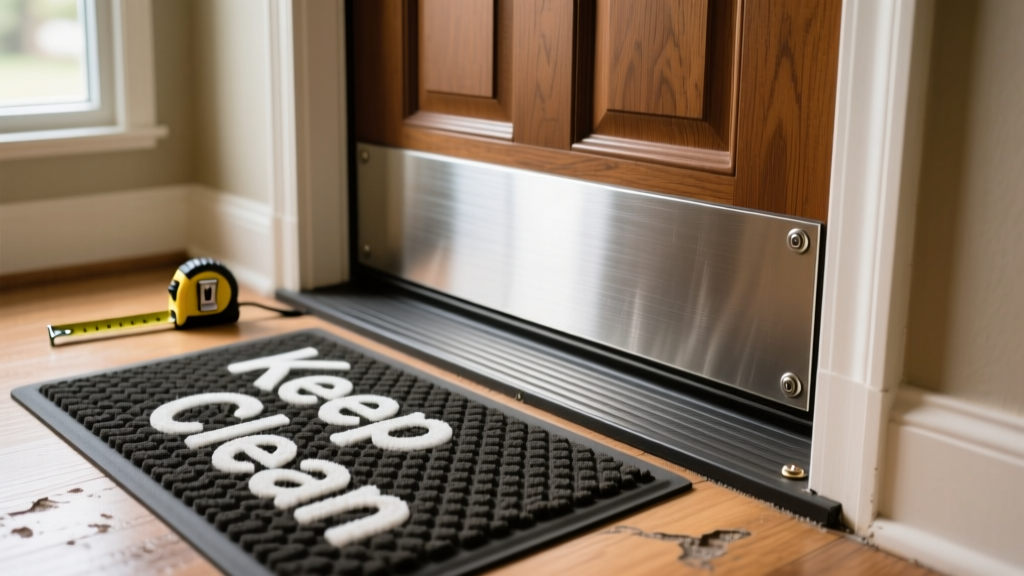
A worn door threshold isn’t just unsightly—it’s a silent gateway for drafts, moisture, pests, and tripping hazards. According to the U.S. Department of Energy, poorly sealed entryways account for up to 25% of a home’s heating and cooling loss. Replacing a threshold averages $180–$320 in labor and materials; prevention takes minutes per month.
Why This Happens
Threshold wear stems from repetitive mechanical stress and environmental exposure—not poor installation alone. Foot traffic grinds grit into soft metals and composites. Moisture trapped under thresholds accelerates rot in wood or corrosion in aluminum. Salt from winter de-icers eats away at steel and vinyl. Uneven settling shifts door weight distribution, concentrating pressure on one edge—often the outer corner near the latch side.
- Foot traffic carrying abrasive sand, gravel, or ice melt residue
- Poor drainage causing standing water at the threshold base
- Door misalignment increasing friction on one side
- Using harsh cleaners (e.g., bleach or acid-based stone removers) that degrade sealants
Maintenance Checklist
| Frequency | Task | Time Required |
|---|---|---|
| Daily | Wipe debris off threshold with dry microfiber cloth | 30 seconds |
| Weekly | Vacuum threshold groove and sweep adjacent flooring | 2 minutes |
| Monthly | Inspect for gaps, rust spots, or loose fasteners; tighten screws if needed | 5 minutes |
| Yearly | Reapply silicone-based threshold sealant; replace worn rubber gasket if present | 15 minutes |
Warning Signs
Catch wear early—before it becomes structural. Look for these telltale indicators during routine walkthroughs:
- Visible grooves or flattened ridges in rubber or vinyl gaskets
- Paint flaking or white powdery residue (oxidation) on aluminum thresholds
- Door dragging or catching only when opening inward (sign of compression wear)
- Water pooling visibly after rain—and not draining within 10 minutes
- Light visible beneath the closed door along the bottom edge
Recommended Products
Not all thresholds or accessories perform equally. Prioritize durability and compatibility:
- Rubber gasket replacement strips: Choose EPDM (not PVC) for UV and ozone resistance—lasts 8+ years outdoors (per Building Science Corporation’s 2022 Sealant Performance Review)
- Non-corrosive stainless steel threshold screws: #8 x 1¼” pan-head, A2/A4 grade—resists salt-induced pitting
- Silicone-based threshold sealant: GE Silicone II or OSI Quad Max—flexible down to −40°F, no shrinkage over time
- Exterior-grade door sweeps: Those with adjustable nylon bristles (e.g., Frost King DSW-12) reduce direct contact wear
Can I use WD-40 on my metal threshold?
No—WD-40 is a water-displacing solvent, not a lubricant or protectant. It attracts dust, dries out rubber gaskets, and offers zero corrosion resistance. Instead, wipe stainless or aluminum thresholds with a damp cloth and apply a thin coat of Boeshield T-9 annually.
"WD-40 leaves a residue that traps grit and accelerates abrasion—especially on high-traffic thresholds," says Mike R., certified door systems technician with 27 years’ field experience.
How often should I replace the rubber gasket?
Inspect it every 6 months. Replace it at first sign of cracking, flattening, or loss of compression—typically every 3–5 years in moderate climates, but as soon as 18 months in coastal or snowy regions. Delaying replacement lets wind-driven rain seep behind the gasket and rot subthreshold framing.
Does threshold material affect wear rate?
Absolutely. Solid brass lasts longest (20+ years) but costs 3× more than aluminum. Aluminum thresholds with powder-coated finishes resist corrosion better than bare extrusions—but still dent under heavy rolling loads (e.g., moving dollies). Vinyl thresholds are affordable but become brittle below 20°F and crack under repeated impact. For homes with pets or strollers, consider reinforced composite thresholds like SpectraLock Pro.
My front door threshold is sloped inward—should I fix it?
Yes—if water flows toward your interior floor, you’re inviting mold and subfloor decay. Thresholds should slope outward at 1/8″ per foot. Correct minor slopes by shimming the door jamb or installing an adjustable aluminum threshold like the Pemko 300 Series. Major slope issues may indicate foundation settlement—consult a structural engineer before DIY fixes.
Can indoor thresholds wear too?
Yes—especially in high-traffic interior doors (laundry rooms, garages, basements). Indoor thresholds see less weather but more abrasive grit tracked in on shoes. Vacuum weekly and avoid dragging heavy furniture across them. For slab doors, install low-profile aluminum transition strips instead of carpet-to-tile ramps—which create uneven wear points.
Threshold wear is rarely sudden—it’s the result of small oversights compounding over seasons. Consistent attention pays off: a 5-minute monthly inspection prevents $300 repairs and keeps your home tighter, safer, and more energy-efficient. Pair this routine with regular door alignment checks and seasonal weatherstripping maintenance for full entryway protection.