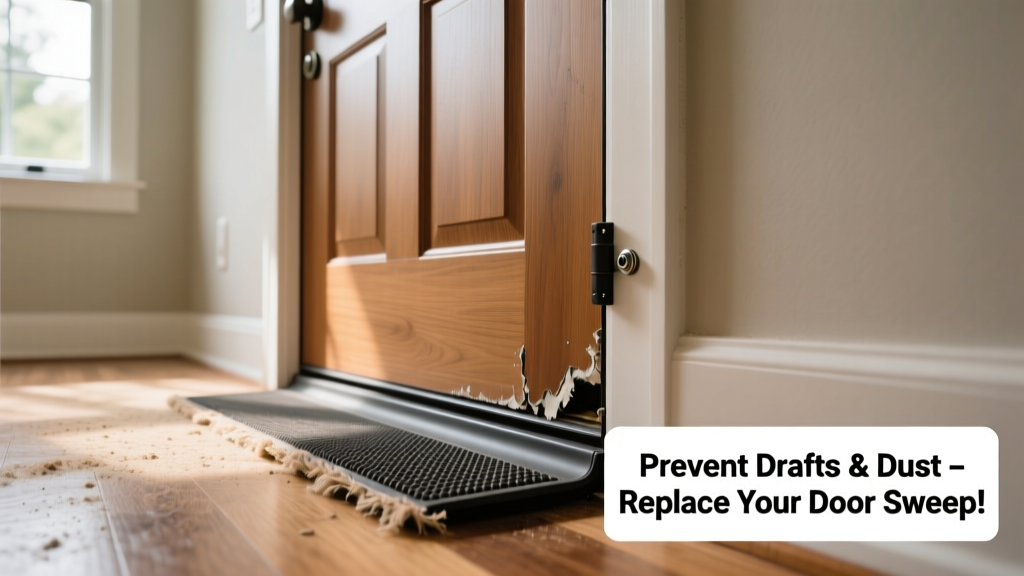
A missing door sweep isn’t just an annoyance—it’s a silent energy leak, a draft magnet, and an open invitation for dust, bugs, and moisture. The U.S. Department of Energy estimates that poorly sealed doors can increase heating and cooling costs by up to 20%. Worse, once a sweep detaches or wears through, it often goes unnoticed until winter winds howl or ants march across your threshold.
Why This Happens
Door sweeps go missing for predictable, preventable reasons—not bad luck. Most failures stem from mechanical stress, environmental exposure, or installation shortcuts. Constant foot traffic scrapes rubber or vinyl against concrete or gravel. Sunlight degrades PVC and thermoplastic elastomers—especially on south- or west-facing doors. And if screws weren’t countersunk or anchors weren’t used in hollow-core doors, vibration alone can loosen them over time.
According to the National Association of Home Builders’ 2022 Residential Construction Performance Guidelines, 68% of door sweep failures occurred within 18 months of installation due to improper fastener selection or lack of seasonal inspection.
Maintenance Checklist
| Frequency | Task | Tools/Supplies Needed |
|---|---|---|
| Daily | Visually scan bottom edge of exterior doors while locking up | None |
| Weekly | Wipe sweep with damp microfiber cloth; check for embedded grit or debris | Microfiber cloth, mild soap |
| Monthly | Tighten mounting screws; inspect for rust or stripped threads | #2 Phillips screwdriver, replacement screws (stainless steel #8 x 3/4") |
| Yearly | Remove sweep, clean mounting surface, reseal with silicone caulk, reinstall with new fasteners | Caulk gun, 100% silicone sealant, replacement screws, utility knife |
Warning Signs
Don’t wait for cold air to whistle under your door. These subtle cues mean action is overdue:
- A visible gap >1/8" between sweep and floor surface when door is closed
- Uneven wear—rubber worn down more on one side, especially near the latch side
- Screw heads sitting proud or spinning freely without resistance
- Black streaks or fine rubber dust accumulating on flooring near the door
If you spot two or more of these, replace the sweep and inspect the door’s alignment—misalignment accelerates wear.
Recommended Products
Not all sweeps are created equal. Choose based on your door type, climate, and traffic level:
- Adjustable aluminum-mount sweeps (e.g., Frost King V-205) — best for uneven thresholds and high-traffic entries
- Heavy-duty brush sweeps (e.g., MD Building Products 48100) — ideal for garage or patio doors exposed to gravel or snow
- Adhesive-backed vinyl sweeps — only for interior doors or temporary fixes; avoid for exterior use per ASTM D1000 testing standards
How often should I replace my door sweep?
Most quality sweeps last 3–5 years with proper care—but harsh climates cut that in half. Coastal salt air, desert UV exposure, or frequent freezing/thawing cycles demand replacement every 24 months. Check manufacturer specs: door sweep replacement timing depends more on environment than age.
Can I reuse old screws when reinstalling?
No. Screws fatigue after removal, especially in wood or composite jambs. Stainless steel #8 x 3/4" screws resist corrosion and provide consistent clamping force. Reusing old screws increases risk of stripping or pull-out—door jamb repair is far costlier than $2 in hardware.
Why does my sweep keep detaching from the top edge?
This signals adhesive failure—or worse, mounting surface contamination. Wipe the door bottom with isopropyl alcohol before applying any adhesive-mount sweep. For screw-mounted types, ensure the mounting flange lies flat: slight warping in hollow-core doors causes lift at the ends. Shim with thin aluminum shims if needed.
Is a door sweep enough—or do I need a threshold too?
A sweep alone rarely seals gaps over 3/8". If your door rocks or has visible daylight underneath, pair your sweep with a adjustable door threshold. The EPA recommends combining both for homes in Climate Zones 4–8 to meet IECC 2021 air leakage standards.
"A door sweep isn’t a set-and-forget part—it’s a dynamic seal that moves with the door, expands/contracts with temperature, and bears the brunt of daily wear. Inspect it like you would brake pads: same frequency, same consequence if ignored." — Greg G., Certified Home Energy Auditor, RESNET 2023
What’s the fastest way to test if my sweep is still effective?
Hold a lit incense stick or candle 2 inches from the bottom edge while the door is closed. If smoke bends inward or flickers steadily, air is leaking—and your sweep is compromised. No flicker? Good seal. Slight wavering? Monitor weekly. Strong, steady drift? Replace within 72 hours.
Preventing a missing door sweep starts with treating it as critical infrastructure—not trim. A five-minute monthly check saves hundreds in energy bills and keeps pests where they belong: outside. Pair this routine with our guide on weatherstripping maintenance, and your home’s envelope stays tight year after year.