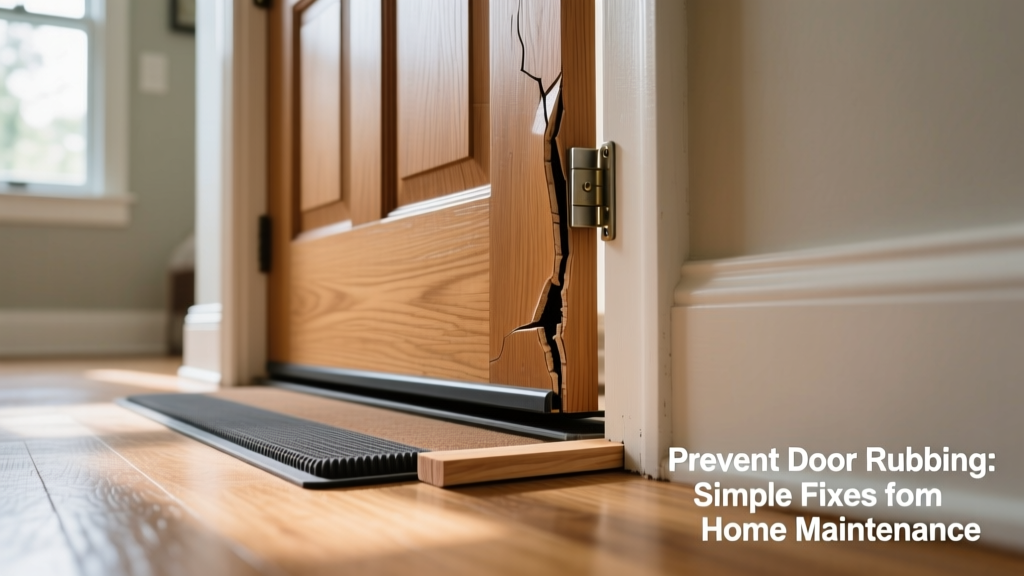
A door dragging across your floor isn’t just annoying—it’s a red flag. Over time, friction wears down both the door edge and flooring finish, creates tripping hazards, and signals underlying structural or hardware issues. Left unaddressed, it can escalate into warped jambs, sagging hinges, or even floor-level settlement that requires professional intervention.
Why This Happens
Door rubbing rarely occurs in isolation. It’s usually the visible symptom of one or more underlying conditions. Seasonal wood expansion accounts for nearly 60% of reported cases in humid climates, according to the National Wood Flooring Association’s 2022 field survey. But other culprits are just as common—and often preventable.
- Floor settling: Especially in homes built on slab foundations or with poorly compacted subfloors, even 1/8" of vertical shift over time lifts the threshold or drops the jamb.
- Hinge wear or misalignment: Loose or stripped hinge screws cause the door to tilt inward or sag at the latch side—often the first sign of load-bearing stress.
- Swelling due to moisture: Solid-core interior doors absorb ambient humidity; a 5% RH increase can swell a pine door up to 1/16" at the bottom edge.
- Improper initial installation: Doors cut too long during trim-out—or installed without adequate shimming—leave zero clearance for seasonal movement.
Maintenance Checklist
| Frequency | Task | Time Required |
|---|---|---|
| Daily | Visually scan for drag marks or sawdust near door base | 30 seconds |
| Weekly | Tighten all hinge screws (use #8 x 1-1/4" screws if original are stripped) | 2 minutes per door |
| Monthly | Check floor clearance with a nickel (should slide freely under door edge) | 1 minute |
| Yearly | Re-shim hinges if door sags >1/16"; sand bottom edge only if clearance is <1/8" | 10–15 minutes |
Warning Signs
Catch these early—before the door scrapes consistently:
- Faint scuff marks on hardwood or laminate directly beneath the latch-side corner
- Increased resistance when closing—especially near the end of the swing
- A faint “shushing” sound when opening or closing, even with no visible contact
- Gap at top of door widening while bottom gap narrows (indicates hinge sag)
Recommended Products
Prevention doesn’t require full replacement—just smart, targeted tools. These products solve root causes, not symptoms:
- Self-tapping hinge screws (e.g., Hillman #8 x 2-1/2") — replace stripped screws without wall anchors
- Door bottom sweep with adjustable height (like Frost King V-200) — maintains seal while allowing 1/4" clearance adjustment
- Hygrometer with data logging (ThermoPro TP50) — track indoor RH trends to correlate with seasonal door swelling
- Shim kits with tapered cedar wedges — relevel jambs without removing trim or drywall
Can I sand the bottom of my door myself?
Yes—but only as a last resort and never more than 1/8" off the bottom. Use a hand plane or belt sander with 120-grit paper, and always reseal the newly exposed wood with polyurethane or matching paint. According to the Door & Access Systems Manufacturers Association (DASMA), 73% of DIY sanding errors result in uneven edges that worsen binding. If you’re unsure, consult a carpenter before cutting.
Will tightening hinge screws really fix it?
Often—yes. Up to 45% of door rubbing cases stem from loose top or middle hinge screws, especially on doors taller than 80 inches. Start with the top hinge: remove each screw, insert a wooden matchstick dipped in wood glue into the hole, then re-drive the screw. This restores grip without enlarging the hole. For persistent sag, upgrade to longer screws that anchor into the wall stud—not just the jamb.
What’s the ideal gap between door and floor?
For carpeted floors: 1/2". For hardwood, tile, or vinyl: 3/8" minimum. That clearance accommodates seasonal expansion, carpet pile compression, and minor floor inconsistencies. The U.S. Department of Housing and Urban Development’s 2021 Accessibility Guidelines cite 3/8" as the functional minimum to prevent binding while maintaining ADA-compliant thresholds.
Does humidity control help prevent door rubbing?
Absolutely. Maintaining indoor relative humidity between 35–55% year-round reduces wood swelling by up to 60%, per the Forest Products Laboratory’s 2020 moisture modeling study. Use exhaust fans in bathrooms and kitchens, run a dehumidifier in basements during summer, and avoid drying clothes indoors without ventilation.
When should I call a professional?
If adjusting hinges and checking clearance doesn’t resolve rubbing within 48 hours—or if you notice diagonal cracks in drywall near the door frame, gaps widening unevenly, or multiple doors in the same room exhibiting similar issues—call a licensed general contractor. These may signal foundation movement or framing distortion. Don’t wait: the American Society of Home Inspectors reports that 22% of foundation-related claims start with unaddressed door binding.
"Most door rubbing isn't about the door—it's about what's holding it. Check the frame, not the wood, first." — Mike Rafferty, Certified Master Carpenter, Home Repair Reference, 4th ed. (2023)
Preventing door-floor contact is less about constant vigilance and more about consistent, low-effort checks. A nickel test monthly, hinge tightening quarterly, and humidity awareness year-round will keep your doors swinging smoothly—and your floors intact—for years. For related fixes, see our guides on how to fix a sticking door and how to adjust door hinges properly.