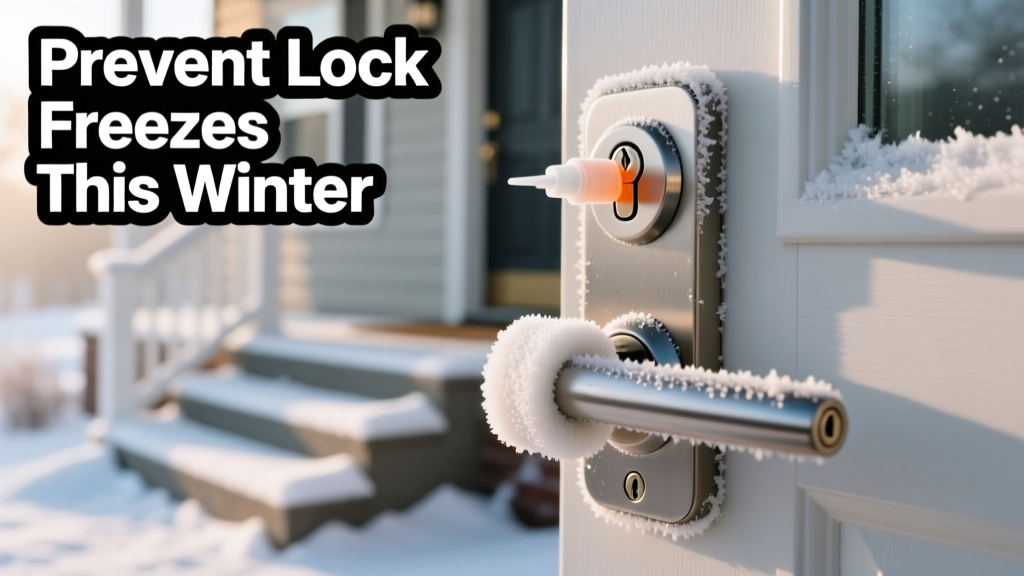
When temperatures plunge below 20°F, a frozen deadbolt isn’t just inconvenient—it’s a security and safety risk. One in five winter lockouts occur between December and February, often requiring locksmiths who charge $120–$250 for after-hours service (National Locksmith Association, 2023). Prevention takes under five minutes a month but saves time, money, and stress.
Why This Happens
Freezing occurs when moisture enters the lock cylinder or latch mechanism and freezes on internal springs, pins, or tumblers. Common culprits include condensation from indoor humidity meeting cold metal, rain or snow blown into the keyway during storms, and residual moisture left behind after cleaning or lubricating with water-based sprays. Older brass or steel locks without weather seals are especially vulnerable—especially on north- or west-facing doors exposed to wind-driven snow.
Maintenance Checklist
| Frequency | Task | Notes |
|---|---|---|
| Daily | Wipe keyway entrance with dry microfiber cloth after snow or rain | Prevents moisture pooling at the entry point |
| Weekly | Inspect strike plate and door sweep for ice buildup or gaps | Even a 1/8" gap lets cold air and moisture infiltrate |
| Monthly | Apply graphite powder or silicone-based lubricant (not WD-40) | WD-40 attracts dust and hardens in cold; use only dry lubes |
| Yearly | Replace worn weatherstripping and install a lock cover or hood | Look for cracks or compression loss in foam or vinyl gaskets |
Warning Signs
Early detection stops full lock failure. Watch for these red flags:
- Key turns stiffly or requires extra force—especially in the morning
- Faint metallic squeaking or grinding sound during operation
- Visible frost or condensation inside the keyhole (use a flashlight to check)
- Door latch doesn’t fully retract when turning the knob
If you notice two or more of these signs, act within 48 hours—even if the lock still works.
Recommended Products
Not all lock protectants perform equally in subfreezing temps. Prioritize products tested to -40°F or lower:
- Lock de-icer sprays with isopropyl alcohol base (e.g., Lock Saver Pro, rated to -65°F)
- Graphite powder in squeeze-bottle applicators (prevents clumping vs. traditional shaker cans)
- Weatherproof lock hoods made of UV-stabilized polycarbonate (like the FrostGuard LX)
- Low-E storm doors with magnetic seals—cut interior-to-exterior convection by up to 70% (U.S. Department of Energy, 2022)
Can I use Vaseline or oil-based lubricants?
No. Petroleum jelly traps dirt, thickens in cold, and gums up pin tumblers over time. It also degrades rubber gaskets in modern lock housings. Stick to dry graphite or synthetic silicone spray—both remain fluid down to -60°F.
What if my lock freezes mid-winter?
Don’t force the key. Warm the key first (rub between gloved palms or hold near a vent), then insert and gently wiggle—not turn—while applying lock de-icer. If the bolt won’t retract, try heating the exterior faceplate with a hair dryer on low for 30 seconds. For recurring issues, see our guide on when to replace a door lock.
Do smart locks freeze too?
Yes—but less often. Most Bluetooth and Z-Wave models (e.g., Yale Assure Lock 2) operate reliably down to 14°F. However, their keypads and battery compartments can still collect condensation. Wipe the keypad dry after snowstorms and store spare CR123 batteries indoors—they lose up to 40% capacity below 10°F (Battery University, 2023).
Is a heated lock worth it?
Only in extreme climates (e.g., northern Minnesota, Alaska). Heated models like the Schlage Encode Plus with built-in thermal regulation cost $280–$390 and draw minimal power—but they’re overkill for most U.S. zones. Focus first on sealing and dry lubrication; add heat only if you’ve had three or more freeze incidents in one season.
"A properly maintained lock in Zone 5 or colder shouldn’t freeze if the keyway stays dry and the mechanism is lubricated twice before November 1st." — Mike R., certified locksmith and IBHS-certified home inspector since 1998
Should I cover my lock overnight during cold snaps?
Yes—if temperatures drop below 10°F and wind speeds exceed 15 mph. Use a removable neoprene lock sleeve (not tape or plastic wrap, which trap moisture). Remove it each morning to let residual condensation evaporate. For long-term solutions, consider installing a storm door with integrated lock protection.
Consistent lock care isn’t about perfection—it’s about catching small issues before they lock you out in a blizzard. Start your winter prep now: inspect one exterior door this weekend, apply graphite, and test the latch. That five-minute habit could save your morning—and your peace of mind.