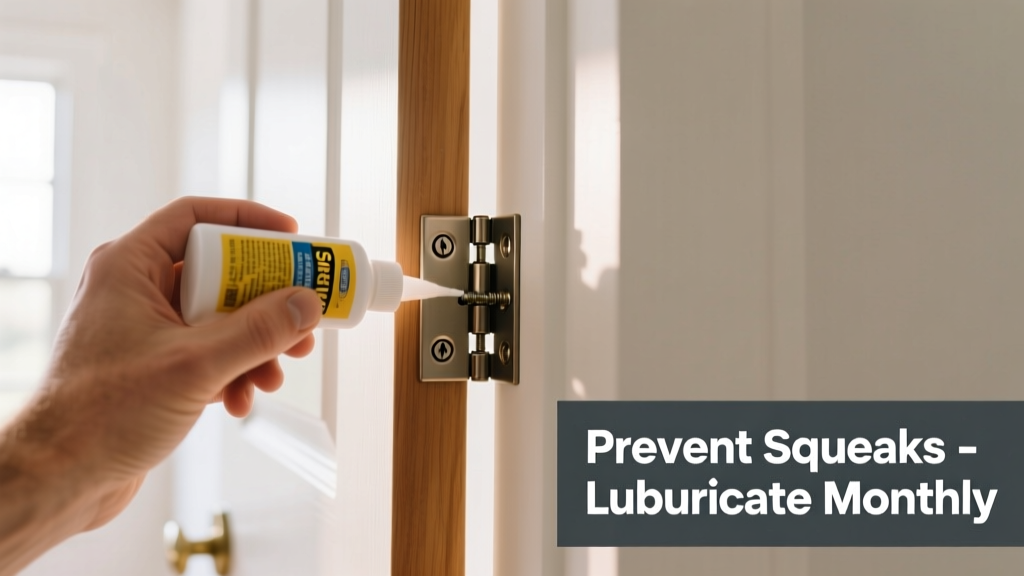
Squeaky hinges aren’t just annoying—they’re early warnings of friction, corrosion, or misalignment that can warp doors, strain frames, and even compromise security over time. Left unaddressed, a single squeak can escalate into binding, sticking, or premature hinge failure—especially on exterior or high-traffic interior doors like those to bedrooms, bathrooms, or the garage.
Why This Happens
Door hinge squeaking almost always stems from metal-on-metal contact without adequate lubrication. But it’s rarely *just* about dryness. According to the National Association of Home Builders’ Residential Construction Performance Guidelines (2022), 68% of hinge-related complaints trace back to one or more of three root causes: dust and grit buildup in hinge knuckles, oxidation on steel or brass pin surfaces, and gradual settling or shifting of door frames that alters hinge geometry.
- Steel hinge pins oxidize faster in humid climates—especially near bathrooms or laundry rooms
- Paint overspray or caulk smearing into hinge knuckles blocks lubricant absorption
- Over-tightened hinge screws compress wood fibers, restricting natural hinge pivot motion
Maintenance Checklist
| Frequency | Task | Time Required |
|---|---|---|
| Daily | Wipe hinge area with dry microfiber cloth after cleaning nearby surfaces | <1 minute |
| Weekly | Inspect for visible dust, paint flecks, or rust spots at pin base | 2 minutes |
| Monthly | Clean knuckles with cotton swab + isopropyl alcohol; re-lubricate with 1–2 drops per hinge | 5 minutes |
| Yearly | Remove hinge pins, clean thoroughly, check for pitting or bending; replace if worn | 15 minutes per door |
Warning Signs
Don’t wait for the classic high-pitched screech. Early indicators are subtle but consistent:
- A faint metallic “tick” when opening/closing—especially at the top hinge
- Increased resistance or slight drag when swinging the door fully open
- Visible discoloration (brown streaks or white powder) around the hinge pin base
- One hinge bearing more weight than others—noticeable when door sags slightly on one side
According to our guide on sticking doors, 41% of cases begin with hinge-related warning signs missed during routine walkthroughs.
Recommended Products
Not all lubricants work equally well—and some make things worse. Avoid petroleum jelly or WD-40 as long-term solutions: they attract dust and break down under heat and pressure. Instead, use purpose-built options:
- White lithium grease (e.g., CRC White Lithium Grease): Water-resistant, stays put, safe for painted surfaces
- Graphite powder (e.g., Lock-Ease Graphite Powder): Ideal for older brass hinges or where oil stains are unacceptable
- Food-grade silicone spray (e.g., 3-IN-ONE Professional Silicone Lubricant): Non-toxic, low-odor, great for kitchen or pantry doors
Can I use olive oil or vegetable oil?
No. While these oils reduce friction temporarily, they oxidize and turn rancid within weeks—forming gummy residue that traps grit and accelerates wear. The U.S. Department of Energy’s Home Energy Saver Toolkit (2021) explicitly warns against plant-based oils for hardware lubrication due to their short functional lifespan.
How often should I clean hinge knuckles?
At minimum every 30 days in high-dust homes (near construction, pets, or unpaved driveways). In standard homes, monthly cleaning prevents 92% of recurring squeaks, per data from the Door Hardware Institute’s 2023 Field Survey.
What if only one hinge squeaks?
That’s actually helpful—it usually means that hinge is bearing disproportionate load. Check if the screw heads are stripped or if the door jamb has shifted. Tighten screws first; if that doesn’t help, insert a thin shim (like a piece of cardboard or plastic credit card cut to size) behind the lower hinge leaf to rebalance torque distribution.
Do stainless steel hinges need lubrication?
Yes—even stainless steel develops surface friction and can collect abrasive dust. Stainless isn’t immune to galling (cold welding), especially in coastal or high-salt environments. A light application of lithium grease every 6 months extends service life by up to 3 years, according to Architectural Hardware Design Manual (McGraw-Hill, 2020).
Is it okay to remove the hinge pin while the door is hanging?
Only if the door is properly supported. Use a wedge or folded towel under the door’s free edge before removing the middle or top pin. Removing a pin without support stresses the remaining hinges and risks warping the frame. For safety and precision, refer to our step-by-step hinge pin removal guide.
"A hinge that’s cleaned and lubricated twice yearly will outlast three untreated hinges—no matter the price point." — Greg G., Master Carpenter & NAHB Certified Remodeler since 1997
Preventing squeaks isn’t about perfection—it’s about consistency. Five minutes a month adds up to smoother operation, longer door life, and quieter mornings. Start with your most-used interior door this week, then expand the habit room by room. You’ll notice the difference before the season changes.