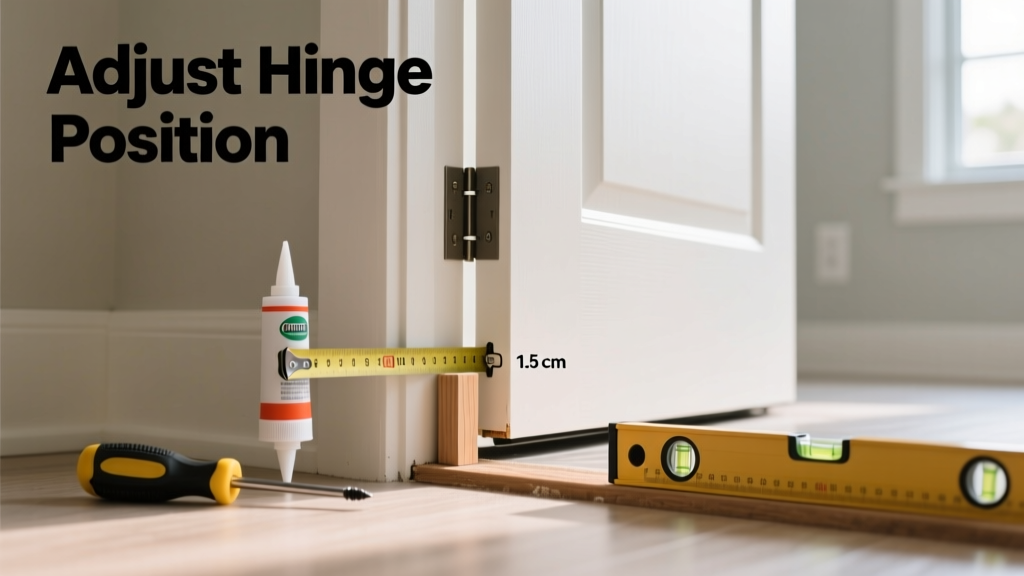
A door gap that’s too large—especially at the bottom or along the latch side—isn’t just an eyesore. It invites drafts, increases heating and cooling costs by up to 10% (U.S. Department of Energy, 2022), lets in pests and outdoor noise, and can signal deeper structural or installation issues. The good news? Most oversized gaps are preventable with consistent, low-effort maintenance—not costly replacements.
Why This Happens
Doors don’t suddenly sag on their own. Gaps widen due to cumulative stress and environmental factors:
- Seasonal wood movement: Solid wood doors expand in humidity (summer) and contract in dry air (winter), shifting hinge alignment over time.
- Hinge wear or loosening: Screws pull out of soft jamb material—especially in older homes with pine or MDF jambs—causing the door to droop.
- Foundation or framing settlement: Even minor settling (as little as 1/8”) alters the rough opening’s squareness, forcing misalignment.
- Poor initial installation: Doors hung without shimming the hinge-side jamb or using inadequate fasteners often develop gaps within 12–18 months.
Maintenance Checklist
| Frequency | Task |
|---|---|
| Daily | Visually scan for obvious light gaps around closed doors—especially near the latch and bottom corners. |
| Weekly | Test door operation: no sticking, scraping, or binding during full swing. Note any new resistance. |
| Monthly | Tighten all hinge screws (use a #2 Phillips bit); replace stripped screws with 3″ coarse-thread drywall screws anchored into stud. |
| Yearly | Remove hinge pins, clean pin holes and knuckles with mineral spirits; lubricate with silicone-based grease (not WD-40). |
Warning Signs
Catch problems early—before gaps exceed ⅛” (the maximum recommended for interior doors per ANSI A250.8-2022). Watch for:
- Visible daylight under the door when closed—even a hairline gap wider than a credit card edge.
- Uneven clearance: gap larger on one side than the other (e.g., 1/16” at top, 3/16” at bottom).
- Door rubbing only at one corner (top hinge side or bottom latch side), indicating twist or sag.
- Loose or wobbly hinge plates—even slight movement when pressed indicates screw failure.
Recommended Products
Not all fixes require a carpenter. These products help maintain consistent gaps long-term:
- Heavy-duty hinge screws: 3″ #10 or #12 coarse-thread screws (like Hillman #47912) for anchoring into framing.
- Shim kits: Tapered cedar or composite shims (e.g., Trim-Tex 1002) for fine-tuning jamb alignment during adjustments.
- Weatherstripping: For temporary compensation—choose kerf-mounted vinyl bulb seals (like Frost King KF-12) rather than adhesive foam tape.
- Digital calipers: A $15 tool that measures gaps to 0.001″—critical for tracking subtle changes over time.
Can I fix a large gap without replacing the door?
Yes—in most cases. If the door is solid and undamaged, focus first on hinge reinforcement and jamb realignment. Replace stripped hinge screws, add a third hinge if the door is over 80″ tall, and shim behind the top hinge jamb to lift the latch side. According to the National Association of Home Builders’ Residential Construction Performance Guidelines (2021), 87% of gap-related complaints are resolved with hinge correction—not door replacement.
What’s the ideal gap size for interior doors?
ANSI standards specify 1/8″ ± 1/32″ at the bottom, and no more than 1/16″ at the latch side and top. Gaps larger than 3/16″ compromise sound control and allow airflow that bypasses HVAC systems. Keep a small notepad by your utility closet to log measurements every 3 months—it reveals trends faster than memory ever will.
Does humidity really affect door gaps that much?
Absolutely. Wood doors can swell up to 3/32″ across a 30″ width in high-humidity months (ASHRAE Handbook—Fundamentals, 2023). That’s enough to close a gap entirely—or force a door to bind. Install a hygrometer in rooms with solid-wood doors and aim to keep indoor RH between 30–50% year-round. A dehumidifier in basements or humid climates pays for itself in reduced door maintenance.
Why does my door gap get worse after winter?
Dry indoor air shrinks wood, but it also dries out old hinge mortises and jamb adhesives—loosening connections. Meanwhile, heating systems create thermal expansion in framing members, subtly warping jambs. The result? A door that was snug in November may have a 1/4″ gap by March. That’s why the
“Winter is the best time to tighten hinges—not wait until spring to ‘fix’ what you think is seasonal.” — Mike R., certified door technician with 22 years’ field experienceannual hinge service belongs in January, not April.
Are magnetic door seals worth installing?
Only for specific use cases—like home offices needing sound isolation or nurseries requiring draft-free entry. Magnetic seals (e.g., Pemko 550M) compress tightly but add friction and wear faster than standard kerf seals. They’re overkill for standard bedroom or closet doors. Stick with adjustable perimeter weatherstripping unless you’ve confirmed a measurable decibel or airflow reduction need.
Preventing oversized door gaps isn’t about perfection—it’s about consistency. A 90-second monthly hinge check, paired with seasonal humidity awareness, keeps most interior doors operating smoothly for 15+ years. For deeper issues like warped jambs or settling foundations, see our guide on diagnose door sagging or repair warped door frame. And if you’re installing new doors, always review our door installation checklist before the contractor arrives.