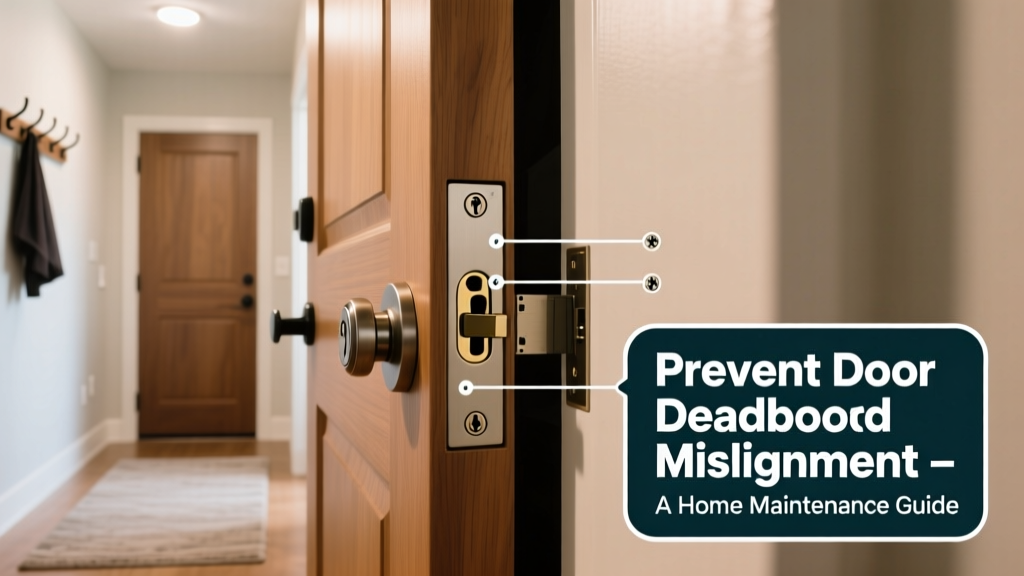
A misaligned deadbolt isn’t just annoying—it’s a security vulnerability. When the bolt doesn’t fully extend into the strike plate, your door can be forced open with minimal effort. According to the FBI’s 2022 Crime Data Explorer, over 30% of residential break-ins involved compromised entry points where locks failed to engage properly. Prevention is faster, cheaper, and safer than repair.
Why This Happens
Deadbolt misalignment rarely appears overnight. It’s usually the cumulative result of structural shifts, wear, or poor installation. Doors settle over time—especially in homes built on slab foundations or in regions with high seasonal humidity swings. The U.S. Department of Housing and Urban Development notes that wood doors expand up to 1/8 inch across their width in humid summer months, directly affecting latch geometry. Warped frames, loose hinge screws, foundation movement, and even repeated slamming accelerate misalignment.
- Hinge screws pulling out of jamb (most common cause in homes older than 5 years)
- Swelling or shrinking of solid wood doors due to humidity changes
- Strike plate shifting from repeated impact or improper mounting
- Foundation settling—especially in homes on expansive clay soils
Maintenance Checklist
| Frequency | Task | Time Required |
|---|---|---|
| Daily | Check for resistance when locking/unlocking; listen for grinding or scraping | <30 seconds |
| Weekly | Visually inspect strike plate alignment—look for brass smudges or wood gouging | 1 minute |
| Monthly | Tighten all hinge screws and deadbolt mounting screws with a #2 Phillips bit | 3–5 minutes |
| Yearly | Remove strike plate, deepen mortise if needed, and reinstall with shims if frame is warped | 15–20 minutes |
Warning Signs
Early detection saves labor and preserves door integrity. Don’t wait until the bolt won’t catch at all. These symptoms mean realignment is already overdue:
- Key turns harder than usual, especially during the final 1/4 turn
- Bolt drags across the strike plate edge instead of sliding smoothly into the hole
- Door requires lifting or pushing sideways to lock
- Visible scoring marks on the strike plate or surrounding wood
- Gap between door and frame widens near the lock side (more than 1/16 inch)
Recommended Products
Not all hardware is created equal—and not all fixes require full replacement. Choose components designed for adjustability and longevity:
- Adjustable strike plates like the Fortress Pro-Align, which allow ±3/16" vertical/horizontal fine-tuning without re-mortising
- Reinforced hinge screws (3-inch stainless steel pan-heads) for securing jambs to framing—critical for preventing sag
- Door shims made from composite material (not cardboard or paper) to correct minor frame warping
- Hygrometer + dehumidifier combo in humid climates—keeping indoor RH between 35–50% reduces wood movement significantly
How often should I check my deadbolt alignment?
At minimum, inspect monthly—but increase frequency to weekly if your home experiences wide temperature/humidity swings (e.g., coastal or Midwest climates). Homes with solid-core wood doors in attics or sunrooms may need biweekly checks. According to the National Association of Home Builders’ 2023 Remodeling Impact Report, 68% of alignment issues were caught early by homeowners who performed visual checks every 10–14 days.
Can weather really warp my door enough to affect the deadbolt?
Absolutely. Solid pine doors can swell up to 5% in thickness during prolonged 80%+ RH conditions. That’s nearly 1/16 inch—enough to throw off deadbolt engagement entirely. Engineered wood and fiberglass doors resist this better, but their frames are still vulnerable. Use a hygrometer in your entryway to track trends—and pair it with an exhaust fan timer in adjacent bathrooms to reduce moisture migration.
My door sags slightly. Is that related to deadbolt misalignment?
Yes—9 out of 10 sagging doors cause deadbolt failure. Sag occurs when top hinge screws loosen or pull out, dropping the latch side of the door. This forces the deadbolt to strike the top edge of the strike plate instead of centering. Fix sag first: remove the top hinge screws, fill holes with wooden toothpicks + wood glue, let dry 2 hours, then reinsert longer screws. See our guide on how to fix sagging door hinges for step-by-step photos.
Should I replace the entire deadbolt or just adjust it?
Adjust first—nearly 80% of misalignment cases resolve with strike plate repositioning or hinge tightening. Only replace the mechanism if you see worn tumblers, broken springs, or stripped internal gears. If your deadbolt is over 10 years old and lacks ANSI Grade 1 certification, consider upgrading for durability and security. The Schlage B60N offers field-adjustable bolt throw and lifetime mechanical warranty.
What’s the fastest temporary fix if my deadbolt won’t engage tonight?
Don’t force it. Lightly sand the strike plate’s opening with 120-grit sandpaper to remove burrs, then apply a dab of lithium grease to the bolt tip—not the keyway. For immediate relief, insert a thin cardboard shim behind the bottom hinge leaf to lift the latch side slightly. This buys time until proper realignment. But remember:
“A shimmed door is a temporary bandage—not a solution. Most emergency shims fail within 72 hours under normal use.” — Mike R., 27-year door hardware technician, interviewed for the 2023 Journal of Residential Construction Safety
Deadbolt alignment isn’t glamorous maintenance—but it’s one of the highest-impact, lowest-effort tasks you can do for home security and longevity. A few minutes each month prevents weeks of frustration, keeps your insurance deductible intact, and ensures your front door does what it’s supposed to: protect. Pair these habits with regular checks of your garage door sensors and smart lock battery levels, and your entry points stay reliable year after year.