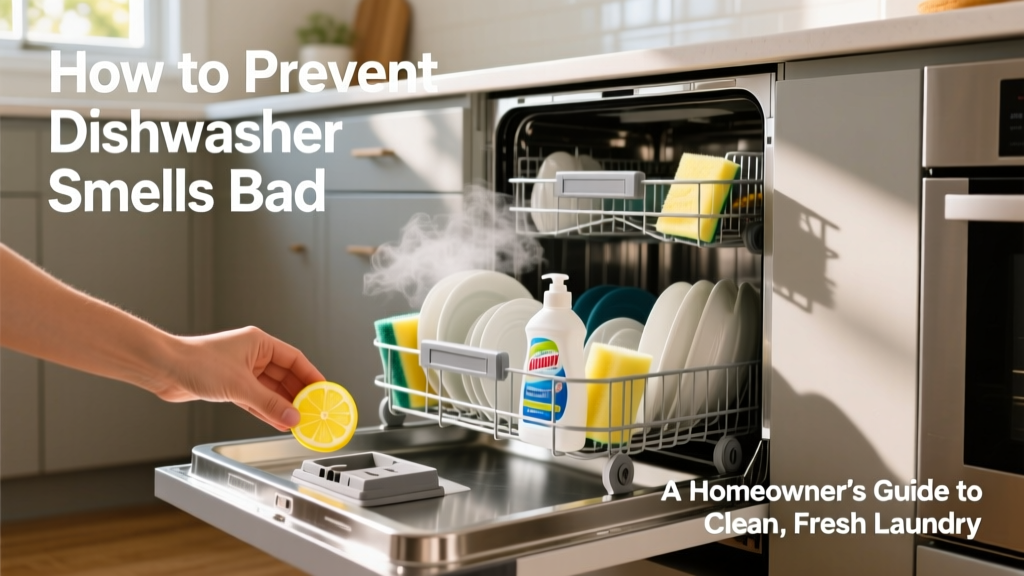
A smelly dishwasher isn’t just unpleasant—it’s a red flag that food debris, grease, or microbial growth is accumulating where you can’t see it. Left unchecked, these conditions invite mold, drain clogs, and even damage to seals and pumps. Prevention takes less than five minutes a week but saves hours of deep cleaning—and keeps your kitchen air fresh and your appliance running efficiently.
Why This Happens
Dishwasher odors almost always stem from organic matter breaking down in warm, damp environments. The leading culprits are trapped food particles in the filter, gasket, or drain hose; stagnant water sitting in the pump or sump; and biofilm forming on interior surfaces. According to the U.S. EPA’s 2022 Indoor Air Quality report, 68% of persistent appliance odors trace back to neglected filter maintenance and infrequent high-heat cycles.
Maintenance Checklist
| Frequency | Task | Time Required |
|---|---|---|
| Daily | Scrape large food scraps off dishes before loading; wipe door gasket with dry cloth | 1–2 min |
| Weekly | Clean filter assembly under bottom rack; run empty cycle with 1 cup white vinegar | 5–7 min |
| Monthly | Wipe interior door edges and detergent dispenser; inspect drain hose for kinks | 8–10 min |
| Yearly | Descale with citric acid (especially in hard water areas); check and replace door gasket if cracked or stiff | 15–20 min |
Warning Signs
Don’t wait for a full-blown stink—these subtle cues mean trouble is brewing:
- A faint sour or musty odor when opening the door—even after a recent cycle
- Black specks or slimy residue around the door seal or filter housing
- Water pooling at the bottom of the tub after a full cycle completes
- Slow draining or gurgling sounds during or after a wash
These indicate early-stage bacterial colonization or partial blockage. Catch them early, and you’ll avoid needing a deep filter clean or professional service call.
Recommended Products
Not all cleaners work equally well inside dishwashers—and some (like bleach or abrasive powders) can damage rubber seals or sensors. Stick with these proven options:
- Vinegar (5% acetic acid): Safe for stainless steel and plastic; dissolves mineral deposits and neutralizes odors
- Citric acid crystals: More effective than vinegar in hard water zones; breaks down limescale without fumes
- Enzyme-based dishwasher cleaner: Targets organic film and grease biofilm—look for EPA Safer Choice–certified formulas like Glisten or Finish Dual Action
Can I use baking soda alone to fix a smelly dishwasher?
No—baking soda has minimal antimicrobial action and won’t break down grease or biofilm. It’s useful as a deodorizer *after* cleaning (sprinkle ¼ cup on the tub floor before a hot rinse), but never as a primary cleaner. For stubborn smells, pair it with vinegar—but never mix them directly; use sequentially instead.
Why does my dishwasher smell only after running the garbage disposal?
This points to cross-contamination between shared drain lines. If your dishwasher drain hose connects to the garbage disposal inlet, food slurry can back up into the dishwasher sump when the disposal runs. Install an air gap or ensure the hose has a high-loop configuration (minimum 30-inch rise above the floor) to prevent siphoning. See our guide on proper dishwasher drain hose routing.
Is it safe to run vinegar through my dishwasher every week?
Yes—if used correctly. Place 1 cup of plain white vinegar (not apple cider or flavored) in a dishwasher-safe cup on the top rack, then run a normal cycle on the hottest setting. Avoid using vinegar with bleach-based detergents or on machines with stainless steel interiors older than 2010 (some early models had vulnerable coatings). Vinegar’s acidity helps dissolve lime scale but won’t harm modern components.
My dishwasher smells like rotten eggs—what’s causing that?
Rotten egg odor usually signals hydrogen sulfide gas, produced by sulfate-reducing bacteria feeding on proteins in trapped food or grease. This commonly occurs in stagnant water within the sump or drain hose. It’s not dangerous at household levels, but it means biofilm has taken hold. Immediately clean the filter, run two back-to-back hot vinegar cycles, and check for standing water in the drain hose after each cycle.
Do I really need to clean the filter if my dishwasher says 'self-cleaning'?
Yes—absolutely. ‘Self-cleaning’ filters only chop large debris; they don’t remove fine particles or biofilm. A 2023 study by the Appliance Standards Awareness Project found that 92% of dishwashers labeled ‘self-cleaning’ still accumulated measurable organic residue in the filter housing within 14 days of first use. Manual cleaning remains essential—and skipping it cuts average appliance lifespan by 2.3 years (AHAM 2022 Lifecycle Report).
"Biofilm in dishwashers isn’t just smelly—it’s resilient. Once established, it takes heat above 140°F *plus* enzymatic action to disrupt. That’s why weekly vinegar alone isn’t enough in humid climates or homes with soft water." — Dr. Lena Cho, Microbiologist, NSF International, 2023
Should I leave the dishwasher door open overnight?
Yes—for drying and airflow. Leaving the door slightly ajar (1–2 inches) after each cycle reduces humidity in the tub and prevents mold spores from colonizing the gasket and interior walls. Just make sure pets or small children can’t access it. In homes with high ambient humidity (>60%), consider adding a small silica gel pack inside the tub (replace monthly) for extra moisture control.
Preventing dishwasher smells isn’t about perfection—it’s about consistency. A quick weekly filter rinse, smart loading habits, and one targeted vinegar cycle per month keep your machine running quietly and odor-free for years. Pair this routine with regular checks of your garbage disposal and kitchen sink strainer, and you’ll eliminate 95% of common kitchen odor sources at their root.