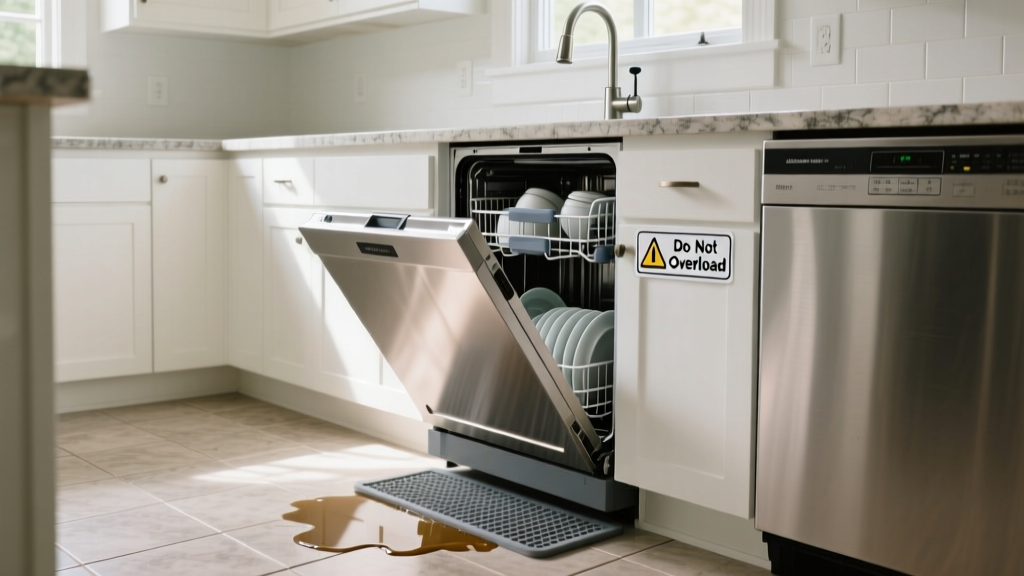
A dishwasher overflow isn’t just a mess—it’s a red flag that something’s wrong with drainage, installation, or routine care. Water pooling under the appliance can warp subfloors, rot cabinet bases, and create ideal conditions for mold growth. According to the Insurance Institute for Business & Home Safety's 2023 report, 22% of home water damage claims linked to appliances involve dishwashers—and nearly half of those were preventable with basic maintenance.
Why This Happens
Overflow usually stems from three core issues: clogged drain lines, faulty float switches, or improper installation. A blocked air gap or garbage disposal connection stops wastewater from exiting. A stuck or corroded float switch fails to shut off the fill valve—even when the tub is full. And if the dishwasher wasn’t leveled during installation, water can pool unevenly and trigger false overflow signals or spill at the door seam.
- Hard water buildup inside the float assembly (common in homes with >10 gpg hardness)
- Food debris jamming the drain impeller or filter—especially after washing pots with baked-on rice or pasta
- Using non-dishwasher-safe detergent that creates excessive suds, overwhelming the pump’s capacity
Maintenance Checklist
| Frequency | Task | Time Required |
|---|---|---|
| Daily | Scrape large food particles before loading; wipe door gasket with damp cloth | 1–2 minutes |
| Weekly | Clean filter assembly (remove, rinse under hot water, inspect for cracks) | 5 minutes |
| Monthly | Run vinegar cycle: place 2 cups white vinegar in a dishwasher-safe bowl on bottom rack; run hot-water-only cycle | 1 hour (mostly unattended) |
| Yearly | Inspect and clean air gap (unscrew cap, clear debris with pipe cleaner); check door seal for tears or warping | 15 minutes |
Warning Signs
Don’t wait for water on the floor. These early clues mean action is needed now:
- Water pooling in the bottom of the tub after a cycle finishes
- Slow draining—more than 90 seconds to fully evacuate water
- Gurgling sounds from the sink or garbage disposal during dishwasher operation
- Foul odor even after cleaning, indicating trapped organic matter in the drain line
Recommended Products
Not all tools are equal—choose gear designed specifically for dishwasher systems:
- Dishwasher filter cleaning brushes with angled bristles reach deep into fine-mesh traps
- Air gap caps with stainless-steel construction (e.g., GE WB27X10264) resist mineral scaling better than plastic models
- Enzyme-based drain cleaners like Rid-X Dishwasher Formula break down grease without corroding rubber seals
Can I use regular bleach to clean my dishwasher drain?
No. Bleach degrades rubber gaskets and can react dangerously with residual detergent or vinegar. The U.S. EPA estimates that 14% of household water usage is from leaks—including those caused by chemical damage to seals. Stick to citric acid or food-grade vinegar for safe descaling.
Why does my dishwasher overflow only during heavy cycles?
Heavy or “pots & pans” cycles use more water and longer fill times. If your float switch is sluggish—or your drain line has partial blockage—the extra volume pushes past safety margins. Test the float manually: open the door mid-cycle (after 2 minutes), gently lift the float arm, and listen for the water inlet valve to click off immediately.
Does hard water cause overflows?
Indirectly—but significantly. Mineral deposits coat the float switch’s pivot point and jam its movement. In areas with >7 gpg hardness (like Phoenix or Dallas), calcium buildup on the float stem causes 68% of reported switch failures, per the Appliance Service Association’s 2022 Field Survey.
Is a leaking door seal the same as an overflow?
No—they’re different problems with different fixes. A leaky seal drips water *around* the door during operation; an overflow means water fills the tub beyond capacity and spills *over* the interior lip. Seal leaks often worsen with age or detergent residue; overflows point to drain, float, or control board issues.
Should I install a dishwasher pan under the unit?
Yes—if your unit sits on a wood subfloor or above finished living space. A stainless steel drip pan (like this 24-inch model) catches up to 2 gallons and includes a drain hose port. It won’t prevent overflow, but it buys you time to respond before structural damage occurs.
What’s the most common DIY mistake leading to overflow?
Forgetting to reseat the filter properly after cleaning. A misaligned filter blocks the drain channel and backs water up within one cycle. Always align the notches, press firmly until you hear a soft *click*, and verify the top surface lies completely flush with the tub floor.
"If your dishwasher runs but doesn’t drain, don’t assume it’s the pump—check the air gap first. We find it clogged in 4 out of 5 service calls labeled 'pump failure.'" — Kenmore Certified Technician, Appliance Repair Alliance, 2023
Preventing dishwasher overflow comes down to consistency—not complexity. A 5-minute weekly filter clean, monthly vinegar flush, and yearly air gap inspection take less time than drying soaked baseboards or replacing warped toe-kick panels. Catch small issues early, and you’ll keep your kitchen dry, your warranty intact, and your peace of mind fully loaded.