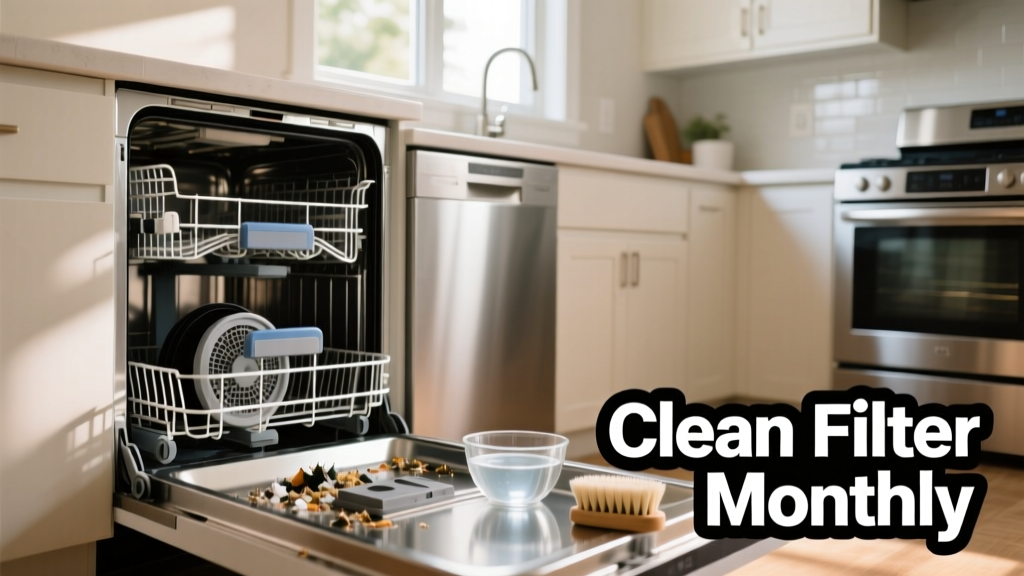
A clogged or non-draining dishwasher isn’t just inconvenient—it’s a moisture time bomb. Standing water breeds mold in hidden crevices, corrodes internal pumps, and can leak onto cabinetry or flooring. According to the U.S. EPA, 14% of household water usage is from leaks and inefficiencies—many traceable to neglected appliance maintenance like this.
Why This Happens
Dishwasher drainage failure rarely stems from one dramatic part failure. It’s usually the slow accumulation of everyday debris and oversight. Food particles, grease buildup, mineral deposits from hard water, and even small plastic bits from broken utensils gradually restrict flow through the filter, drain hose, or air gap. Over time, these obstructions reduce pump efficiency or trigger error codes that shut down the cycle entirely.
- Food debris trapped in the fine mesh filter or chopper assembly
- Kinked, crushed, or improperly sloped drain hose (especially under-sink routing)
- Blocked air gap—often due to dried food or soap scum in the cap or vertical tube
- Failed drain pump impeller (common after 5+ years of unfiltered operation)
- Garbage disposal flange clog (if connected to disposal instead of direct drain)
Maintenance Checklist
| Frequency | Task | Time Required |
|---|---|---|
| Daily | Scrape large food off dishes; rinse sticky residue before loading | 30–60 seconds |
| Weekly | Clean filter assembly (remove, rinse under hot water, scrub with soft brush) | 5 minutes |
| Monthly | Run vinegar cycle: 1 cup white vinegar in bottom rack, no dishes, normal heat-dry cycle | 1 hour |
| Yearly | Inspect and clear air gap; check drain hose for kinks, cracks, or mineral scaling | 15 minutes |
Warning Signs
Don’t wait for standing water at the end of a cycle. Early indicators give you time to intervene before damage escalates:
- Faint odor of stagnant water or mildew between cycles
- Slow draining during the final rinse—water level drops noticeably slower than usual
- Gurgling sounds from the sink or garbage disposal during dishwasher operation
- Visible debris or film inside the filter housing—even if it looks “mostly clean”
- Water pooling in the bottom of the unit after a full cycle completes
Recommended Products
Not all cleaners and tools work equally well—and some (like harsh chemical drain openers) can damage rubber seals and pump gaskets. Stick with manufacturer-approved or tested-safe options:
- Vinegar & baking soda combos — effective for light mineral and grease buildup (never mix them directly; use sequentially)
- Appliance-specific filter brushes — like the Dishwasher Filter Brush Set, with angled bristles for tight corners
- Enzyme-based cleaners — such as Glisten Dishwasher Cleaner, which breaks down organic matter without corrosion risk
- Hard water treatment tablets — like Finish Power Up, especially if your home’s water exceeds 7 grains per gallon
Can I use bleach to clean my dishwasher filter?
No. Bleach degrades rubber seals and can corrode stainless steel components over time. It also reacts dangerously with vinegar or other common cleaners if used in rotation. The dishwasher filter cleaning guide recommends warm water, dish soap, and a soft nylon brush—no harsh chemicals needed.
Does running hot water in the sink before starting the dishwasher help?
Yes—but only if your dishwasher connects to the garbage disposal. Running hot water for 15–20 seconds clears residual debris from the disposal flange and helps prime the drain path. This simple habit reduces clogs by up to 30%, according to the Kitchen Plumbing Maintenance Handbook (2022).
What’s the right slope for a dishwasher drain hose?
It must rise at least 18 inches above the floor (the high-loop method), then descend smoothly to the sink or disposal. This prevents backflow from the sink into the dishwasher. A flat or downward-sloping hose invites siphoning and allows wastewater to re-enter the tub—especially during garbage disposal use.
How often should I replace the drain hose?
Every 5–7 years—even if it looks fine. Rubber hoses degrade internally, developing micro-cracks and scale buildup that restrict flow. PVC or reinforced braided hoses last longer but still need inspection annually. As plumbing technician Maria Lopez notes in Appliance Repair Today (2023):
"I replace more drain hoses than pumps—most failures are silent until water pools under cabinets."
Is an air gap really necessary?
In most U.S. jurisdictions, yes—if your dishwasher drains into a garbage disposal or shared sink line. An air gap prevents cross-contamination and backsiphonage. If yours is missing or capped, install a certified air gap (like the EZ-Install Air Gap Kit). Skipping it may void your warranty and increase risk of contaminated water entering the dishwasher.
Drainage problems don’t appear overnight—they evolve from months of small oversights. Consistent, low-effort care keeps your dishwasher moving water efficiently and protects your cabinetry, flooring, and indoor air quality. Start with the weekly filter clean and build from there. You’ll avoid service calls, extend appliance life by 3–5 years, and keep your kitchen dry and odor-free.