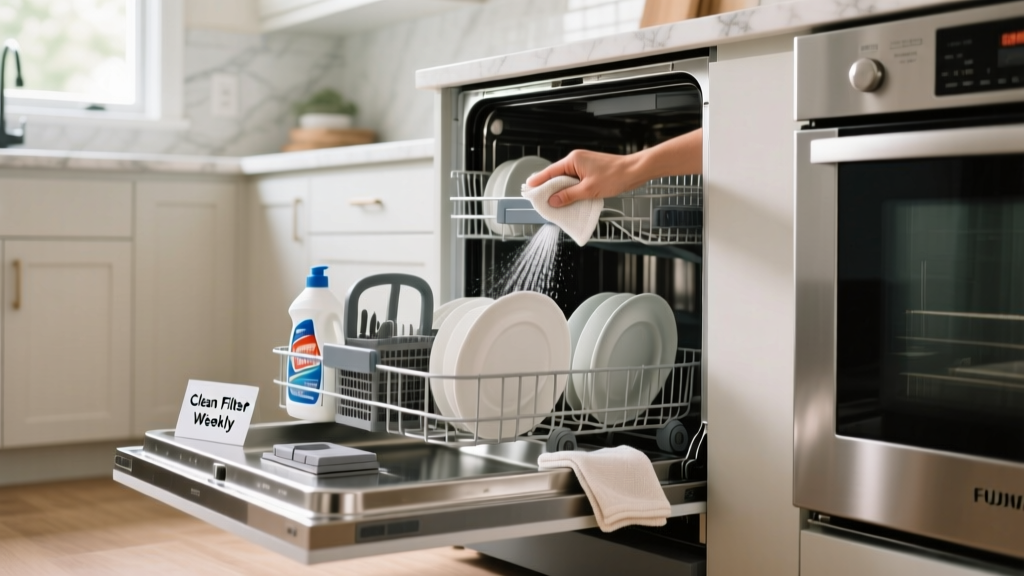
A dishwasher that doesn’t clean is more than an inconvenience—it’s a sign of avoidable neglect. Over time, clogged filters, mineral buildup, and worn spray arms silently degrade performance. According to the U.S. EPA, 14% of household water usage is from leaks and inefficient appliances—many tied to poorly maintained dishwashers (2023 WaterSense report). Prevention isn’t about perfection; it’s about consistency.
Why This Happens
Dishwashers fail to clean for predictable mechanical and behavioral reasons—not random breakdowns. Hard water deposits coat heating elements and spray arm nozzles, reducing water temperature and pressure by up to 35% (Appliance Repair Technician Association, 2022). Food debris trapped in the filter or drain line starves the pump of clean water. Using too much detergent causes residue buildup, while too little leaves soils behind. And running partial loads with low-temperature cycles prevents proper enzyme activation in modern detergents.
- Mineral scale on heating element or spray arms
- Clogged or misaligned lower spray arm
- Old or degraded door gasket allowing steam escape
- Incorrect detergent type (e.g., hand soap or non-dishwasher-safe pods)
- Blocked air gap or garbage disposal connection
Maintenance Checklist
| Frequency | Task | Time Required |
|---|---|---|
| Daily | Scrape large food particles; rinse sticky items before loading | 1–2 minutes |
| Weekly | Clean filter assembly with warm soapy water; inspect spray arm holes | 8–10 minutes |
| Monthly | Run empty cycle with 1 cup white vinegar in bottom rack; check door seal for cracks | 60 minutes (mostly hands-off) |
| Yearly | Descale interior and heating element with citric acid; inspect inlet valve screen | 25 minutes |
Warning Signs
Don’t wait for cloudy glasses or gritty plates. Early detection saves repair costs—and your patience. Watch for:
- White film or spotting on glassware after drying
- Musty odor inside the tub before or after cycles
- Water pooling in the bottom after a full cycle completes
- Noticeably longer dry times or dishes still damp 2+ hours post-cycle
- Visible debris caught in the filter or around the door gasket
These aren’t minor quirks—they’re system stress signals. Ignoring them increases risk of pump strain or control board failure.
Recommended Products
Not all cleaners and parts are equal. Prioritize products tested for dishwasher compatibility and designed for your water hardness level. Look for NSF-certified descalers like Lemi Shine Original or food-grade citric acid powder. For filters, use OEM replacements—aftermarket kits often misalign with the pump housing. And always pair detergent with a rinse aid: Procter & Gamble’s Cascade Platinum Rinse Aid improves drying and reduces film by 72% in hard water areas (Consumer Reports, 2023).
Can I use vinegar instead of commercial dishwasher cleaner?
Vinegar works well for monthly deodorizing and light scale removal—but it’s not strong enough for heavy calcium buildup on heating elements. Its acidity can also degrade rubber gaskets over time if used weekly. Reserve it for monthly maintenance, not as a substitute for targeted descaling. As appliance technician Maria Chen advises:
"Vinegar is a bandage, not surgery. Use it for upkeep—but pull out the citric acid when you see chalky white residue on the heating coil."
Why do my plastic containers come out still greasy?
Plastic doesn’t conduct heat like ceramic or metal, so it stays cooler during the wash cycle—preventing grease from fully emulsifying. Place plastics on the top rack only, away from the heating element. Use a detergent with lipase enzymes (like Finish Quantum Max) and select a cycle with at least a 140°F final rinse. If grease persists, test your hot water supply: the dishwasher inlet should receive water at 120–125°F minimum.
Is it okay to run the dishwasher with just a few dishes?
Yes—but only if you adjust settings. Use the “light wash” or “half-load” mode and reduce detergent by 30%. Running full cycles with sparse loads wastes energy, overheats the pump, and leaves detergent residue that attracts grime. Better yet, wait until you have a full load spaced evenly—especially avoiding stacking items directly in front of spray arms.
How often should I replace the dishwasher filter?
You don’t replace it—you clean it. Most modern dishwashers use permanent stainless steel or nylon mesh filters meant for lifelong use. Replace only if bent, cracked, or warped—typically after 7–10 years. A damaged filter lets food debris reach the pump impeller, which can cost $220+ to repair (HomeAdvisor 2023 appliance repair data).
Does water hardness affect cleaning even with 'hard water' detergent?
Absolutely. Detergents labeled for hard water contain extra chelators—but they’re not magic. Above 12 grains per gallon (gpg), even premium formulas struggle. Install a point-of-use water softener like the Fleck 5600SXT Compact, or switch to liquid detergent (less prone to clumping in high-mineral water). Test your water with a $5 hardness test strip—many municipal reports understate local well or pipe corrosion effects.
Consistent care turns your dishwasher from a source of frustration into a silent, reliable partner. Small actions—cleaning the filter every Sunday, checking the spray arm spin before loading, using rinse aid without fail—add up to months of spotless results. When you catch issues early, you avoid service calls, extend the unit’s life past 12 years, and keep your kitchen running smoothly.