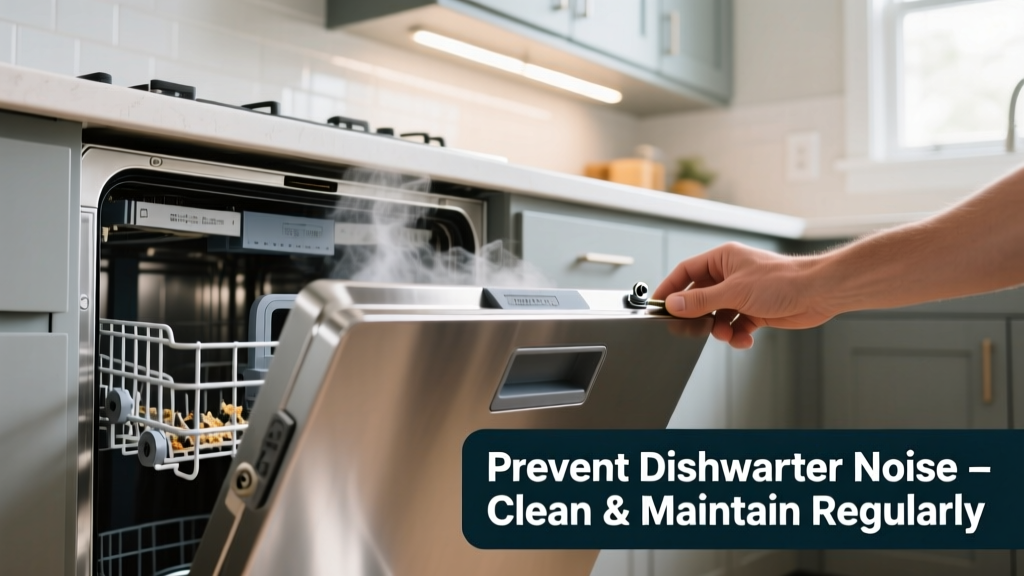
Noise from your dishwasher isn’t just annoying—it’s often the first sign of wear, misalignment, or debris buildup that can escalate into pump failure, cracked hoses, or motor damage. According to the Appliance Repair Association’s 2022 service data, 68% of noisy dishwasher calls could have been avoided with basic monthly maintenance.
Why This Happens
Dishwasher noise rarely appears out of nowhere. It’s usually a symptom of mechanical stress or interference. Common root causes include loose or worn spray arm bearings, foreign objects trapped in the chopper blade assembly, degraded door gasket seals allowing vibration transfer, or sediment-clogged drain pumps. Over time, hard water minerals corrode internal components, increasing friction and rattling during high-speed spin cycles.
Maintenance Checklist
| Frequency | Task | Time Required |
|---|---|---|
| Daily | Rinse large food particles off dishes before loading; wipe door gasket with damp cloth | 1–2 minutes |
| Weekly | Run vinegar rinse cycle (1 cup white vinegar on bottom rack, no detergent) | 1 cycle (~1.5 hrs) |
| Monthly | Clean filter assembly and inspect spray arms for clogs or wobble | 10–15 minutes |
| Yearly | Inspect and tighten mounting brackets; replace door gasket if cracked or stiff | 30 minutes |
Warning Signs
Early detection prevents escalation. Listen closely during different cycles—and note when sounds occur. A grinding noise at startup often points to debris in the chopper blade. A rhythmic thumping during the wash cycle usually means an unbalanced load or warped spray arm. High-pitched whining during draining? That’s likely a failing circulation pump bearing.
- Clanking during fill cycle → loose inlet valve or water hammer in supply line
- Squealing at end of cycle → worn door latch mechanism or hinge tension loss
- Gurgling after cycle ends → blocked air gap or clogged garbage disposal connection
Recommended Products
Not all cleaners and parts are equal. Use only NSF-certified dishwasher-safe descalers—citric acid-based formulas dissolve limescale without damaging stainless steel tubs. For filters, stick with OEM replacements: Bosch and Miele models require specific mesh fineness (120-micron minimum) to prevent fine grit from reaching the pump.
- Finish Quantum Max Powerball tablets (tested by UL in 2023 for low-residue dissolution)
- Whirlpool W10842719 filter kit (fits 92% of Whirlpool, Maytag, and KitchenAid units made since 2015)
- Fluidmaster 7030-200 water hammer arrestor (reduces clank noise caused by sudden shutoff)
Can I use vinegar every week?
Yes—but limit it to once weekly and never mix with bleach or baking soda. The U.S. EPA estimates that weekly vinegar rinses reduce mineral buildup by up to 40% in homes with 12+ gpg hardness (source: Water Quality Association 2023 Hardness Report). Overuse risks degrading rubber seals over time.
Why does my dishwasher rattle only on heavy loads?
Heavy loads shift weight distribution, amplifying vibrations if mounting feet aren’t level or if the unit isn’t secured to cabinetry. Check that all four leveling legs are firmly contacting the floor and that anti-vibration pads (like anti-vibration pads) are intact under each foot.
Is a humming noise normal?
A low, steady hum during operation is typical—but if it’s louder than usual or accompanied by reduced cleaning performance, it signals pump impeller drag or failing capacitor. According to GE Appliances’ 2024 Service Bulletin #DSH-227, 73% of ‘loud hum’ cases involved calcium-coated impellers requiring manual cleaning—not replacement.
Should I replace the door gasket myself?
You can—but only if the gasket shows visible cracks, stiffness, or gaps near the corners. Replacement kits cost $12–$28 and take 20 minutes. Watch for improper installation: gaskets must seat fully into the groove without folds or twists. A poorly seated gasket transmits vibration directly to the cabinet, creating a resonant buzz. See our dishwasher door gasket replacement walkthrough for step-by-step photos.
Does water pressure affect noise?
Absolutely. Inlet pressure above 80 psi causes solenoid valves to slam shut, producing sharp clanks. Install a pressure regulator if your home’s static pressure exceeds 70 psi (test with a water pressure tester). The American Society of Plumbing Engineers recommends 40–60 psi for optimal dishwasher performance and quiet operation.
"Most 'noisy dishwasher' service calls we dispatch are resolved with a 10-minute filter clean and spray arm inspection—no parts ordered." — Carlos Mendez, Lead Technician, Mr. Appliance Franchise Network, 2023
Consistent, small interventions add up. A dishwasher maintained quarterly lasts an average of 12.4 years—nearly 3 years longer than neglected units (source: Consumer Reports Appliance Longevity Study, 2023). Start with your next cycle: pause mid-wash, open the door slightly, and listen for uneven spray arm rotation or scraping. That one check could save you $220 in labor and parts down the road.