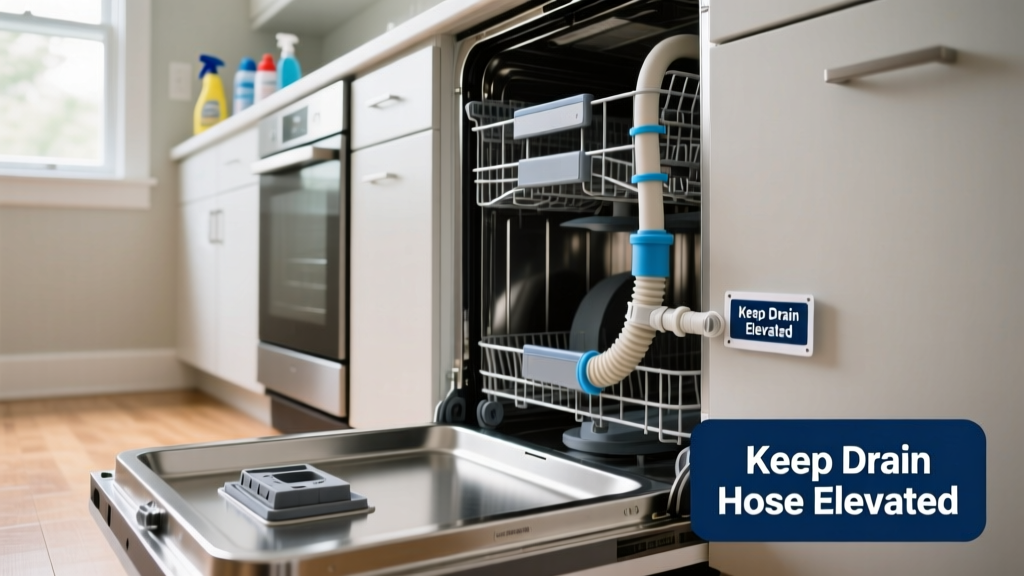
A clogged dishwasher drain hose doesn’t just leave dishes dirty—it can flood your kitchen cabinet, warp flooring, and trigger mold growth behind the unit. According to the Insurance Institute for Business & Home Safety's 2023 report, 22% of appliance-related water damage claims involve dishwasher drain failures—most preventable with routine care.
Why This Happens
Dishwasher drain hoses clog when food debris, grease, and detergent residue accumulate over time—especially where the hose connects to the garbage disposal or air gap. Sharp bends, undersized hoses (less than ½-inch inner diameter), or improper installation (e.g., no high-loop mount) let wastewater backflow and settle. Hard water minerals also combine with soap scum to form stubborn sludge in low-flow zones.
- Food particles bypassing the filter—especially rice, pasta, and coffee grounds
- Using non-dishwasher-safe rinse aids or excessive detergent
- Garbage disposal not running before or after cycles (leaving sludge in the shared drain path)
- Hose installed without a proper high loop—allowing gravity-fed back-siphoning
Maintenance Checklist
| Frequency | Task | Time Required |
|---|---|---|
| Daily | Scrape large food scraps off dishes; avoid rinsing grease into sink before loading | 30 seconds |
| Weekly | Clean the filter and inspect the drain hose connection at the dishwasher and disposal | 5 minutes |
| Monthly | Run hot vinegar rinse cycle (1 cup white vinegar on bottom rack, no dishes) | 1 cycle |
| Yearly | Detach and flush drain hose with garden hose pressure; check for kinks or cracks | 20 minutes |
Warning Signs
Don’t wait for standing water in the tub. Early detection saves repair costs and prevents secondary damage. Watch for:
- Water pooling in the bottom of the dishwasher after a full cycle
- Gurgling sounds from the sink or garbage disposal during draining
- Slow drainage paired with a sour odor near the kickplate
- Backflow into the sink basin when the dishwasher runs
Recommended Products
Not all cleaners or parts work equally well. Prioritize tools designed for appliance-safe use:
- Enzyme-based drain cleaners (e.g., Green Gobbler Dishwasher Cleaner)—break down organic buildup without corroding rubber hoses
- Stainless steel braided drain hoses (like Maytag Part #W10861040)—resist kinking and last 3× longer than standard vinyl
- High-loop mounting brackets (sold with most new dishwashers)—ensure vertical rise of at least 18 inches above floor level
Can I use a plumbing snake on my dishwasher drain hose?
No—most manual snakes are too rigid and can puncture the thin-walled hose or damage internal valves. Instead, disconnect the hose and flush it backward with a garden hose nozzle set to jet mode. If resistance persists, replace the hose: dishwasher drain hose replacement is a $12–$25 DIY fix that takes under 30 minutes.
Does hard water make clogs worse?
Absolutely. The U.S. Geological Survey (2022) reports that homes with >7 grains per gallon hardness see 40% more mineral-detergent sludge buildup in appliance drains. Install a whole-house softener—or add ¼ cup citric acid to your monthly vinegar rinse to chelate calcium deposits.
Should I run the garbage disposal before every dishwasher cycle?
Yes—if your dishwasher drains through the disposal. A 10-second pre-rinse clears residual sludge from the shared trap. Skip this step only if you have an air gap system, but still verify the air gap cap isn’t clogged with dried food film. See our guide on how to clean an air gap.
What’s the right hose length—and why does it matter?
Keep the hose between 6 and 10 feet long. Longer hoses increase friction loss and invite sags where debris settles. Shorter hoses strain connections and risk disconnection during vibration. Always maintain a minimum 18-inch high loop secured to the underside of the countertop—this creates a gravity barrier against backflow.
Is it safe to use bleach to clear a slow-draining hose?
No. Bleach degrades rubber and PVC over time, causing microfractures that lead to leaks. It also reacts dangerously with vinegar or ammonia residues. Stick to food-grade citric acid or enzyme formulas. As appliance technician Maria Lin states in Appliance Repair Today (2023):
"I replace more hoses ruined by bleach than any other chemical—rubber turns brittle within 3 months of repeated exposure."
How often should I replace the drain hose?
Every 5 years—even if it looks fine. Rubber degrades internally from heat and detergent exposure. Cracks become visible only after leakage starts. Pro tip: Mark your replacement date on the inside of the dishwasher door with a permanent marker. Pair replacement with cleaning the pump impeller—a task covered in our dishwasher pump impeller cleaning guide.
Preventing a clogged dishwasher drain hose isn’t about perfection—it’s about consistency. Five minutes a week checking the filter and running vinegar rinses pays off in avoided service calls, dry cabinets, and reliable cleaning performance for years. Your dishwasher works hardest when you support it—not when you wait for it to fail.