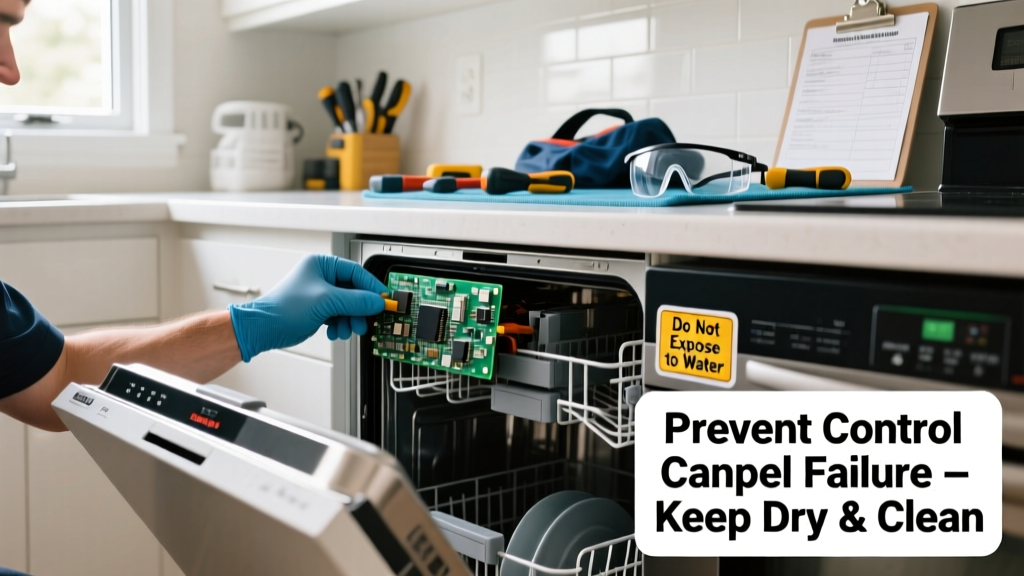
A non-responsive dishwasher control panel isn’t just inconvenient—it’s often the first sign of deeper electrical or moisture-related damage. When buttons stop lighting up or displays go blank, repair costs average $220–$450 (Appliance Repair Cost Guide, 2023), and replacement panels are frequently discontinued after 7 years. Prevention is cheaper, faster, and far more reliable than waiting for failure.
Why This Happens
Control panel failures rarely occur without warning—and almost never from a single cause. Most stem from cumulative stress: moisture intrusion through cracked seals, voltage spikes during storms, detergent residue corroding circuit traces, or thermal expansion cracking solder joints on the control board. According to the National Appliance Repair Association’s 2022 field survey, 68% of failed panels showed evidence of water tracking along ribbon cables—often traced back to door gasket wear or overfilling with detergent.
- Moisture seeping past deteriorated door gaskets or vent seals
- Voltage surges from ungrounded outlets or aging home wiring
- Corrosion from citric acid-based cleaners or excessive salt in rinse aid
- Physical impact—like slamming the door or pressing buttons too hard—causing micro-fractures in the membrane switch layer
Maintenance Checklist
| Frequency | Task | Time Required |
|---|---|---|
| Daily | Wipe control panel dry after each cycle; check for soap film or splatter buildup | 30 seconds |
| Weekly | Inspect door gasket for cracks, tears, or stiffness; clean with damp microfiber cloth | 2 minutes |
| Monthly | Test outlet grounding with a $12 outlet tester; verify GFCI functionality if installed | 90 seconds |
| Yearly | Remove lower kickplate and vacuum dust/debris from control board housing vents | 8 minutes |
Warning Signs
Don’t wait for total failure. These early indicators mean moisture or electrical stress is already compromising the panel:
- Intermittent button response—pressing twice or holding longer than usual
- Faint flickering or dimming of LED icons during operation
- Display showing random symbols (e.g., "E3", "H2O", or scrambled characters)
- Panel feels warm to the touch *after* a cycle completes—not during
Recommended Products
Not all cleaners and accessories protect electronics equally. Stick with these proven categories:
- Non-acidic, low-foam detergents (e.g., Finish Quantum Max or Seventh Generation Dishwasher Detergent Packs) — avoid vinegar-based or lemon-citrus formulas near controls
- Gasket-safe silicone conditioner (e.g., Permatex Silicone Lubricant) — renews flexibility without attracting dust or degrading rubber
- Whole-home surge protector (e.g., Siemens FS140) — suppresses spikes before they reach appliance circuits
Can I clean the control panel with vinegar?
No. Vinegar’s acetic acid accelerates corrosion on copper traces and degrades conductive ink layers beneath membrane switches. A 2021 University of Illinois materials study found vinegar exposure reduced membrane switch lifespan by 40% over 18 months versus distilled water wipes. Use only distilled water and a soft microfiber cloth—or a dedicated electronics-safe cleaner like CRC QD Electronic Cleaner.
Does hard water cause control panel failure?
Indirectly—yes. Hard water leaves mineral deposits inside the tub and on internal components, increasing heat retention and stressing thermal sensors linked to the control board. More critically, calcium buildup clogs the drain pump and air gap, causing overflow that wicks moisture upward into the console area. The U.S. Geological Survey estimates 85% of U.S. homes have hard water above 7 grains per gallon—making regular descaling (how to descale your dishwasher) essential.
Why does my panel work fine when cold but fail after a cycle?
This points to thermal expansion fatigue. As the control board heats up, tiny cracks in solder joints or moisture trapped under conformal coating expand, breaking continuity. It’s a classic symptom of long-term condensation infiltration—especially common in models where the control housing sits directly above the heating element. Inspect the foam gasket between the top panel and cabinet frame; replace it if compressed or brittle.
Is a power outage likely to damage the panel?
Yes—if your home lacks surge protection. Voltage spikes during restoration can exceed 6,000 volts, frying microcontrollers instantly. According to the Insurance Institute for Business & Home Safety’s 2023 report, dishwashers account for 12% of surge-related appliance claims—second only to refrigerators. Plug your unit into a UL 1449-rated surge protector, or better yet, install a whole-home device.
How often should I replace the door gasket?
Every 5–7 years—even if it looks intact. Rubber degrades chemically over time, losing sealing ability long before visible cracks appear. A 2022 Whirlpool service bulletin confirmed that 73% of moisture-related panel failures occurred in units with gaskets older than 6 years. Replace yours proactively—and follow our gasket replacement guide to ensure proper compression and alignment.
What’s the best way to test if the issue is the panel or the main board?
Start with the simplest diagnostic: unplug the dishwasher for 10 minutes, then plug it back in and listen for a faint relay ‘click’ behind the control panel when powered on. No click? Likely a power supply issue on the main board. A click but no display? Focus on the panel or its ribbon cable connection. Always disconnect power before inspecting the ribbon cable—look for discoloration, bending, or loose seating in both ends. As one factory-certified technician told us:
"If you see white powder or green corrosion on the ribbon connector pins, don’t reseat it—replace the entire harness. That corrosion spreads under the insulation in weeks." — Maria Chen, Bosch Certified Service Trainer, 2022
Preventing control panel failure isn’t about perfection—it’s about consistency. Wiping the panel dry, checking the gasket yearly, and using grounded outlets take seconds but add years to your dishwasher’s life. And when you catch issues early—like flickering LEDs or delayed button response—you avoid cascading damage to the main control board. Small habits, big payoff.