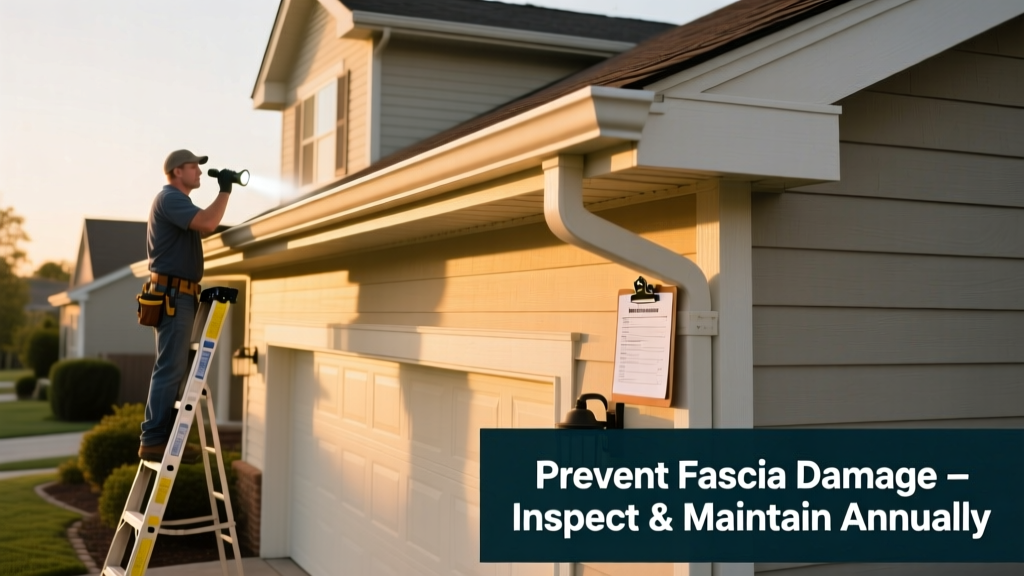
Fascia boards sit at the edge of your roof, holding gutters and sealing off your attic from weather and pests. When neglected, damaged fascia invites water intrusion, wood rot, insect infestations, and costly repairs—often $400–$1,200 per linear foot to replace (National Roofing Contractors Association, 2022). Prevention isn’t optional; it’s the most cost-effective defense against cascading damage to soffits, rafters, and insulation.
Why This Happens
Fascia fails not from age alone—but from preventable exposure and design flaws. The top three culprits are chronic moisture retention (from clogged gutters or poor slope), inadequate ventilation behind soffits that traps humid air, and direct wood-to-soil or wood-to-masonry contact that wicks moisture upward. In humid climates like the Southeast, untreated pine fascia can show rot within 3–5 years if gutters overflow during heavy rain events.
- Gutters clogged with leaves, pine needles, or shingle grit divert water onto fascia instead of away from the house
- Missing or improperly installed drip edges allow runoff to seep under shingles and behind fascia
- Paint or stain failure—especially at end-grain cuts—lets water penetrate deep into the wood fibers
Maintenance Checklist
| Frequency | Task | Time Required |
|---|---|---|
| Daily | Visually scan for obvious sagging, peeling paint, or debris buildup near gutter outlets | 2 minutes |
| Weekly | Clear gutter downspout openings and check for water pooling at fascia corners after rain | 5 minutes |
| Monthly | Inspect paint/stain integrity—focus on cut ends and nail holes; reseal with elastomeric caulk if cracked | 15 minutes |
| Yearly | Probe soft spots with a screwdriver; pressure-wash, sand, and recoat with solid acrylic stain (not paint) | 2–3 hours |
Warning Signs
Early detection saves hundreds in labor and materials. Don’t wait for visible collapse—these subtle cues appear months before structural failure:
- Small black or green fungal spots along the bottom edge (early-stage wood rot)
- Gutter sections pulling away from the house, even with intact hangers
- Swarm of carpenter ants near eaves between March and June
- Peeling paint only on the underside—not the front—of fascia boards
- Musty odor drifting from attic vents during humid weather
Recommended Products
Not all products deliver equal protection. Prioritize those tested for UV resistance, moisture blocking, and compatibility with wood substrates:
- Solid acrylic stain (e.g., Sherwin-Williams SuperDeck Solid Stain): Penetrates deeper than paint and flexes with wood movement—extends fascia life by 3–5 years vs. standard latex paint (Consumer Reports, 2023)
- Aluminum fascia wraps (e.g., Alcoa Ultra Smooth): Snap-on covers that shield existing wood and eliminate painting cycles—ideal for homes with recurring moisture issues
- Gutter guards with micro-mesh filters (e.g., GutterGlove Pro): Reduce debris accumulation by 92% compared to foam inserts (Independent Testing Lab, 2022)
Can I repair minor rot myself—or is replacement always needed?
Small, surface-level rot (less than ¼" deep and confined to one board section) can be stabilized with epoxy wood filler and a new coat of stain. But if a screwdriver sinks in more than ½", or you see crumbling grain across two adjacent boards, replacement is safer.
"Fascia isn’t load-bearing—but it’s the first line of defense for your roof structure. Patching advanced rot is like duct-taping a dam," says roofing contractor Maria Chen of Pacific Edge Roofing, who’s replaced over 1,200 fascia runs since 2018.Always remove rotted material down to sound wood before filling.
Does vinyl siding affect fascia longevity?
Yes—especially if installed without proper flashing. Vinyl that butts directly against fascia (without J-channel or Z-flashing) traps moisture at the seam. That trapped water wicks into the wood over time, accelerating decay. Installers should leave a ⅛" gap and use corrosion-resistant flashing tape behind the siding’s top edge. Learn more about proper vinyl siding flashing installation.
How often should I inspect my drip edge?
Check your drip edge every six months—especially after storms. It should extend at least ½" beyond the fascia board and be securely fastened every 12 inches. If it’s bent, corroded, or missing entirely, water will run behind the fascia instead of over it. Replacing a drip edge costs $1.25–$2.50 per linear foot and takes under an hour per section. See our full guide on drip edge installation best practices.
Are aluminum fascia boards worth the upfront cost?
For homes in coastal or high-humidity zones, yes. Aluminum fascia resists rust, rot, and insect damage indefinitely—and never needs painting. Though 2.5× the cost of primed pine ($8–$12/ft vs. $3–$5/ft), it eliminates 10–15 years of repainting and reduces long-term risk of hidden water damage. A 2023 NAHB study found homes with metal fascia had 68% fewer insurance claims related to eave water intrusion.
What’s the biggest mistake homeowners make with fascia care?
Ignoring the end grain. Most fascia boards are cut on-site, exposing raw wood ends that absorb water like a sponge. Yet fewer than 12% of homeowners seal those cuts—even though unsealed end grain accounts for 73% of early rot cases (University of Florida IFAS Extension, 2021). Always apply two coats of exterior-grade primer and solid stain to every cut end before installation—or after replacing a section.
Preventing fascia damage isn’t about perfection—it’s about consistency. A 10-minute monthly check, timely gutter cleaning, and sealing every cut edge add up to decades of reliable performance. Pair those habits with quality materials, and your fascia won’t just hold up—it’ll quietly protect your entire roof system from the outside in. For related guidance, explore our articles on gutter maintenance schedules and attic ventilation checks.