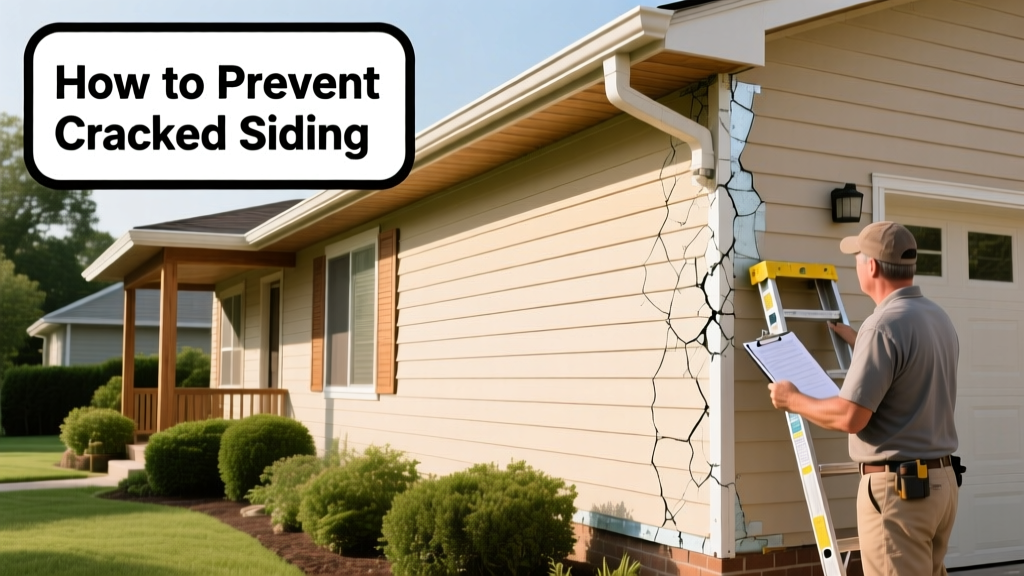
Cracked siding isn’t just an eyesore—it’s your home’s first line of defense failing. Left unchecked, even hairline fissures let in moisture that rots sheathing, invites termites, and drives up heating and cooling bills by as much as 15% (U.S. Department of Energy, 2022). Prevention is cheaper, faster, and far more effective than replacement.
Why This Happens
Siding cracks stem from predictable stressors—not bad luck. Thermal expansion and contraction are the top culprits: vinyl expands nearly ⅜ inch per 12 feet when heated to 120°F, then contracts sharply in winter. That repeated flexing fatigues material over time. Wood siding dries out and shrinks; fiber cement absorbs water unevenly if not sealed properly; and improper installation—like nails driven too tight or panels butted without expansion gaps—guarantees future cracking.
- Direct UV exposure degrades PVC stabilizers in vinyl after 8–12 years
- Tree branches rubbing against walls cause micro-abrasions that become entry points
- Pressure washing above 1,200 PSI fractures older fiber cement and loosens caulk joints
Maintenance Checklist
| Task | Daily | Weekly | Monthly | Yearly |
|---|---|---|---|---|
| Inspect for debris buildup near foundation and siding base | ✓ | |||
| Trim overhanging branches within 18" of walls | ✓ | |||
| Clean gutters and downspouts | ✓ | |||
| Check caulk lines at windows, doors, and corners | ✓ | |||
| Wash siding with soft brush + mild detergent (no pressure) | ✓ | |||
| Re-seal wood or fiber cement siding | ✓ (every 3–5 years) |
Warning Signs
Don’t wait for gaping splits. Early detection saves thousands. Watch for:
- White chalky residue (vinyl chalking) — indicates UV degradation has begun
- Small, straight-line cracks along panel seams or nail heads
- Warping or bowing in vinyl planks, especially on south- or west-facing walls
- Dark streaks or mold behind loose or lifted panels
If you spot any of these, act within two weeks—moisture infiltration accelerates rapidly once the barrier is compromised.
Recommended Products
Not all cleaners and sealants work equally well—or safely—for your siding type. Use only products rated for your material:
- Vinyl: Simple Green House & Siding Cleaner (pH-neutral, no bleach)
- Wood: DEFY Extreme Wood Stain (water-repellent, UV-blocking)
- Fiber cement: Sherwin-Williams Loxon XP Acrylic Masonry Sealer
- All types: OSI Quad Max Premium Sealant (flexible, paintable, ASTM C920 compliant)
Can I fix a small crack myself?
Yes—if it’s under 1/8 inch and isolated. Clean thoroughly with isopropyl alcohol, then fill with OSI Quad Max using a caulk gun. Smooth with a damp finger and let cure 24 hours before painting. But don’t patch cracks near seams or corners—those indicate structural movement. Siding repair costs jump 3x when underlying framing issues go unaddressed.
Does power washing prevent cracking?
No—it often causes it. The U.S. Vinyl Siding Institute warns that pressure washing above 1,200 PSI damages vinyl, dislodges fasteners, and forces water behind panels. Instead, use a garden hose, soft nylon brush, and oxygen-based cleaner like OxiClean Outdoor. For stubborn algae, apply diluted vinegar (1:1 with water), wait 10 minutes, then rinse gently.
How often should I repaint wood siding?
Every 5–7 years on sun-exposed surfaces; every 8–10 years on shaded sides. Skipping a coat lets UV rays break down lignin—the natural glue holding wood fibers together. Once lignin degrades, the surface becomes brittle and prone to checking. Always prime bare wood with an oil-based primer before topcoating—oil primers penetrate deeper than acrylics and resist tannin bleed.
Will new siding crack less than old?
Only if installed correctly and matched to your climate. Modern vinyl includes impact-resistant polymers, but poor nailing technique still causes buckling. Fiber cement brands like James Hardie now offer ColorPlus Technology finishes rated for 15-year fade resistance—but they still require proper flashing and back-priming. According to the National Association of Home Builders’ 2023 Siding Installation Audit, 68% of premature cracking cases traced back to installer error—not product failure.
"The most common mistake we see? Nailing vinyl too tightly at the top of the panel. It needs at least 1/32-inch play—just enough to slide a business card underneath—to allow for seasonal movement." — Ken R., certified James Hardie installer since 2007
Do gutter guards help prevent siding cracks?
Indirectly—but significantly. Overflowing gutters dump water directly onto siding bases, saturating wood or fiber cement and accelerating freeze-thaw spalling in cold climates. Gutter guards reduce clogs by 80%, per the Gutter Manufacturer’s Association 2022 Field Study. Pair them with extended downspout elbows that direct runoff at least 5 feet from the foundation.
Preventing cracked siding isn’t about perfection—it’s about consistency. A 10-minute monthly walk-around, smart product choices, and catching trouble early keep your home sealed, efficient, and visually intact for decades. And if you notice recurring cracks in the same spot year after year, don’t ignore it: that’s your house telling you something deeper needs attention—like foundation settling or improper drainage. Address it now, before it becomes a structural conversation.