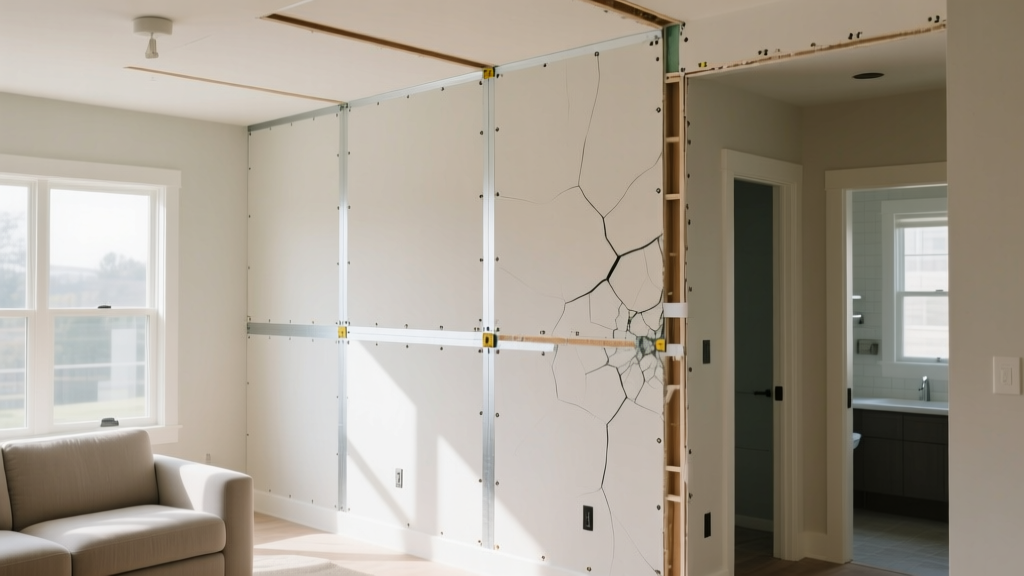
Cracked drywall isn’t just unsightly—it’s often the first visible sign of deeper issues: shifting foundations, moisture intrusion, or seasonal stress on framing. Left unaddressed, hairline fissures can widen into structural red flags, triggering insurance concerns and repair costs averaging $350–$900 per wall (National Association of Home Builders, 2022). Prevention is cheaper, quieter, and far less disruptive than patching and repainting every six months.
Why This Happens
Drywall cracks rarely appear out of nowhere. They’re symptoms—not causes—of underlying movement or environmental strain. The three most common culprits are thermal expansion/contraction of framing lumber, foundation settlement (even as little as 1/8 inch), and improper installation techniques like over-tightened screws or insufficient fastener spacing.
- Wood framing shrinks up to 1% in width as indoor humidity drops below 30%—enough to pull seams apart
- Unseasoned lumber used during construction can continue shrinking for 12–18 months post-build
- Foundation movement exceeding ¼ inch over 10 feet triggers diagonal cracks near corners and windows
Maintenance Checklist
| Frequency | Action | Notes |
|---|---|---|
| Daily | Monitor indoor humidity with a hygrometer | Aim for 35–55% year-round; use exhaust fans in bathrooms/kitchens |
| Weekly | Inspect interior corners and ceiling-wall joints for new hairline cracks | Use a flashlight at a low angle to catch subtle surface breaks |
| Monthly | Check door and window operation for binding or gaps | Sticking doors may signal frame distortion pushing on drywall |
| Yearly | Hire a certified home inspector to assess foundation movement and framing condition | Especially critical for homes older than 10 years or built on expansive clay soils |
Warning Signs
Early detection stops small problems from becoming big ones. Don’t wait until you see spiderwebbing or crumbling edges—act when you notice these subtler clues:
- Fine vertical cracks along stud lines (especially above outlets or switches)
- Cracks that widen seasonally—worse in winter, narrower in summer
- Cracks that follow a straight path across multiple rooms on the same floor
- Discoloration or soft spots adjacent to cracks (indicates moisture behind the wall)
Recommended Products
Not all drywall products and accessories are created equal. Prioritize performance over price—especially for high-risk areas like basements, garages, or exterior walls.
- Flexible joint compound: USG Sheetrock Brand All-Purpose Joint Compound with added polymer flexibility resists micro-fracturing better than standard compounds
- Mold-resistant drywall: National Gypsum Gold Bond XP for moisture-prone zones (bathrooms, laundry rooms, basements)
- Expansion-friendly fasteners: Simpson Strong-Tie SDWS screws with self-drilling tips and engineered shank design reduce stress on gypsum panels
Can humidity control really prevent cracks?
Absolutely. The U.S. EPA estimates that maintaining indoor relative humidity between 35% and 55% reduces wood-frame dimensional change by up to 60%. A $40 digital hygrometer and a $120 whole-house humidifier (or dehumidifier, depending on climate) pay for themselves in avoided drywall repairs within two seasons.
Should I caulk drywall seams to prevent cracking?
No—caulking hides the problem and traps moisture. Instead, use properly taped and finished seams with fiberglass mesh tape and setting-type joint compound for high-stress areas. Caulk belongs only at the baseboard-to-floor transition or where drywall meets trim—not over seams.
Do new homes need drywall crack prevention?
Yes—even brand-new builds settle. According to the Foundation Repair Association’s 2023 field survey, 68% of homes under 3 years old show at least one drywall crack linked to normal post-construction settling. Waiting 12 months before final touch-ups is standard industry practice for good reason.
Is it safe to ignore hairline cracks under 1/16 inch?
Only if they’re isolated, non-widening, and not near structural openings. But
"A crack wider than a credit card edge is never 'just cosmetic'—it's telling you something moved, and it will move again," says structural engineer Maria Chen, P.E., in her Residential Wall Systems Handbook (2021).Track them with masking tape markers and photograph monthly. If length increases >1/8 inch in 90 days, investigate framing or foundation issues.
What’s the best time of year to inspect for drywall cracks?
Mid-February and mid-August. These points capture peak seasonal stress: winter’s low humidity and frozen ground heave, plus summer’s high heat and soil shrinkage. That’s why the Seasonal Home Maintenance Checklist includes drywall inspection in both windows.
Preventing cracked drywall isn’t about perfection—it’s about consistency. Monitor humidity, watch for movement clues, and treat your walls like living parts of your home’s structure, not static finishes. When you catch shifts early, you avoid cascading damage: peeling paint, compromised insulation, even mold growth behind the board. Start today with a humidity reading and a flashlight walk-through. Your future self—and your drywall—will thank you.