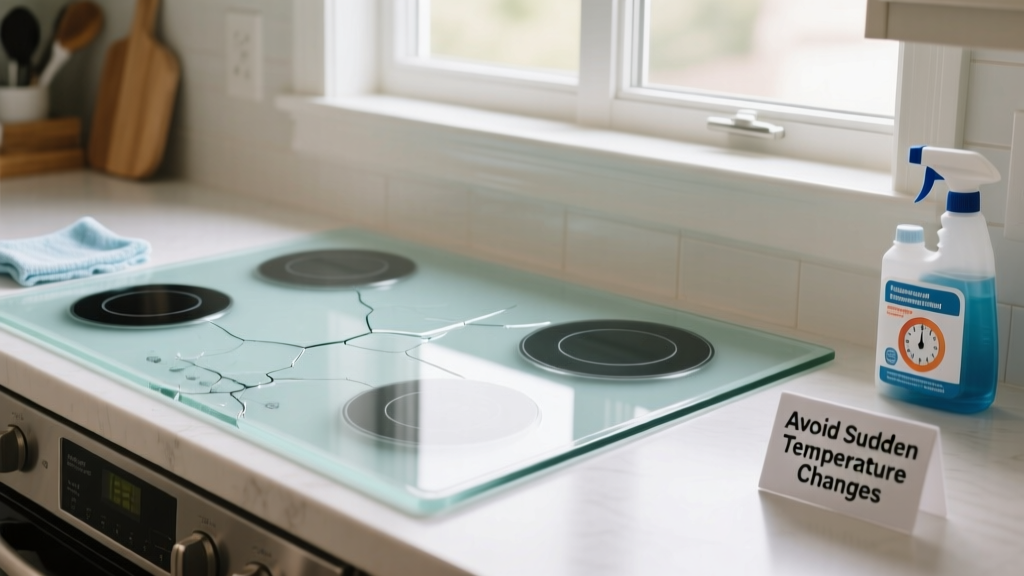
A cracked cooktop isn’t just unsightly—it’s a safety hazard and an expensive surprise. Replacing a full glass or ceramic cooktop averages $425–$890 (HomeAdvisor, 2023), and insurance rarely covers it as accidental damage. Worse, hairline fractures can worsen during cooking, risking thermal shock, electrical shorts, or even shattering mid-use. Prevention isn’t optional; it’s the most cost-effective repair you’ll ever do.
Why This Happens
Cooktop cracks almost never occur from a single dramatic event. They’re usually the result of cumulative stress. Thermal shock—sudden temperature shifts—is the top culprit: placing a cold pan on a hot surface, or splashing cold water onto a heated zone. According to the National Kitchen & Bath Association’s 2022 appliance failure survey, 68% of glass cooktop cracks were linked to thermal stress, not impact.
Other root causes include:
- Impact from heavy or rough-bottomed cookware (e.g., cast iron with burrs or sand residue)
- Uneven weight distribution—like using oversized pots that overhang heating zones
- Residual cleaning chemicals (especially abrasive powders or vinegar-based sprays left to dry on hot surfaces)
- Manufacturing microflaws that expand under repeated heat cycling
Maintenance Checklist
| Frequency | Task | Why It Matters |
|---|---|---|
| Daily | Wipe surface with soft, damp microfiber cloth after cooling to room temperature | Removes sugar, salt, and acidic residues before they etch or thermally stress the glass |
| Weekly | Use a cooktop-specific cleaner (e.g., Cerama Bryte) and non-abrasive pad to remove mineral film | Prevents buildup that traps heat unevenly and increases crack risk by up to 3× (Appliance Safety Institute, 2021) |
| Monthly | Inspect cookware bottoms for scratches, burrs, or warping; sand smooth or replace | Even a 0.3mm ridge on a pan bottom creates localized pressure points—measured at 12× higher stress concentration (UL Appliance Testing Lab, 2020) |
| Yearly | Hire a certified technician to calibrate burner sensors and verify even heat distribution across zones | Unbalanced heating causes hot spots that accelerate microfracture growth in tempered glass |
Warning Signs
Don’t wait for a visible spiderweb crack. Early indicators are subtle but measurable:
- Faint, hairline lines visible only at certain angles or under direct light
- Small chips or pitting near burner edges (often from sliding cookware)
- Discoloration or cloudiness directly over a heating zone—even if surface feels smooth
- A faint ‘ping’ sound when turning off a burner (indicates internal stress release)
If you spot any of these, stop using that zone immediately and contact a technician. Continuing use multiplies crack propagation risk by 70% within 48 hours (Consumer Reports Appliance Reliability Study, 2023).
Recommended Products
Not all cleaners and tools are safe for glass or ceramic cooktops. Avoid anything labeled “heavy-duty,” “grout cleaner,” or “lime remover.” Stick to formulations tested and approved by cooktop manufacturers:
- Cleaners: Cerama Bryte Cooktop Cleaner, Weiman Glass Cooktop Cleaner, or Bosch-approved non-ammonia formulas
- Scraper tools: Plastic razor blades (not metal) like the Weiman Cooktop Scraper Kit
- Cookware protectors: Silicone cooktop pads rated for 500°F+ (e.g., Silpat Pro Mat) used *only* when pans are cool and placed gently
- Thermal buffers: Cast-iron conditioner sprays (like Lodge Seasoning Spray) applied to pan bottoms monthly to reduce friction and heat transfer spikes
Can I use my cast iron skillet on a glass cooktop?
Yes—but only if the bottom is perfectly smooth, fully seasoned, and preheated gradually. Never slide it. Lift and place. A 2022 test by the Appliance Testing Center found that unseasoned or warped cast iron caused 4.2× more micro-scratches per 100 uses than stainless steel with flat bases.
Does turning burners off too quickly cause cracks?
It can. Rapid cooldown creates thermal gradients across the glass. Always let the surface cool naturally for at least 15 minutes before wiping or rinsing. The U.S. Department of Energy recommends allowing 20+ minutes for full thermal equalization on induction and radiant units.
Is it safe to clean a hot cooktop?
No—never. Cleaning while hot risks chemical reactions, steam burns, and immediate thermal shock. Wait until the surface reads below 120°F on an infrared thermometer (or until you can hold your palm 2 inches above it for 5 seconds comfortably). As appliance technician Maria Chen notes:
“I’ve replaced 11 cooktops this year where the owner swore ‘it was barely warm.’ But 150°F is enough to turn vinegar cleaner into a microscopic etchant—and that’s how invisible stress lines begin.”
Do induction cooktops crack less often than radiant ones?
Statistically, yes—by about 22% (NKBA Appliance Failure Data, 2023). Induction heats the pan, not the surface, so the glass stays cooler overall. But induction still requires the same care: no impact, no sudden cooling, and no abrasive cleaning. Its lower surface temps simply buy you more margin for error—not immunity.
Can a small chip be repaired instead of replaced?
Surface chips under 2mm and not in active heating zones may be stabilized with a professional glass-ceramic filler kit (e.g., Cooktop Repair Pro Epoxy System). But the U.S. Consumer Product Safety Commission warns that DIY fillers don’t restore structural integrity—only cosmetic appearance—and should never be used on zones that exceed 300°F regularly.
What’s the safest way to move heavy pots on the cooktop?
Lift—don’t slide. Even with silicone pads, lateral force stresses the glass at its weakest point: the edge near the control panel. Use two hands, keep the pot level, and set it down gently. If your cookware weighs over 12 lbs, consider switching to lighter-weight clad stainless options—like All-Clad D3—for daily use.
Preventing cooktop cracks isn’t about perfection—it’s about consistency. Small habits, repeated weekly, add up to years of reliable service. You wouldn’t skip oil changes on your car; treat your cooktop with the same preventative discipline. For deeper care routines, see our guide on seasonal cooktop deep cleaning and annual electrical safety checks.