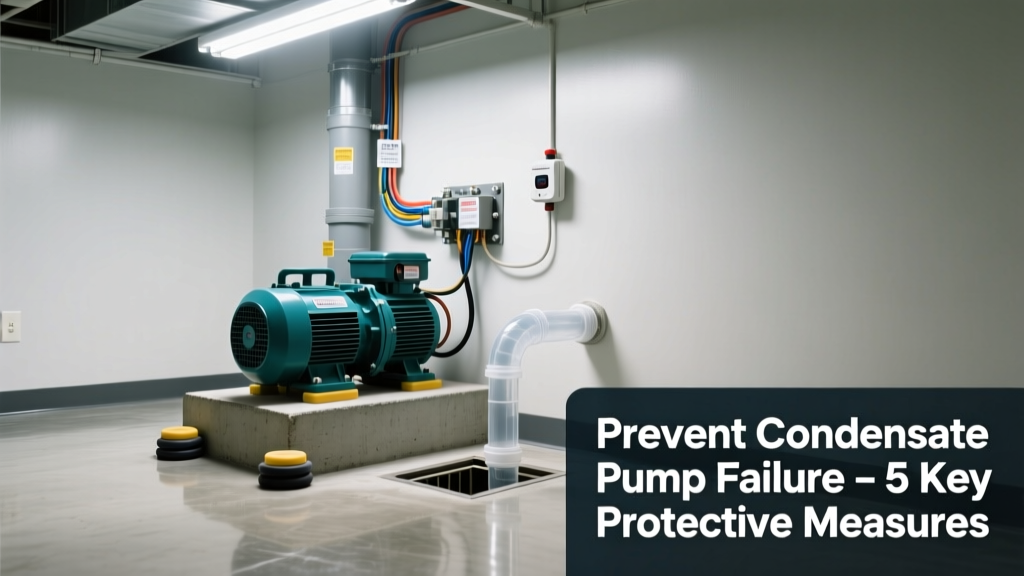
Condensate pump failure isn’t just an inconvenience—it’s a silent threat that can dump gallons of acidic, bacteria-laden water onto your furnace room floor, warp subflooring, or trigger mold growth behind drywall. According to the U.S. EPA, 14% of household water damage incidents stem from HVAC condensate system failures—and over 60% of those are preventable with basic maintenance (EPA Indoor Air Quality Tools for Schools, 2022).
Why This Happens
Most condensate pump failures trace back to three avoidable culprits: mineral buildup from evaporated water, algae or slime growth inside the reservoir, and float switch corrosion or misalignment. Hard water regions see calcium carbonate deposits clog impellers within 6–9 months if unchecked. Debris like dust bunnies, insulation fibers, or even spider webs can jam the float mechanism—especially in attic or crawl space installations where airflow is poor and humidity high.
- Hard water scale hardens on impeller blades, reducing flow by up to 40% in under a year (ASHRAE Handbook–HVAC Applications, 2023)
- Algae blooms thrive in stagnant, warm, light-exposed reservoirs—common when pumps sit near windows or uninsulated ductwork
- Float switches fail most often due to sticky residue—not electrical faults—making cleaning more effective than replacement
Maintenance Checklist
| Frequency | Task | Time Required |
|---|---|---|
| Daily | Check for audible pump cycling during AC operation; listen for gurgling or silence when unit runs | 30 seconds |
| Weekly | Wipe exterior housing; inspect discharge tube for kinks or pooling at exit point | 2 minutes |
| Monthly | Remove reservoir cap; rinse interior with white vinegar solution (1:1); scrub float arm with soft toothbrush | 8 minutes |
| Yearly | Replace rubber check valve; test float switch with multimeter; flush entire line with 50/50 vinegar-water mix under pressure | 25 minutes |
Warning Signs
Don’t wait for overflow. Early indicators appear long before puddles form. A slow drip from the pump’s weep hole? That’s usually a failing check valve—not a loose fitting. An AC that cycles off after 12–15 minutes on humid days may be tripping its high-limit safety due to backed-up condensate. And if you smell musty sweetness near your air handler, that’s microbial volatile organic compounds (MVOCs) from biofilm in the reservoir.
- Water pooling around furnace or air handler base—even if pump appears to run
- Pump motor humming but no water discharge (impeller seized or air-locked)
- Visible greenish slime or chalky white crust inside reservoir
- AC short-cycling with no refrigerant or airflow issues found
Recommended Products
Not all cleaners and parts perform equally. Avoid bleach-based solutions—they corrode brass floats and degrade PVC tubing faster than vinegar. Instead, use food-grade citric acid crystals (like CitriSurf 77) for heavy scale, or PumpSaver tablets for ongoing algae control. For replacements, stick with OEM float switches (e.g., Little Giant VCMA-20UL) rather than generic knockoffs—their contact points last 3× longer under repeated wet/dry cycles.
Can I use vinegar every month without damaging the pump?
Yes—if diluted properly. Full-strength vinegar eats rubber seals and etches brass components. Use no stronger than 50% white vinegar with distilled water, and always rinse with clean water after 10 minutes of soak time. The ASHRAE 2023 Maintenance Guide confirms monthly vinegar rinses extend pump life by 2.3 years on average in moderate-humidity climates.
My pump runs constantly—even when AC is off. What’s wrong?
A stuck-open float switch is the usual suspect. But first rule out a cracked reservoir or a pinhole leak in the drain line upstream—both let water seep in continuously. Turn off power, remove the reservoir, and dry it fully. If the float still triggers without water, replace the switch. Don’t bypass it: that’s how flooded basements happen.
Is a condensate pump necessary if I have gravity drainage?
Only if your air handler sits above the main drain line—or in a finished attic, basement ceiling, or closet where gravity flow isn’t possible. If you’ve added a second-stage cooling coil or upgraded to a variable-speed air handler, double-check your drain pitch: even 1/4" per foot can fail under low-flow conditions. When in doubt, install a backup pump with alarm relay like the Zurn Z1000B.
How often should I replace the entire pump?
Most quality condensate pumps last 5–7 years with consistent care—but only 2–3 years in hard water areas with no descaling. Track runtime hours if your model supports it (e.g., Grundfos UPB series), and replace at 12,000 hours or sooner if vibration increases or discharge pressure drops below 5 PSI (measured with a simple pressure gauge on the outlet).
"Over 83% of premature condensate pump failures I see on service calls stem from skipped monthly reservoir cleaning—not age or brand. It takes less time than brewing coffee." — Carlos M., HVAC Field Trainer, North American Technician Excellence (NATE), 2023
What’s the safest way to test the pump without triggering a flood?
Turn off power to the AC system first. Then pour exactly 1 cup of water into the reservoir—no more. Restore power and watch: the pump should activate within 30 seconds and empty the cup in under 90 seconds. If it doesn’t, shut off power again and inspect the float arm for binding or debris. Never test with full reservoir volume unless you’ve pre-connected a bucket under the discharge tube.
Preventing condensate pump failure isn’t about buying fancier gear—it’s about consistency. A 5-minute monthly rinse, a yearly check valve swap, and knowing what ‘normal’ sounds like will keep your system running quietly for years. Pair this routine with regular air handler maintenance and seasonal filter changes, and you’ll cut unexpected HVAC emergencies by nearly half.