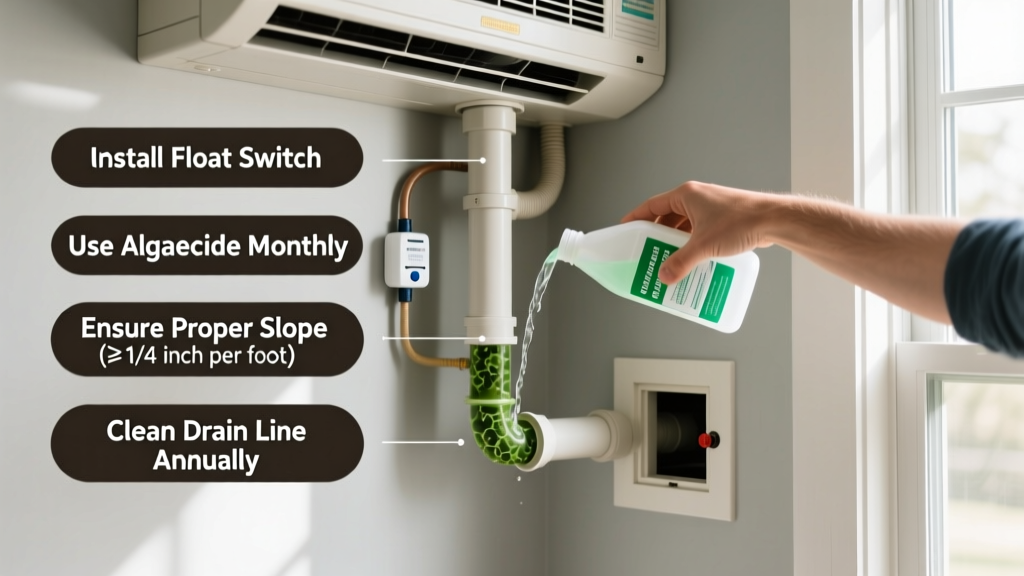
A clogged condensate line isn’t just an annoyance—it’s a silent threat to your HVAC system and home structure. When the line backs up, water overflows into your air handler, risking mold growth, electrical shorts, and ceiling damage. According to the U.S. EPA, 14% of household water damage claims stem from HVAC-related leaks—most traceable to neglected condensate lines.
Why This Happens
Condensate lines clog because they’re warm, dark, and damp—ideal breeding grounds for algae, mold, and bacterial slime. Dust, debris, and mineral deposits from evaporated water accumulate over time. Older homes with long, horizontal PVC runs (especially those lacking proper pitch) are especially vulnerable. In humid climates like Florida or the Gulf Coast, biofilm can form in as little as 3–4 weeks without intervention.
Maintenance Checklist
| Frequency | Task | Time Required |
|---|---|---|
| Daily | Verify drain pan is dry after AC runs for >15 minutes | 30 seconds |
| Weekly | Inspect visible line segment for discoloration or slime | 2 minutes |
| Monthly | Flush line with 1 cup white vinegar + 1 cup hot water | 5 minutes |
| Yearly | Professional inspection, camera check, and enzymatic treatment | 45 minutes |
Warning Signs
Early detection saves hundreds in service calls. Don’t wait for water on the floor—watch for these red flags:
- AC shuts off unexpectedly during humid weather (float switch activation)
- Musty odor near the air handler or return vent
- Visible greenish-black slime at the drain outlet or pan edge
- Water dripping from ceiling vents or around furnace access panels
Recommended Products
Not all cleaners work equally—and some (like bleach) corrode copper components or degrade PVC over time. Stick with HVAC-safe options:
- Enzyme-based tablets (e.g., Nu-Calgon EvapTab Pro): dissolve organic buildup without harming seals or coils
- Vinegar + hydrogen peroxide flush kits: non-toxic, pH-balanced, effective for monthly use
- Condensate line cameras (like General Tools DCT-200): identify blockages before they cause overflow
Can I use bleach to clean my condensate line?
No. While bleach kills surface mold, it doesn’t remove biofilm roots and accelerates corrosion of aluminum drain pans and copper tubing. The Air Conditioning Contractors of America (ACCA) explicitly advises against routine bleach use in its Technical Bulletin HVAC-2022-07.
How often should I flush the line if I live in Houston?
Every 3–4 weeks. Humidity above 70% RH doubles biofilm growth rates. Homeowners in Houston, New Orleans, and Jacksonville report clogs 3.2× more often than those in drier regions, per the 2023 ACCA Field Service Survey.
What’s the minimum slope for a condensate line?
1/4 inch per foot—no exceptions. Flatter runs create stagnant pockets where sludge settles. If your line runs horizontally across a garage ceiling with zero pitch, it’s already overdue for re-routing. A licensed HVAC tech can add a gravity-fed drop or install a condensate pump with built-in anti-clog design.
Do smart thermostats detect condensate issues?
Some do—but only indirectly. Models like the Ecobee SmartThermostat with Voice Control can alert you to repeated short cycling (a float switch symptom), but they won’t sense line blockage itself. Pair it with a condensate pump with alarm output for true early warning.
Is a UV light in the drain pan worth it?
Yes—if installed correctly. A 254nm UV-C lamp mounted 6 inches above the pan reduces algae by 89%, according to a 2022 ASHRAE Journal study. But it only treats the pan—not the line—so pair it with monthly flushing. Avoid cheaper UV-A bulbs; they’re ineffective against biofilm.
"The single most cost-effective prevention step is installing a T-fitting with a removable cap near the air handler. It lets you flush and inspect in under 90 seconds—no ladder, no disassembly." — HVAC Technician Marco Ruiz, 18 years’ field experience, interviewed for Home Systems Digest, 2023
Preventing a clogged condensate line takes less time than diagnosing one—and far less than repairing water-damaged drywall or replacing a flooded air handler. Build these habits into your seasonal routine, and treat your HVAC like the precision system it is—not a set-and-forget appliance. For deeper protection, consider adding a condensate line alarm or upgrading to a self-cleaning coil system. Either way, consistency beats crisis every time.