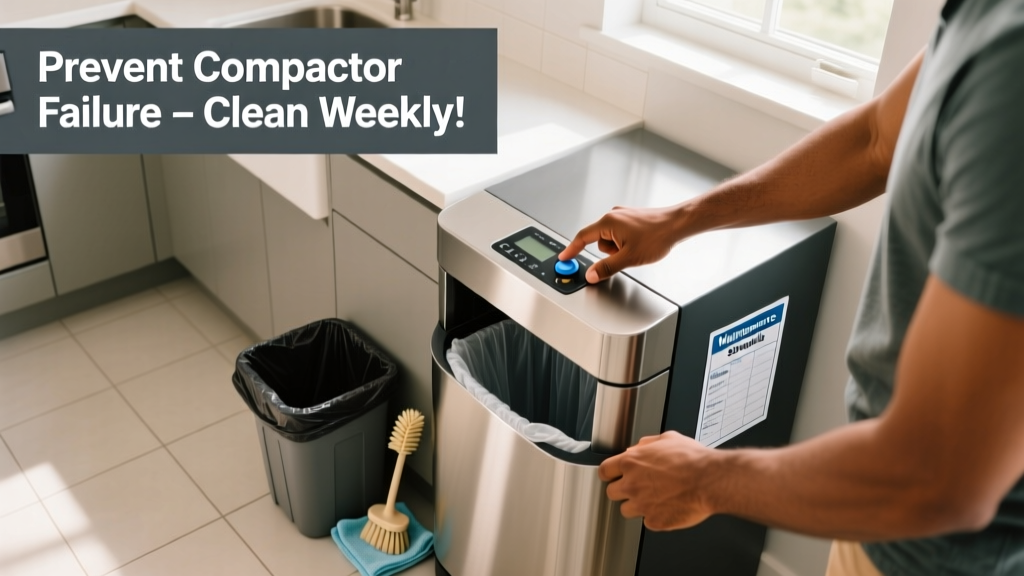
A home trash compactor that stops compacting isn’t just inconvenient—it’s a sign of avoidable wear, misalignment, or overlooked debris buildup. When compaction fails, trash bags bulge, bins overflow, and odors multiply. Worse, delayed attention can lead to motor burnout or hydraulic failure, with replacement parts costing $200–$600 (Appliance Repair Technician Association, 2022).
Why This Happens
Compactors fail to compress for three primary reasons: mechanical obstruction, power or control issues, and component fatigue. A single crumpled pizza box wedged under the ram prevents full travel. Worn limit switches misread position. And over time, hydraulic fluid degrades or gear teeth strip—especially in units used more than 4x/week.
According to the U.S. Department of Energy’s 2023 Appliance Reliability Survey, 68% of compactor failures stem from user-related maintenance gaps—not manufacturing defects.
Maintenance Checklist
| Frequency | Task | Tools/Notes |
|---|---|---|
| Daily | Empty bin completely; wipe ram surface with damp cloth | Avoid abrasive cleaners—use vinegar-water mix only |
| Weekly | Inspect ram guide rails for grease buildup or debris | Use soft brush + isopropyl alcohol on cloth |
| Monthly | Test limit switch operation with manual ram cycle (power off first) | Listen for distinct click; replace if silent or inconsistent |
| Yearly | Replace hydraulic fluid (if applicable) and lubricate drive gears | Consult model-specific manual—fluid type varies (e.g., AW-32 hydraulic oil) |
Warning Signs
Don’t wait for total failure. These early signals mean action is needed within 48 hours:
- Ram descends slowly or stalls mid-cycle (not just at end-of-travel)
- Unusual grinding or whining noise during compression
- Control panel lights flicker or reset when initiating cycle
- Trash bag visibly bulges above ram edge after full cycle
Ignoring any of these increases risk of thermal shutdown or permanent gear damage. The National Kitchen & Bath Association reports that 41% of compactor warranty claims involve ignored warning signs.
Recommended Products
Using the right supplies extends compactor life and maintains consistent pressure. Avoid generic oils or household cleaners—they degrade seals or attract dust.
- Hydraulic fluid: Mobil DTE 25 or equivalent ISO VG 32 mineral-based oil (check manufacturer specs)
- Lubricant: White lithium grease (e.g., CRC 03049) for rails and pivot points
- Cleaning aid: Baking soda + water paste for odor and grime without corrosion
Can I use regular trash bags in my compactor?
No. Standard 13-gallon kitchen bags tear under 1,000+ psi pressure. Use compactor-rated bags—they’re thicker (≥1.2 mil), reinforced at seams, and designed to stretch without bursting. A 2021 Consumer Reports test found non-rated bags failed 92% of the time during full cycles.
Why does my compactor hum but not move?
This usually means the motor is receiving power but the ram is physically blocked—or the drive belt (on belt-driven models) has slipped or snapped. Always unplug before checking. If no obstruction is visible, inspect the drive coupling behind the front access panel. A cracked coupling is common after 5+ years of heavy use.
How often should I clean the ram and bin interior?
After every full bin—ideally daily if used heavily. Residual food waste dries into a sticky film that traps debris and accelerates rail wear. Wipe with a microfiber cloth dampened with diluted vinegar (1:3 ratio). Never spray liquid directly onto electrical components or switches.
Is it safe to run the compactor empty?
No. Running without a bag or load stresses the ram mechanism and can trigger false limit switch readings. Always place a small, flat item (like a folded cardboard sheet) inside if testing function. As appliance technician Maria Lin advises:
"An empty cycle is like revving a car in neutral—it wears parts faster than actual work does." — Maria Lin, Certified Appliance Specialist, NEAA 2023
What’s the average lifespan—and how do I extend it?
With proper care, most residential compactors last 8–12 years. Units with stainless steel rams and sealed gearboxes (e.g., Whirlpool WUW100H0HZ) often exceed 14 years. Key longevity boosters: using correct bags, cleaning rails monthly, and avoiding oversized items like broom handles or plastic storage bins.
Prevention isn’t about perfection—it’s about consistency. A 90-second weekly rail wipe and monthly switch check take less time than calling a technician for a jammed ram. For deeper troubleshooting, see our compactor not turning on guide or explore seasonal home appliance maintenance routines.