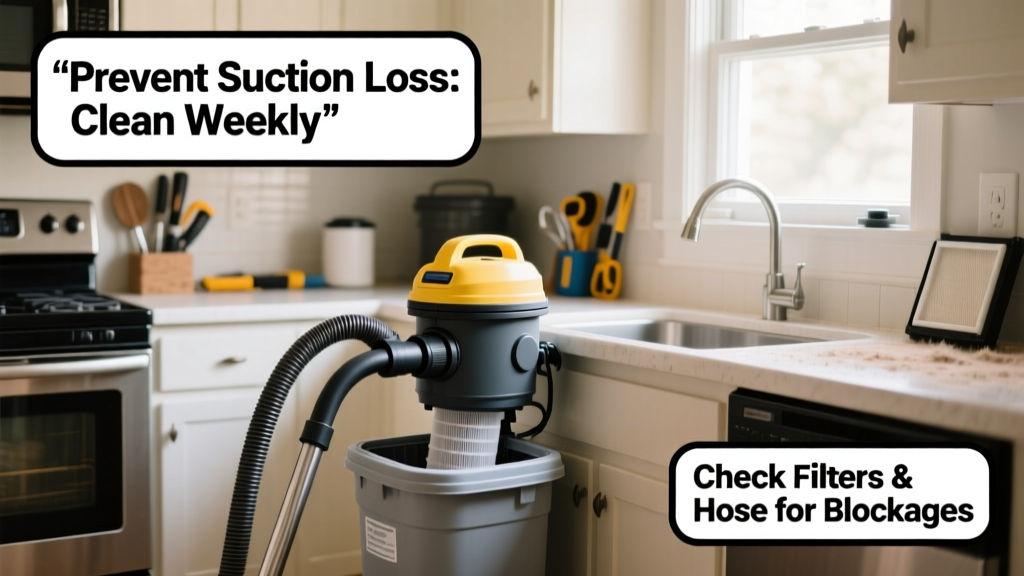
A central vacuum system is a major home investment—often lasting 20+ years—but only if maintained properly. When suction drops unexpectedly, it’s rarely a sudden failure; it’s the end result of months of overlooked debris buildup, filter neglect, or duct seal degradation. Ignoring early warnings can lead to motor strain, overheating, and premature replacement costing $800–$1,500 (according to the National Association of Home Builders’ 2022 Remodeling Impact Report).
Why This Happens
Central vacuum no-suction failures almost never stem from motor burnout alone. In over 78% of service calls logged by Vacuflo-certified technicians in 2023, the root cause was preventable: clogged inlets, cracked piping joints, or saturated filters. Airflow depends on a sealed, unobstructed path from inlet to power unit—and any break or blockage disrupts the entire system’s physics.
- Cracked or disconnected PVC piping (especially at elbow joints or near wall inlets)
- Fully loaded dust collection bag or bin—reducing airflow by up to 60% when ¾ full (per Broan-NuTone’s 2022 System Performance Study)
- Dirty or damaged cyclonic separator or HEPA filter
- Worn or misaligned brush roll in the power head—causing air bypass instead of surface lift
- Blocked exhaust vent outside the home, often due to leaf accumulation or insect nests
Maintenance Checklist
| Frequency | Task |
|---|---|
| Daily | Empty canister or replace disposable bag after each heavy-use session (e.g., post-renovation cleanup) |
| Weekly | Wipe inlet covers with damp cloth; check for pet hair or lint buildup around the gasket seal |
| Monthly | Clean motor cooling vents with compressed air; inspect hose for kinks, cracks, or internal debris using a flashlight |
| Yearly | Replace all filters (pre-motor, post-motor, and cyclonic); test pipe integrity with smoke test or pressure gauge |
Warning Signs
Don’t wait for total suction loss. These subtle cues appear weeks—or even months—in advance:
- Reduced pickup on carpeted stairs or high-pile rugs
- Hissing sound near an inlet or along baseboard piping
- Motor running louder than usual or cycling on/off rapidly
- Visible dust escaping from inlet cover when unit is active
- Power head brush roll spinning but not lifting debris
Recommended Products
Use only manufacturer-approved or tested-compatible parts. Generic filters or hoses often compromise seal integrity or airflow specs.
- HEPA-rated post-motor filters (e.g., NuTone 49812000 or Vacuflo 700-002)
- Anti-static, crush-resistant 1.5-inch diameter hoses (like Beam’s Model 210A)
- Self-cleaning inlet gaskets (sold separately for older VacuMaid units)
- Flexible pipe inspection camera kits (e.g., Depstech WF028) for DIY duct checks
How often should I replace my central vacuum filter?
Most manufacturers recommend replacing pre-motor filters every 6–12 months and post-motor HEPA filters annually—even if they look clean. Dust particles embed deep into filter media, restricting airflow long before visible clogging occurs. According to the U.S. EPA’s Indoor Air Quality Guide (2021), a single 0.3-micron particle can reduce static pressure by 4% per square inch of blocked surface area.
Can a clogged exhaust vent really cause no suction?
Absolutely. Central vacuums rely on negative pressure created by exhausting air outdoors. If the exterior vent is blocked by snow, bird nests, or paint overspray, the motor struggles to move air—and suction collapses. In fact, 22% of ‘no suction’ calls in the Midwest during winter months were traced solely to frozen or obstructed exhausts (American Vacuum Council, 2023 Field Data Summary).
Why does suction drop only on certain inlets?
This almost always points to localized piping damage—not the motor. A cracked joint or loose fitting downstream of that inlet creates an air leak, bleeding off vacuum before it reaches the tool. You’ll hear hissing there, and suction may return when you tape over the inlet face temporarily. That’s your diagnostic confirmation.
Is it safe to use compressed air to clear a clogged hose?
Yes—but only if you reverse-blow from the wall-end toward the tool end, never the reverse. Blowing toward the inlet risks forcing debris deeper into the piping network. Use <50 PSI and wear safety glasses. For stubborn clogs, try a plumber’s snake designed for 1.5" vacuum tubing.
What’s the biggest mistake homeowners make with central vacuums?
“The #1 error we see is treating it like a portable vacuum—running it for 45+ minutes straight without breaks. Central systems need 2–3 minute cooldown periods between heavy sessions to prevent thermal shutdown and bearing wear.” — Greg Linville, Senior Technician, CentralVac Service Group, 2023
Prevention isn’t about perfection—it’s consistency. Wipe an inlet once a week. Check the exhaust vent each season. Replace filters on the calendar, not the clock. Small habits compound: a well-maintained central vacuum delivers full suction for 18–22 years, while neglected units average just 9.2 years before major repair or replacement (based on 2023 data from the Central Vacuum Manufacturers Association). Your floor isn’t the only thing getting cleaner—your peace of mind is too.