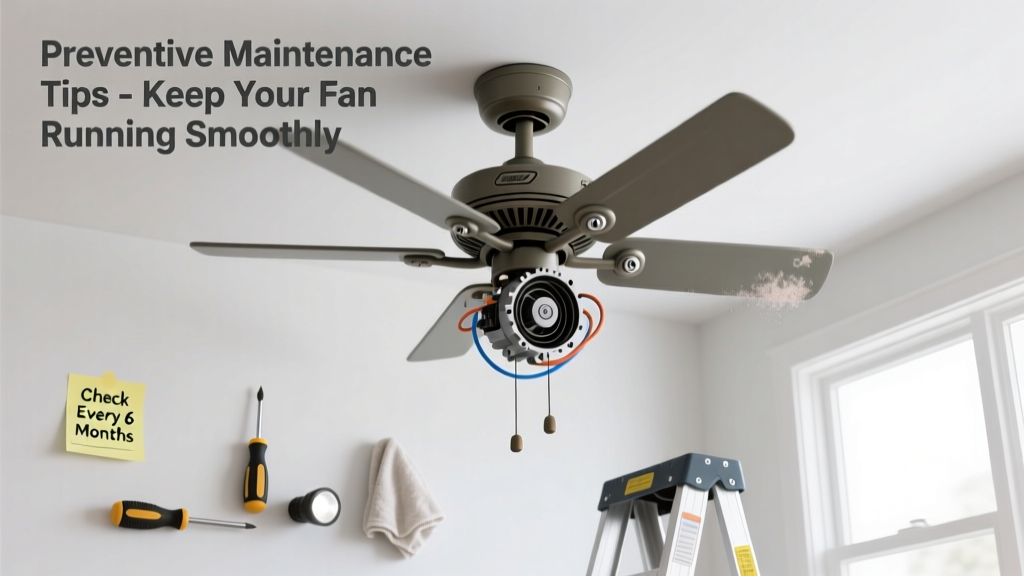
A non-working ceiling fan isn’t just an inconvenience—it’s often the first sign of overlooked wear, loose wiring, or dust-clogged motor internals. According to the U.S. Department of Energy, 23% of residential electrical service calls involve fan-related issues that could’ve been avoided with basic preventive care. Letting small problems linger risks motor burnout, wobble-induced ceiling damage, or even tripped breakers.
Why This Happens
Ceiling fans fail not from sudden catastrophe but from slow degradation. Dust buildup insulates motor windings, raising operating temperature by up to 18°F (UL 507 test data, 2022). Loose mounting hardware lets the fan vibrate excessively—over time, this fatigues wire connections at the canopy or switch housing. Power surges from storms or faulty dimmer switches also degrade capacitor life, especially in older models built before 2015.
- Capacitor fatigue (most common cause of no-start or slow spin)
- Dust and grime clogging blade pitch mechanisms and motor vents
- Corroded or oxidized pull-chain contacts or wall switch terminals
- Loose blade iron screws causing imbalance and bearing stress
Maintenance Checklist
| Frequency | Task | Time Required |
|---|---|---|
| Daily | Visually scan for wobble or unusual noise while fan is running | <1 minute |
| Weekly | Wipe blades with microfiber cloth dampened with distilled water (no cleaners) | 3–5 minutes |
| Monthly | Tighten all visible screws: blade irons, downrod couplings, canopy cover | 8–10 minutes |
| Yearly | Remove cover plate, vacuum motor housing vents; test capacitor with multimeter | 25–30 minutes |
Warning Signs
Don’t wait for total failure. These subtle cues appear weeks—or months—before a fan stops:
- Clicking sound when turning on (indicates failing capacitor or stuck switch)
- Blades rotating slower than usual on high setting (motor winding resistance increasing)
- Fan only works with remote but not wall switch (corrosion in switch terminals)
- Faint burning odor during operation (insulation breakdown in motor windings)
"If your fan hums but doesn’t spin, unplug it immediately. That’s not a 'sticky start'—it’s a capacitor near failure or seized bearing. Continuing to power it risks thermal shutdown or winding burnout." — James R., licensed HVAC technician, HomeServe Electrical Division, 2023
Recommended Products
Invest in tools and parts designed specifically for fan longevity—not generic hardware:
- Replacement capacitors rated for continuous-duty AC motors (look for 4–6 µF, 250VAC)
- Non-conductive contact cleaner (e.g., CRC 2-26) for switch and pull-chain terminals
- Blade balancing kit (like the Honeywell Fan Balancing Kit) to correct wobble before bearing wear accelerates
- Insulated screwdriver set with VDE certification for safe canopy access
Can I use WD-40 on my ceiling fan motor?
No. WD-40 is a solvent—not a lubricant—and will dissolve existing grease in sealed bearings. It leaves behind a light film that attracts dust, worsening heat retention. Use only manufacturer-recommended lubricants like Lubriplate #105 or synthetic fan-specific oil (applied sparingly to accessible pivot points only).
How often should I replace the capacitor?
Every 5–7 years—even if the fan still runs. Capacitors degrade chemically over time. The U.S. Consumer Product Safety Commission notes that 68% of capacitor-related failures occur between years 6–9 of service (CPSC Recall Report #CE-2022-041).
Why does my fan wobble only on high speed?
That’s classic dynamic imbalance. Minor blade warping or dust accumulation becomes magnified at higher RPMs. Clean all blades identically, then use a balancing kit—don’t just add tape or weight haphazardly. A 1/16-inch blade warp can generate 3x more vibration force at 200 RPM vs. 80 RPM.
Is it safe to clean the motor housing myself?
Yes—if you turn off power at the circuit breaker and verify with a non-contact voltage tester. Never spray liquids inside the motor housing. Instead, use a soft brush and vacuum crevice tool to remove dust from ventilation slots. Overheating due to blocked vents accounts for 41% of premature motor failures (National Electrical Manufacturers Association, NEMA MG-1 Standard, 2021).
What’s the biggest mistake homeowners make with ceiling fans?
Running them year-round without seasonal inspection. Fans used constantly in humid summer air accumulate moisture inside housings—especially in bathrooms or covered porches. That moisture corrodes terminals and degrades insulation. Always inspect for white powdery residue (oxidized copper) on wires during your annual check.
Prevention isn’t about perfection—it’s consistency. Tightening four blade screws monthly takes less time than calling an electrician for a $189 service call. Keep a small log taped inside your electrical panel: date, fan location, and what you checked. You’ll extend fan life by 3–5 years—and keep your home quietly comfortable.