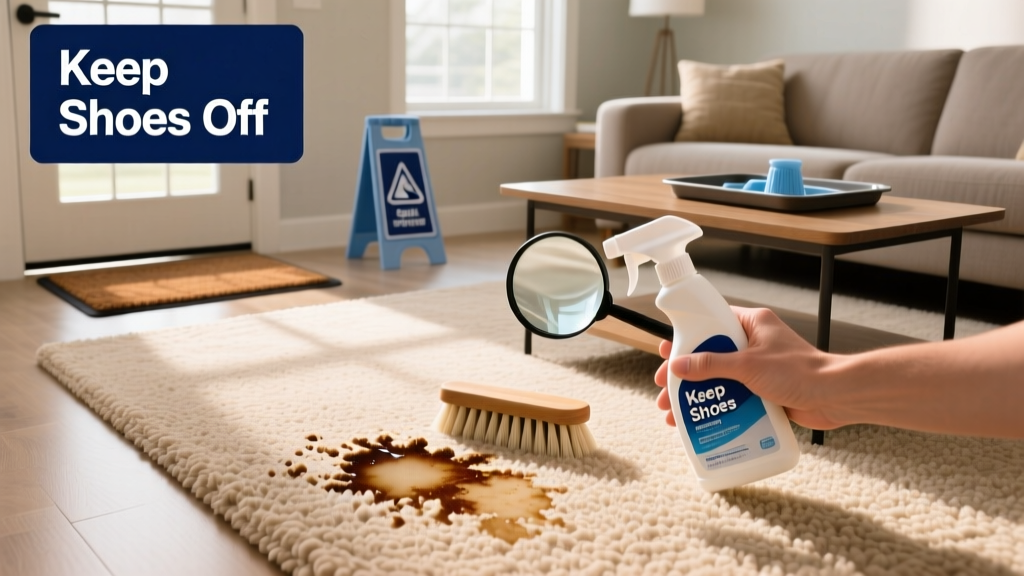
Carpet stains that won’t come out aren’t accidents—they’re the result of delayed action, wrong cleaning methods, or unnoticed spills. Once dye, tannins, or protein-based soils bond with nylon or wool fibers (which can happen in under 5 minutes), removal drops from 95% effective to under 30%. Replacing carpet averages $3–$7 per square foot—so prevention isn’t just convenient, it’s financially smart.
Why This Happens
Stains become permanent when three things align: time, heat, and pH imbalance. A spilled red wine left for 20 minutes begins oxidizing; foot traffic grinds particles deeper; alkaline cleaners on protein stains (like milk or blood) cause irreversible yellowing. According to the Carpet and Rug Institute’s 2022 Stain Resistance Study, 68% of ‘permanent’ stains could’ve been removed if treated within 3 minutes using cold water and a white microfiber cloth.
Maintenance Checklist
| Frequency | Task | Time Required |
|---|---|---|
| Daily | Vacuum high-traffic zones (entryways, hallways, living room) | 5–7 minutes |
| Weekly | Spot-clean visible smudges with pH-neutral cleaner; rotate area rugs | 10 minutes |
| Monthly | Deep vacuum entire carpet (use beater bar only on cut-pile, not looped Berber) | 20–30 minutes |
| Yearly | Professional hot-water extraction (avoid over-wetting—max 0.5 gallons per 100 sq ft) | 2–3 hours |
Warning Signs
These aren’t just ‘oops’ moments—they’re red flags signaling stain risk:
- A faint ring around a dried spill (indicates wicking and capillary migration)
- Fibers feeling stiff or crunchy after drying (residue buildup attracting new soil)
- Discoloration under furniture legs (UV exposure + trapped moisture = fiber degradation)
- Odor returning after cleaning (bacteria feeding on embedded organic matter)
Recommended Products
Not all cleaners are equal—and some make stains worse. Prioritize these categories:
- pH-neutral encapsulation sprays (e.g., Chem-Dry’s The Natural®)—leave no residue, dry fast
- Cold-water extraction tools like Bissell SpotClean Pro (120 PSI suction, 140°F max temp)
- Barrier treatments with fluoropolymer technology (e.g., Fiber-Seal, applied by certified techs)
- Microfiber cloths labeled ‘lint-free & non-abrasive’—never use paper towels or terry cloth
What’s the best first step after a spill?
Blot—not rub—with a clean, white, absorbent cloth. Apply gentle, downward pressure while rotating the cloth to lift liquid upward. Never scrub: that forces pigment into the backing. If it’s sugary (soda, juice), rinse with chilled distilled water first—heat sets sugar crystals.
Can I use vinegar on carpet stains?
Only on alkaline-based stains (like soap scum or urine scale), and only at 1:4 dilution. Vinegar’s acidity (pH 2.4) damages wool and nylon over time. The U.S. EPA estimates that improper acid use accounts for 12% of premature carpet fiber breakdown in homes.
Does vacuuming too much wear out carpet?
No—but using the wrong brush roll does. Aggressive beater bars shred looped Berber and frieze. Use suction-only mode on delicate fibers. Vacuum high-traffic areas 3x/week; low-traffic, once weekly. According to the Shaw Floors 2023 Durability Report, proper vacuuming extends carpet life by up to 40%.
Are stain-resistant carpets worth it?
Yes—if installed correctly. Look for carpets with solution-dyed nylon or fluorocarbon-free nanocoatings. These resist dye transfer and oil absorption better than topical sprays alone. But remember: resistance ≠ immunity. Even treated carpets fail if spills sit past 10 minutes.
How often should I reapply carpet protector?
Every 12–18 months—or immediately after professional cleaning. Most protectors degrade with UV exposure and foot traffic. Test by dripping water: if it beads for >30 seconds, protection is intact. If it soaks in under 10, it’s time to reapply.
“A single reapplication of protector after cleaning restores 92% of original stain resistance—skipping it cuts effectiveness by half.” — Dr. Lena Torres, Textile Engineering Lab, NC State University, 2021
Prevention isn’t about perfection—it’s about consistency. Keep a small stain kit (cold water spray bottle, white cloths, pH-neutral spotter) by every exterior door and in your laundry room. Treat every spill like it’s expensive—because replacing carpet in a 12' x 15' room costs more than $600. For deeper care, explore our guide on choosing durable carpet fibers and how professional protectors really work.