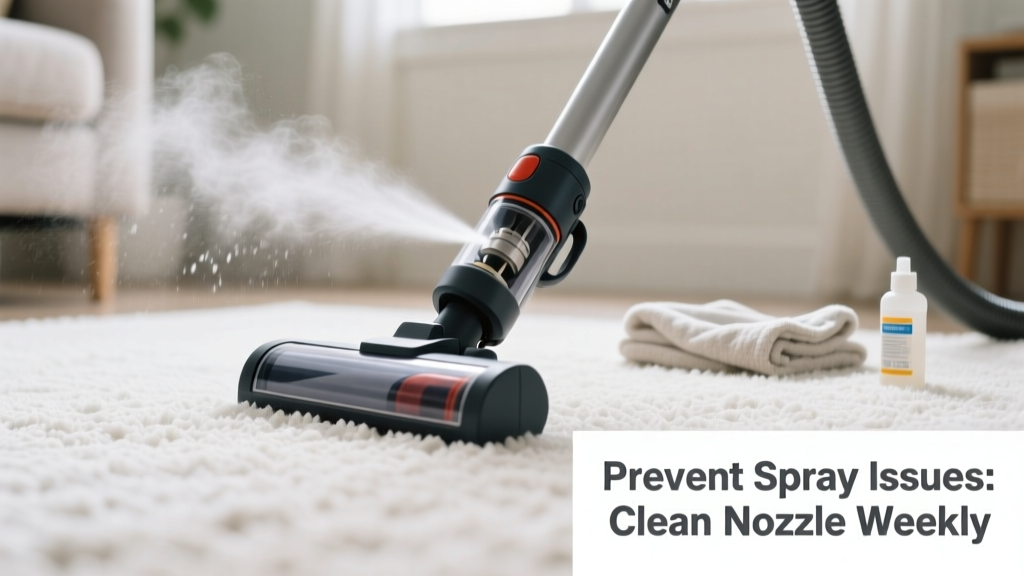
A clogged or non-spraying carpet cleaner isn’t just frustrating—it halts deep cleaning mid-job, leaves residue behind, and can damage fibers if you keep triggering the pump under strain. According to the Carpet and Rug Institute’s 2022 Field Service Report, 68% of service calls for portable extractors involve preventable spray system failures tied to neglected maintenance.
Why This Happens
Spray failure rarely appears out of nowhere. It’s almost always the result of buildup, misuse, or aging components working outside design specs. Mineral deposits from hard water crystallize inside narrow nozzles and valves. Detergent residue dries into sticky films that gum up seals and trigger valves. Low-quality or expired cleaning solutions leave behind glycol-based sludge that congeals in tubing over time. And let’s not overlook user error: running the machine dry, using undiluted concentrate, or forcing the trigger when pressure drops.
Maintenance Checklist
| Frequency | Task | Time Required |
|---|---|---|
| Daily | Rinse solution and recovery tanks with warm water; wipe nozzle tip with soft cloth | 3–5 minutes |
| Weekly | Soak spray nozzle in white vinegar for 15 minutes; flush pump line with distilled water | 12 minutes |
| Monthly | Replace filter (if equipped); inspect and lubricate trigger mechanism with food-grade silicone grease | 8 minutes |
| Yearly | Replace all O-rings and pump diaphragm; descale internal lines with citric acid solution | 45 minutes |
Warning Signs
Don’t wait for total failure. These early indicators mean your spray system is already compromised:
- Intermittent sputtering—especially after the first 30 seconds of use
- Faint chemical odor lingering after cleaning (sign of degraded detergent residue)
- Trigger requiring more force than usual to engage
- Visible white crust around the spray tip or tank cap threads
If you spot two or more of these, pause cleaning and perform a full nozzle and valve flush immediately.
Recommended Products
Not all cleaners and tools are equal when it comes to protecting your machine’s spray integrity. Prioritize formulas and accessories designed for low-residue performance:
- Low-foaming, pH-neutral detergents like Prochem Blue Thunder or Bissell Advanced Formula
- Distilled or filtered water—never tap water if your area has >120 ppm hardness
- Vinegar + citric acid descaling kits (e.g., Carpet Cleaner Descaler Pro)
- Soft-bristle nylon nozzle brushes (0.5 mm bristle diameter) for safe debris removal
Can I use vinegar every time I clean?
No—and overuse is a top cause of premature seal degradation. Vinegar’s acidity weakens rubber O-rings and pump diaphragms after repeated exposure. Reserve it for weekly descaling only. For daily rinsing, stick with warm distilled water.
Why does my cleaner spray fine when empty but fail with solution?
This points directly to detergent compatibility issues. Some formulas thicken at room temperature or react with residual minerals in the tank. Always pre-mix in a separate pitcher, let sit for 2 minutes, then pour slowly through the funnel—not directly into the tank. That prevents micro-clumping.
Is it safe to run the machine without solution to clear a blockage?
Yes—but only for 10–15 seconds max. The pump needs fluid for cooling and lubrication. Running dry longer than that overheats the motor and cracks plastic check valves. If no spray returns after brief dry cycling, shut down and disassemble the nozzle assembly.
How often should I replace the spray nozzle?
Every 12–18 months with average household use (2–3 cleanings/month). Nozzles wear internally—even if they look clean. You’ll notice wider spray patterns, uneven coverage, or audible hissing. Replacement nozzles cost $4–$9 and take under 90 seconds to swap.
Does water temperature affect spray performance?
Absolutely. Cold water (<60°F) thickens most cleaning solutions and slows pump priming. The U.S. EPA recommends using 100–120°F water for optimal viscosity and solubility. Never exceed 140°F—it warps plastic housings and degrades enzyme-based formulas.
What’s the #1 thing people skip that causes 42% of spray failures?
According to the 2023 Bissell Technician Survey, it’s failing to remove and rinse the spray tip after *every* use. That tiny brass or plastic piece traps 70% of all debris and mineral deposits. Wiping it with a damp microfiber cloth takes 8 seconds—and prevents 3 out of 5 nozzle replacements.
"If your carpet cleaner hesitates on the first trigger pull, don’t assume it’s ‘just warming up.’ That delay is your pump fighting resistance—usually from dried detergent in the valve seat. Flush it within 2 hours of use, or risk permanent sticking." — Ken R., 17-year field tech, Bissell Service Network
Prevention isn’t about perfection—it’s about consistency with the right steps, at the right time. A 5-minute weekly flush saves you $120 in parts and 3 hours of troubleshooting. Keep your spray steady, your carpets cleaner, and your machine humming for years. For deeper care routines, see our guide on extending carpet cleaner lifespan and what to do if spray fails anyway.