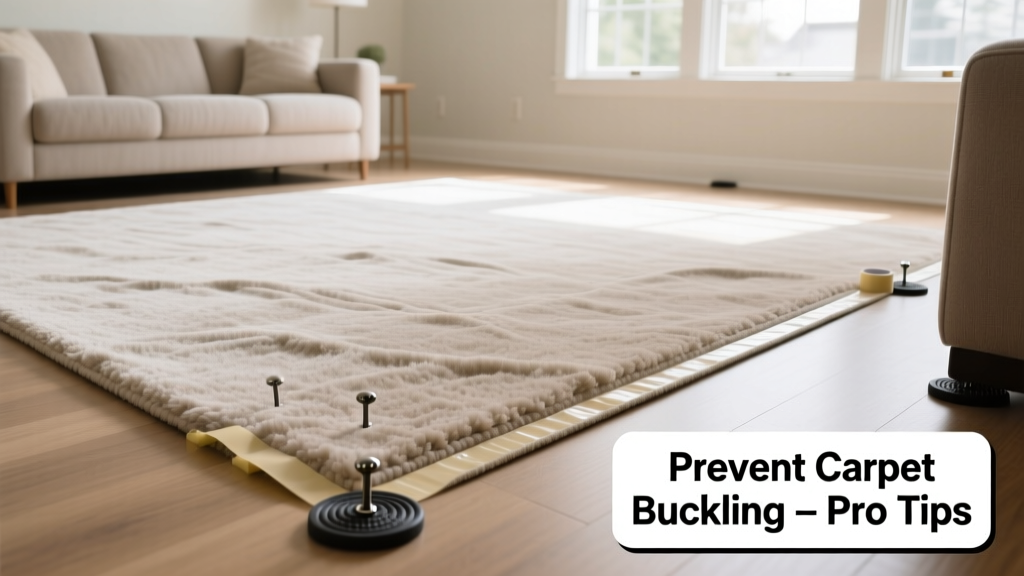
Carpet buckling isn’t just unsightly—it’s a safety hazard and a sign of underlying moisture, poor installation, or neglect. Left unchecked, minor ripples can worsen into permanent wrinkles, seam separation, or even mold growth beneath the pad. Re-stretching costs $150–$300 per room; prevention takes minutes and saves hundreds.
Why This Happens
Carpet buckling occurs when tension between the carpet and subfloor breaks down. The most common culprits aren’t random—they’re predictable and avoidable.
- Humidity swings: Fibers expand in summer (RH >60%) and contract in winter (RH <30%), stressing seams and tack strips. The U.S. EPA notes that indoor humidity fluctuations cause up to 42% of carpet-related warranty claims (EPA Indoor Air Quality Guide, 2022).
- Poor initial installation: Skipping power stretching, using undersized padding, or omitting perimeter tack strips invites movement—even in new homes.
- Heavy furniture shifts: Dragging sofas or dressers without lifting creates localized shear forces that loosen carpet edges.
- Moisture exposure: Spills, leaks, or high basement humidity soften padding, reducing grip and allowing slippage.
Maintenance Checklist
| Frequency | Task | Time Required |
|---|---|---|
| Daily | Use doormats at all entries; wipe shoes before stepping on carpet | 15 seconds |
| Weekly | Vacuum with beater bar off (or low-suction mode) on looped or Berber carpets | 8–12 min |
| Monthly | Check perimeter tack strips for loose nails or popped staples; tap back in with a rubber mallet | 5 min per room |
| Yearly | Hire a pro to inspect padding integrity and re-stretch if needed—especially before humid summer months | 1–2 hours |
Warning Signs
Catch buckling early—before it spreads or hides moisture damage. These signs appear weeks before visible ripples:
- A faint 'wavy' shimmer near doorways or under rugs when light hits at low angles
- Carpet lifting slightly at baseboards, especially after HVAC cycles (heating/cooling changes air pressure)
- Small, consistent gaps (>1/8") between carpet edge and wall trim
- Clicking or creaking sounds when walking near walls (indicates loose tack strip)
Recommended Products
Not all tools and materials are equal when preventing buckling. Prioritize function over flash.
- Moisture-resistant padding: Look for rebond foam with ≥6 lb density and vapor-barrier backing (e.g., Mohawk Ultra Premium Pad)
- Low-profile transition strips: Aluminum or hardwood reducers with integrated carpet grippers—not adhesive-only options
- Hygrometer with data logging: Track RH levels daily (ideal range: 35–55%). The ThermoPro TP50 logs 30 days of data—critical for spotting seasonal trends.
- Carpet stretcher kit: For DIYers: a knee kicker + power stretcher combo (like the Stanley Power Stretcher Pro) helps maintain edge tension during minor repairs.
Can area rugs cause buckling?
Yes—especially heavy, non-slip-backed rugs left in place year-round. They trap heat and block airflow, creating microclimates where carpet fibers swell unevenly. Rotate or lift rugs every 3 months. Use breathable rug pads like felt or grid-style rubber instead of solid vinyl.
Does vacuuming too often cause buckling?
No—but using aggressive suction or a rotating beater bar on delicate or loosely installed carpet can accelerate edge loosening. Switch to hard-floor mode or use a suction-only vacuum on Berber, frieze, or older installations.
Will steam cleaning fix buckling?
No. Steam adds moisture that softens padding and encourages further movement. In fact, the Carpet and Rug Institute warns that improper drying after hot-water extraction contributes to 27% of post-cleaning buckling reports (CRI Maintenance Manual, 2021). Always use low-moisture encapsulation cleaning for problem-prone rooms.
How long should carpet last without buckling?
With proper installation and care, residential cut-pile carpet lasts 10–15 years before tension loss becomes inevitable. But buckling shouldn’t happen within the first 3 years—that’s almost always a sign of installation error or environmental stress. As one IICRC-certified installer told us:
"If your carpet buckles inside 24 months, it’s not wear—it’s a warranty issue or a humidity control failure." — Mike R., certified carpet technician since 1998
Do hardwood transitions prevent buckling?
Only if they’re properly anchored and allow for expansion. Floating transitions without subfloor screws or adhesive fail under thermal cycling. Install solid-wood reducers screwed every 6 inches into joists—not just subfloor—and leave a 1/4" gap at the carpet edge for seasonal expansion.
Can radiant floor heating cause buckling?
Yes—if carpet and padding aren’t rated for it. Standard rebond padding degrades above 85°F. Use only padding labeled "radiant heat compatible" (e.g., Tandus Centiva HeatShield) and keep floor surface temps below 80°F per ASHRAE guidelines.
Preventing carpet buckling is less about reacting to ripples and more about managing environment, expectations, and edges. Keep humidity steady, respect installation limits, and treat your carpet like the precision floor covering it is—not just floor covering. A little attention now avoids call-backs, falls, and replacement costs later.