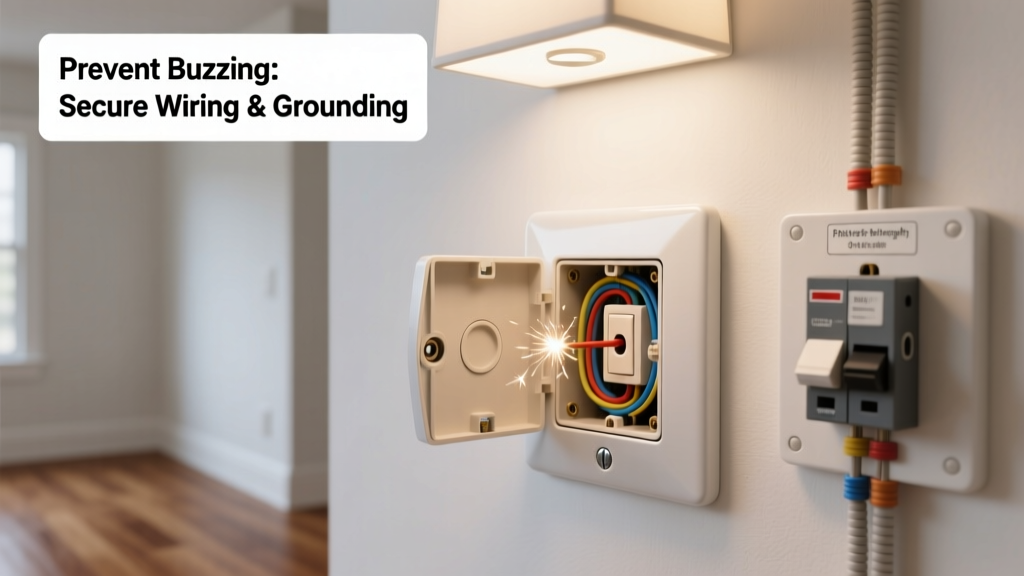
A buzzing light switch isn’t just annoying — it’s a red flag. That faint hum or audible buzz often signals loose connections, arcing, or failing components inside the switch. Left unaddressed, it can escalate to overheating, melted wiring, or even electrical fires. According to the U.S. Fire Administration’s 2022 report, faulty switches and outlets contribute to over 4,500 home fires annually.
Why This Happens
Buzzing originates from physical vibration caused by electrical arcing or magnetic fields interacting with loose parts. Most commonly, it’s due to:
- Loose terminal screws on the switch’s hot or neutral wires
- Worn-out internal contacts that no longer make clean contact
- Overloaded circuits drawing more current than the switch is rated for (e.g., using a 15-amp switch on a 20-amp circuit)
- Dimmer switches paired with non-dimmable LEDs or incompatible loads
- Moisture intrusion in outdoor or bathroom switches without proper weatherproofing
These issues rarely appear overnight — they develop gradually, making routine checks essential.
Maintenance Checklist
| Frequency | Task |
|---|---|
| Daily | Listen for new or changing sounds when flipping any switch |
| Weekly | Check for warmth around switch plates (use back of hand — never fingers) |
| Monthly | Inspect wall plates for discoloration, cracks, or warping |
| Yearly | Hire a licensed electrician to torque terminal screws to manufacturer specs and test load capacity |
Warning Signs
Don’t wait for sparks or smoke. These subtle cues mean it’s time to act:
- Faint ozone smell (like chlorine or burnt metal) near the switch
- Intermittent flickering of lights controlled by that switch
- Switch plate feels warm to the touch during normal use
- Visible scorch marks or brownish discoloration behind the wall plate
- Clicking or sizzling sounds accompanying the buzz
If you notice two or more of these, replace the switch immediately — don’t just tighten screws.
Recommended Products
Not all switches are created equal. Prioritize reliability and compatibility:
- Leviton Decora Smart Wi-Fi switches — include built-in arc-fault detection and real-time load monitoring
- Lutron Maestro dimmers — auto-sense LED compatibility and thermal overload protection
- Hubbell commercial-grade toggle switches — rated for 20-amp circuits and designed for high-cycle durability
- Weatherproof covers with gaskets (e.g., Carlon LB series) for exterior or damp-location switches
Can a buzzing switch cause a fire?
Yes — sustained arcing generates heat exceeding 1,000°F at the contact point. The National Fire Protection Association (NFPA 70E, 2023) identifies arc faults as the leading cause of electrical ignition in residential wiring older than 15 years.
Is it safe to tighten the screws myself?
Only if the circuit is confirmed OFF at the breaker and verified with a non-contact voltage tester. But tightening won’t fix worn contacts or internal pitting. As master electrician Maria Chen notes in Electrical Safety Today (2022): “A tight screw on a corroded terminal is like locking a rusted hinge — it looks secure but fails under load.”
“If your switch buzzes only when dimming, the issue is almost always load incompatibility — not the switch itself. Swap bulbs first before replacing hardware.” — Mike Torres, Licensed Residential Electrician, Chicago, IL (2023)
Why does my new switch buzz right after installation?
Most often, it’s improper wire looping (e.g., clockwise vs. counterclockwise wrap on terminals) or using stranded wire without proper ferrules. Always follow the manufacturer’s torque spec — over-tightening strips threads; under-tightening invites vibration-induced arcing.
Do LED bulbs really affect switch noise?
Absolutely. Low-wattage LEDs draw erratic micro-currents that confuse older dimmers. The U.S. Department of Energy estimates 38% of reported buzzing cases involve non-dimmable LEDs on leading-edge dimmers. Use trailing-edge (ELV) dimmers with labeled “LED-compatible” switches like Lutron Diva C-L models.
Should I replace all switches at once?
No — but prioritize those controlling high-load fixtures (garage door openers, ceiling fans, recessed can banks) or installed before 2010. Older switches lack modern arc-fault suppression and may use aluminum wiring connections prone to creep.
Prevention isn’t about perfection — it’s about consistency. A 60-second monthly check takes less time than an emergency call to an electrician at midnight. Replace switches every 15–20 years, even if they seem fine. And if you hear buzzing, don’t ignore it — test voltage and load first, then act. Your safety isn’t powered by convenience — it’s powered by vigilance.