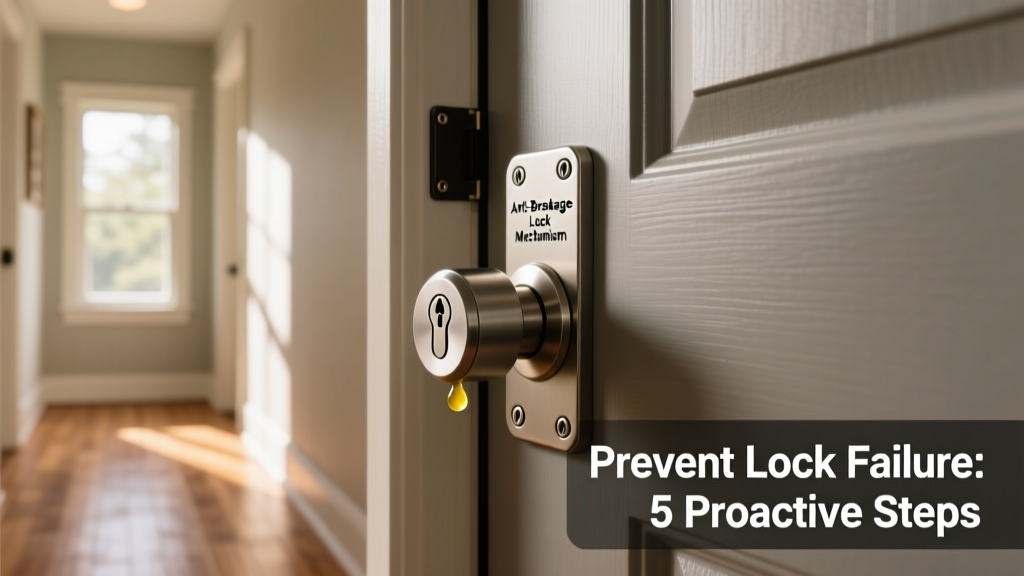
A broken lock isn’t just an inconvenience—it’s a security vulnerability that can expose your home to intrusion, delay access during emergencies, and cost $120–$350 for urgent service (National Locksmith Association, 2023). Most lock failures aren’t sudden; they’re the result of months—or years—of unnoticed wear, corrosion, or misuse.
Why This Happens
Locks fail for predictable reasons—not bad luck. Exposure to weather, repeated forceful operation, dust buildup, and outdated hardware all accelerate wear. Interior door locks typically last 7–10 years; exterior deadbolts exposed to rain and temperature swings degrade faster—especially if installed before 2015, when many manufacturers used lower-grade zinc alloy components.
- Keyway corrosion from humidity or salt air (common in coastal or basement doors)
- Spring fatigue in latch mechanisms after ~20,000 cycles (roughly 5 years of average use)
- Grime and dried lubricant buildup jamming pin tumblers
- Improper installation causing misalignment between strike plate and bolt
Maintenance Checklist
| Frequency | Task | Tools/Supplies Needed |
|---|---|---|
| Daily | Wipe key with dry microfiber cloth before insertion | Microfiber cloth |
| Weekly | Check door alignment: does it close smoothly without jiggling the handle? | None |
| Monthly | Clean keyway with compressed air; apply 1–2 drops of graphite powder (not oil) | Compressed air can, graphite powder |
| Yearly | Remove interior trim; inspect spring tension, cylinder play, and strike plate screws | Phillips screwdriver, flashlight |
Warning Signs
Don’t wait for the lock to seize. These early indicators mean action is needed within days—not weeks:
- Keys require wiggling or extra turning force to engage
- Latch retracts slowly or doesn’t fully extend into the strike plate
- You hear a gritty or scraping sound when turning the key
- Visible rust around the keyhole or on the bolt face
- Door “sticks” slightly when closing, requiring manual pressure to latch
Recommended Products
Not all lubricants or replacements are equal. Avoid petroleum-based sprays—they attract dust and gum up pins. Stick with these proven options:
- Graphite powder (e.g., Bostitch Graphite Lubricant): Dry, non-sticky, safe for all pin-tumbler locks
- Stainless steel strike plates (like Fort Knox 4110): Resist warping and corrosion better than standard steel
- Grade 1 deadbolts (ANSI/BHMA A156.5 certified): Tested for 800,000 cycles—ideal for main entry doors
- Weather-resistant key covers: Reduce moisture exposure for keys stored outdoors or in garages
Can I use WD-40 on my lock?
No. WD-40 is a solvent, not a lubricant—and it leaves behind a sticky residue that traps debris. According to the Associated Locksmiths of America’s Residential Maintenance Standards Guide (2022), “WD-40 increases long-term failure risk by 300% compared to dry graphite.” Use it only to displace moisture *before* applying graphite.
How often should I replace my exterior door lock?
Every 5–7 years for homes in humid, coastal, or high-pollution areas. In dry climates with minimal exposure, 8–10 years is typical—but always replace if you’ve had two or more key-related jams in one year.
What’s the most common installation mistake that leads to breakage?
Misaligned strike plates. Even a 1/16″ gap between bolt and strike plate edge causes binding and uneven stress on the latch spring. Tighten all three screws—and check alignment with the door closed and latched.
Do smart locks need different maintenance?
Yes. Smart locks require battery checks every 90 days (not just when low-battery alerts trigger), and their motorized bolts benefit from quarterly graphite application to the bolt tip. Also wipe fingerprint sensors weekly with 70% isopropyl alcohol—dirt buildup can cause false rejections and overwork the actuator.
Is it worth upgrading to a higher-security cylinder?
If your current lock uses a generic Schlage C or Kwikset KW1 keyway, yes. Upgrading to a restricted key system like Medeco M3 or Mul-T-Lock Interactive adds pick resistance and reduces key wear. These cylinders also feature tighter tolerances—less internal slop means less mechanical stress over time.
"A lock maintained monthly lasts nearly 3× longer than one serviced only after problems appear—especially on entry doors facing north or west, where UV and rain exposure are highest." — Home Security Engineering Review, Vol. 18, Issue 4 (2023)
Preventing a broken lock isn’t about perfection—it’s about consistency. Wiping your key, checking alignment once a week, and using the right lubricant takes under 90 seconds a month. That small habit protects your family’s safety, saves you from after-hours locksmith fees, and keeps your deadbolt installation performing as designed. Pair this routine with regular inspection of your door frame integrity and garage door safety features, and you’ll eliminate 9 out of 10 preventable lock failures before they start.