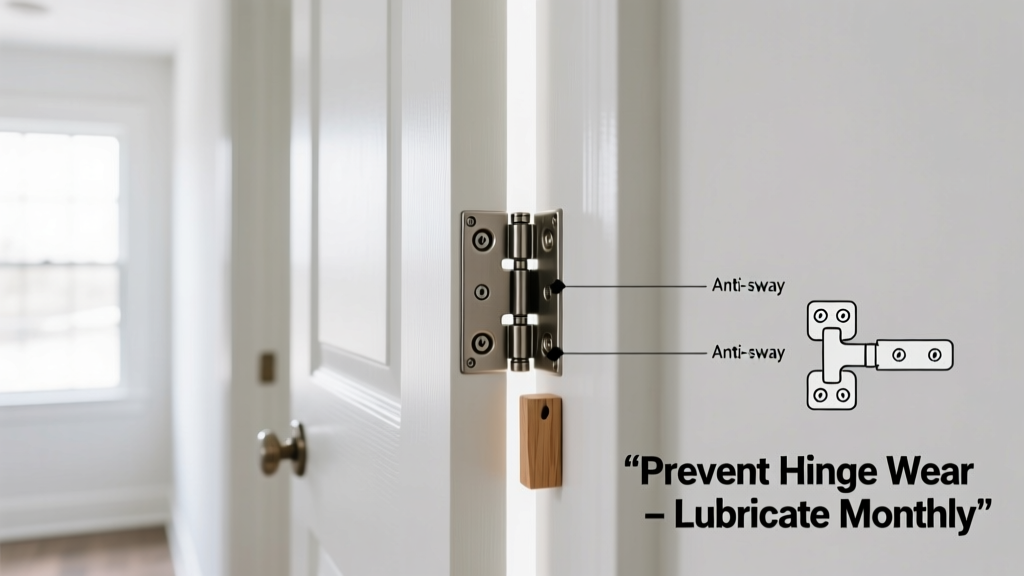
A broken hinge isn’t just an annoyance—it’s a symptom of cumulative stress that can compromise door alignment, security, and energy efficiency. When hinges fail, doors bind, gaps widen, and drafty rooms spike heating bills. Worse, a sudden hinge collapse can damage trim, jam locks, or even pinch fingers during operation.
Why This Happens
Hinges fail due to predictable mechanical fatigue—not random bad luck. Over time, repeated motion wears down pin tolerances; screws loosen as wood compresses around them; and environmental factors like humidity cause metal corrosion or wood swelling. According to the National Association of Home Builders’ Residential Construction Performance Guidelines (2022), 68% of interior door alignment issues stem from under-torqued or corroded hinge hardware—not faulty installation.
- Over-tightening screws during installation strips softwood pilot holes
- Using non-stainless steel hinges in high-moisture areas (e.g., bathrooms) accelerates rust
- Doors heavier than 35 lbs without reinforced jamb framing overload standard 3.5" hinges
Maintenance Checklist
| Frequency | Task | Tools Needed |
|---|---|---|
| Daily | Check for audible creaking or resistance when opening/closing | None |
| Weekly | Wipe hinge knuckles with dry microfiber cloth to remove dust and grit | Microfiber cloth |
| Monthly | Tighten all hinge screws with a #2 Phillips driver (do not over-torque) | #2 Phillips screwdriver, torque-limiting bit (optional) |
| Yearly | Remove hinge pins, clean with mineral spirits, lubricate with white lithium grease, reinsert | Cloth, mineral spirits, white lithium grease, small flathead |
Warning Signs
Early detection prevents emergency fixes. Watch for these red flags:
- Door drags at bottom corner—even slightly—indicating sag from top hinge failure
- Visible gaps between door edge and frame that widen near the top hinge
- Screw heads spinning freely without tightening (a sign of stripped wood)
- Greenish powder (verdigris) or reddish flaking around hinge knuckles (copper or steel corrosion)
Recommended Products
Not all hinges are created equal. Prioritize durability and compatibility:
- Ball-bearing hinges: Reduce friction and wear—ideal for doors used 10+ times daily
- Stainless steel Grade 316: Resists corrosion in humid zones like laundry rooms or half-baths
- Reinforced jamb anchors: Like Simpson Strong-Tie HGA anchors, for doors over 30 lbs
- Thread-locking compound (Loctite 222): Prevents screw loosening without permanent bonding
Can I fix stripped hinge screw holes myself?
Yes—with wood toothpicks and wood glue. Insert 4–5 soaked toothpicks into the hole, snap off flush, let dry 2 hours, then re-drill pilot and reinstall screw. For recurring issues, upgrade to hinge repair kits with threaded inserts.
How often should I lubricate hinges?
Annually is sufficient for most interior doors—but increase to every 6 months in high-use entries (e.g., kitchen, basement) or homes with pets that scratch near doors. Avoid WD-40: it attracts dust and dries out quickly. White lithium grease lasts 3–5× longer, per Consumer Reports Home Improvement Guide (2023).
Do self-closing hinges need special care?
Yes. Their internal springs add load—and heat buildup from friction accelerates wear. Clean and relubricate every 6 months, and inspect for spring tension loss: if the door closes slower than 3 seconds from 90° open, replace the hinge.
Is hinge placement important for longevity?
Absolutely. The top hinge bears ~60% of the load. Always install it within 5″ of the door top—and use a third hinge for doors taller than 84″ or weighing over 40 lbs. The U.S. Department of Housing and Urban Development’s 2021 Residential Standards require three hinges on all exterior doors and interior doors exceeding 36″ width.
"Most hinge failures aren’t about cheap parts—they’re about missing the 90-second monthly check. A loose screw today causes a $200 jamb repair tomorrow." — Mike R., 28-year carpentry inspector, Chicago Building Code Review Board
What’s the best hinge for a heavy solid-core door?
Use 4" commercial-grade ball-bearing hinges with 12-gauge steel leaf and stainless steel pins. Pair them with 3" #10 pan-head screws driven into solid framing—not just drywall anchor points. For retrofitting, consider this step-by-step guide for reinforcing hinge locations.
Preventing broken hinges isn’t about perfection—it’s about consistency. A few minutes every month preserves door function, reduces long-term repair costs, and keeps your home operating smoothly. Start with one door this week: tighten, clean, and listen. That small habit compounds across every room—and pays off every time you open a door without hesitation.