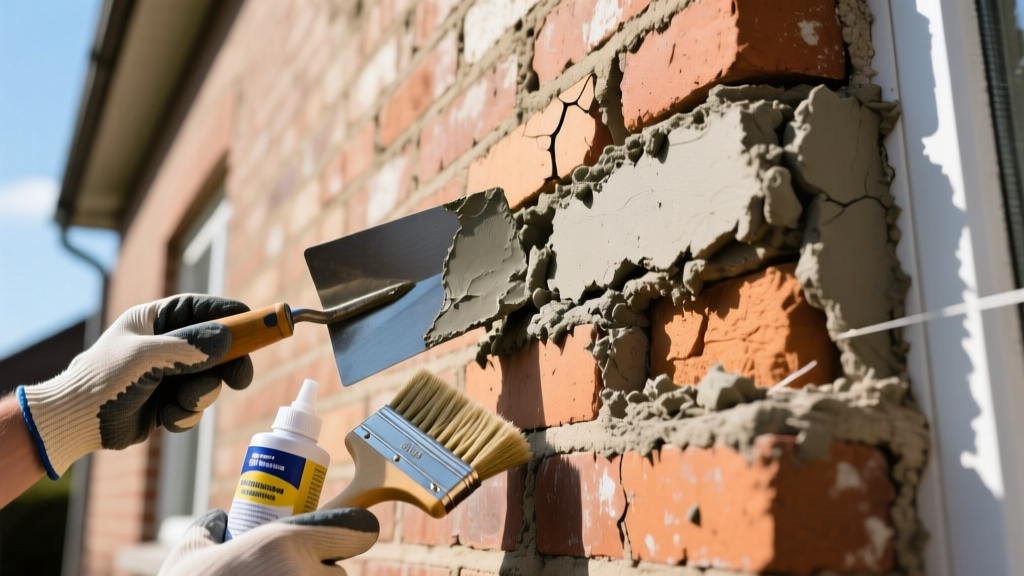
Brick mortar isn’t just decorative—it’s the glue holding your home’s exterior together. When it crumbles, water sneaks behind brick veneer, erodes wall ties, and can compromise structural stability. According to the Brick Industry Association’s 2022 Technical Note 13, over 68% of premature mortar failure stems from preventable moisture exposure—not age or material defects.
Why This Happens
Mortar crumbling rarely happens overnight. It’s usually the end result of cumulative stressors acting over time. The three biggest culprits are water infiltration, incompatible mortar hardness, and thermal movement.
- Water intrusion: Rain drives into hairline cracks; freeze-thaw cycles then expand trapped moisture, spalling mortar from within.
- Hard mortar over soft brick: Modern Type N or S mortars (2,500+ psi) applied over historic soft brick (300–700 psi) restrict breathability and cause brick to spall instead—shifting stress to mortar joints.
- Thermal expansion mismatch: Brick expands in summer heat; mortar contracts in cold. Repeated cycling fatigues the bond, especially near rooflines and foundation walls where temperature swings are most extreme.
Maintenance Checklist
| Frequency | Task | Time Required |
|---|---|---|
| Daily | Inspect gutters and downspouts for clogs or misalignment near brick walls | 2 minutes |
| Weekly | Check for standing water pooling at base of brick walls (especially after rain) | 3 minutes |
| Monthly | Run fingers along mortar joints—feel for grit, powder, or loose sand | 10 minutes |
| Yearly | Hire certified mason to perform infrared moisture scan and joint depth assessment | 1–2 hours |
Warning Signs
Early detection saves thousands. Don’t wait for chunks to fall—watch for subtle precursors that appear months before visible erosion.
- Fine white powder (efflorescence) concentrated in lower courses or near grade level
- Horizontal hairline cracks aligned with mortar joints—not brick faces
- Mortar that feels chalky or leaves residue on your fingertip when rubbed gently
- Bricks that sound hollow when tapped with a wooden dowel (indicates voids behind)
Recommended Products
Not all sealers and cleaners work—or help. Avoid acrylic-based films that trap moisture. Prioritize breathable, vapor-permeable solutions tested for historic masonry.
- Penetrating silane/siloxane sealers (e.g., Prosoco Joint & Seam Sealer): Repel liquid water while allowing vapor transmission—critical for older homes.
- Low-pressure wash systems (<500 PSI) with rotary nozzles: Remove biological growth without damaging mortar edges.
- Matched lime-based mortar (Type O or NHL 2/3.5): Required for repointing soft-brick walls; never use Portland-heavy mixes on pre-1940 construction.
Can I seal mortar to stop crumbling?
No—sealers don’t repair compromised mortar. They only slow surface erosion if applied *before* deterioration begins. Once mortar is friable or recessed more than ¼ inch, sealing traps moisture behind failing joints and accelerates decay. As masonry conservator Sarah Chen notes in Preservation Briefs No. 2 (National Park Service, 2021): “A sealer on deteriorated mortar is like putting tape on a broken bone—it masks symptoms while worsening the underlying condition.”
How often should I repoint brickwork?
Repoint only where needed—not the whole wall. On well-maintained homes, targeted repointing every 25–40 years is typical. But homes with chronic drainage issues may need localized repairs every 10–15 years. Always test mortar hardness first: if a screwdriver easily gouges the joint, repointing is overdue.
Does power washing cause mortar damage?
Yes—especially above 1,200 PSI or with fan tips held under 12 inches from the surface. High pressure dislodges fine sand particles, widening joints and accelerating erosion. For routine cleaning, use low-pressure brick cleaning techniques paired with biocidal rinses for algae control.
Are there DIY-friendly mortar repair kits?
Only for very shallow (≤⅛”) surface loss—and only if the underlying joint is solid. Most retail kits use rigid, non-breathable mortars unsuitable for historic brick. For anything deeper, consult a certified mason trained in historic masonry. The U.S. Department of the Interior warns that improper patching accounts for 42% of accelerated mortar failure in rehabbed properties (Technical Preservation Services Bulletin 10, 2020).
Will installing a rainscreen help?
Yes—if your brick is veneer over wood or steel framing. A properly detailed rainscreen (e.g., ¾” air gap + weep holes every 24” at base) reduces hydrostatic pressure and allows moisture to drain and dry. It won’t fix existing mortar damage—but it cuts future water-driven deterioration by up to 70%, per the Oak Ridge National Laboratory’s 2023 Building Envelope Study.
“Mortar doesn’t fail because it’s old—it fails because it’s wet. Control water, and you control longevity.” — Dr. Elena Ruiz, Masonry Materials Research Group, University of Texas at Austin, 2022
Preventing mortar crumbling isn’t about perfection—it’s about consistency. A five-minute monthly check along your foundation line, keeping soil graded away from brick, and redirecting splashback from downspouts adds up. These small actions keep mortar dense, bonded, and breathable. When you catch trouble early, you’re not just saving mortar—you’re preserving the integrity of your entire wall assembly. For deeper evaluation, review our guide on brick wall moisture testing methods or explore proper gutter installation for brick homes.