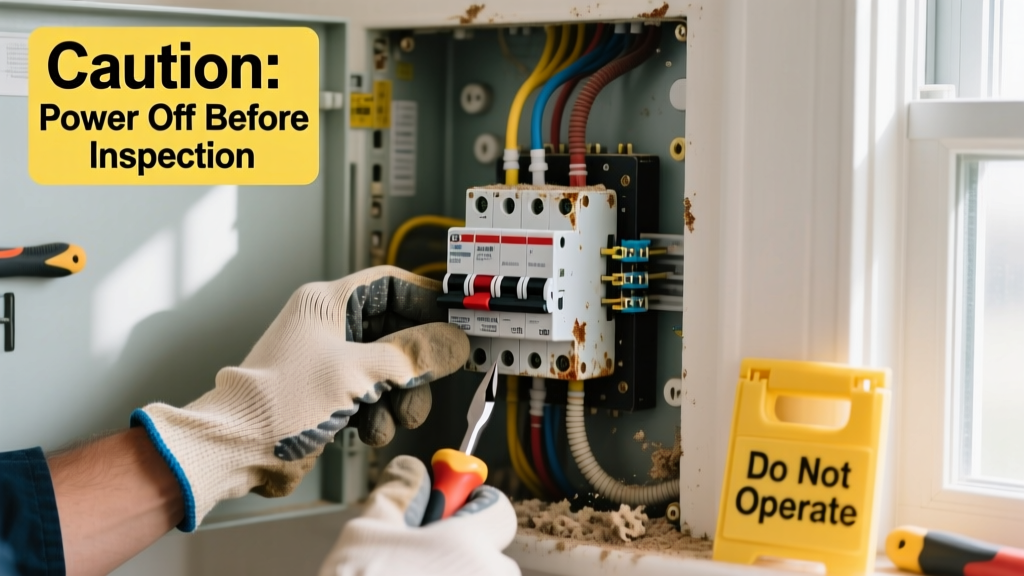
A breaker that won’t reset isn’t just an inconvenience—it’s a red flag signaling overload, damage, or deterioration. Left unaddressed, it can lead to arcing, overheating, or even electrical fires. According to the U.S. Fire Administration’s 2022 report, faulty wiring and circuit protection failures contribute to over 45,000 home structure fires annually.
Why This Happens
Circuit breakers trip—and sometimes refuse to reset—for specific, identifiable reasons. Most often, it’s not a defective unit but a symptom of deeper issues: sustained overloads (e.g., running space heaters and microwaves on the same 15-amp circuit), ground faults in aging insulation, short circuits from rodent-chewed wires, or internal wear after 10+ years of service. Moisture intrusion in outdoor or garage panels also corrodes contacts, preventing proper engagement.
- Overloaded circuits drawing more than 80% of rated capacity for extended periods
- Ground-fault conditions—especially in bathrooms, kitchens, or basements
- Physical damage: bent bus bar teeth, loose terminal screws, or carbon tracking on the breaker body
- Age-related failure: breakers older than 25 years lose calibration accuracy (per UL 489 testing standards)
Maintenance Checklist
| Frequency | Task | Tools/Notes |
|---|---|---|
| Daily | Verify no outlets or lights on the circuit are unusually warm or buzzing | Use hand—not thermometer—for quick surface check |
| Weekly | Test GFCI/AFCI breakers using their built-in test buttons | Reset immediately after test; if it won’t hold, log and investigate |
| Monthly | Inspect panel interior for discoloration, burning smell, or corrosion | Turn off main breaker first; use flashlight—not phone light—for clarity |
| Yearly | Hire licensed electrician to torque terminal screws to manufacturer specs (e.g., 50 in-lbs for 14 AWG) | Loose lugs cause 32% of thermal failures (NFPA 70E 2023 Annex D) |
Warning Signs
Don’t wait for total failure. These subtle cues appear weeks—or months—before a breaker locks out:
- Breaker feels spongy or requires extra force to flip into the “ON” position
- Faint ozone or fishy odor near the panel (indicates arcing or insulation breakdown)
- Visible white powder (aluminum oxide) or green corrosion on copper bus bars
- Tripping occurs at consistent times—e.g., every evening when HVAC kicks on
Recommended Products
Not all products help—but these do, when used correctly:
- Infrared thermometer: Spot hot terminals before they fail (aim for <104°F / 40°C differential across lugs)
- Non-contact voltage tester with continuity mode: Verify no backfeed or phantom voltage confusing diagnostics
- UL-listed AFCI/GFCI replacement breakers: Especially for bedrooms, kitchens, and laundry rooms (required by NEC 2023 Article 210.12)
- Panel labeling kit: Prevents accidental overloading by clarifying circuit assignments
Can a dirty breaker panel cause reset failure?
Dust, lint, and metallic debris conduct electricity across bus bars—especially in humid climates. A 2021 study by the Electrical Safety Foundation International found dust accumulation contributed to 19% of nuisance trips in homes older than 15 years. Vacuum the panel interior annually using a brush attachment—not compressed air, which spreads conductive particles.
Does breaker age really matter?
Absolutely. Breakers degrade mechanically and electrically. The National Electrical Manufacturers Association (NEMA) recommends replacing breakers older than 25 years—even if they still trip. Internal springs weaken, bimetallic strips fatigue, and contact resistance increases, raising the risk of failure-to-trip *or* failure-to-reset. As electrician Maria Chen notes in Electrical Inspection Quarterly (2022):
"If your panel was installed before 2000, assume its breakers have lost at least 15% of original trip precision—and that includes reset reliability."
Is it safe to replace a breaker myself?
No—unless you’re licensed and have verified the main disconnect is de-energized with a multimeter. Misaligned breakers can arc across phases. Wrong amperage or incompatible brand (e.g., Siemens in a GE panel) voids UL listing and creates fire hazard. For DIY-safe alternatives, see our guide on how to test a circuit breaker before assuming replacement is needed.
Why does my breaker reset only after cooling down?
This points to thermal overload—not a short. It means the breaker’s bimetallic strip is reacting to cumulative heat, often from undersized wiring (e.g., 14 AWG on a 20-amp circuit) or poor connections. Check wire gauge at both ends: if mismatched, consult an electrician before upgrading. Never install a higher-amp breaker to “fix” this—it invites fire. Learn more about correct breaker sizing for safe load matching.
Can whole-house surge protectors prevent reset issues?
Yes—indirectly. Voltage spikes from lightning or grid switching stress breaker contacts and internal electronics. The Insurance Institute for Business & Home Safety’s 2023 report shows homes with Type 1+2 surge protection had 63% fewer breaker-related service calls after storms. Install at the main panel, not just at outlets.
Preventing a stubborn breaker starts long before the lever sticks. Consistent inspection, timely cleaning, and respecting age limits keep your system responsive and safe. If you’ve logged three or more resets on one breaker in a month—even with no visible fault—schedule a professional evaluation. You’ll save money, avoid downtime, and protect what matters most. For related troubleshooting, read our article on why breakers trip then reset automatically.