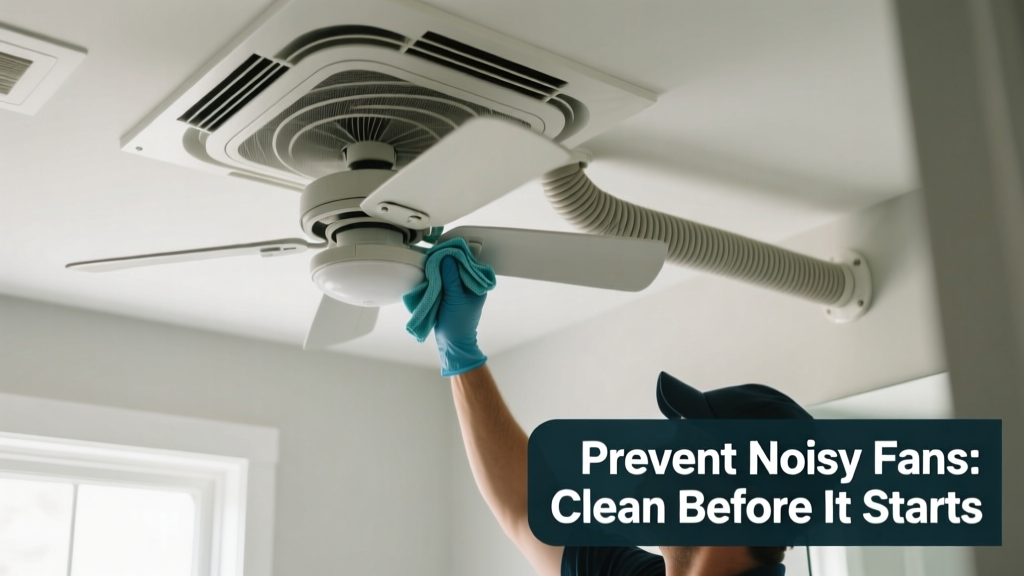
A noisy bathroom fan isn’t just annoying—it’s a red flag. Squealing, rattling, or grinding sounds often signal failing bearings, loose components, or accumulated dust that reduces airflow by up to 30% (U.S. Department of Energy, 2022). Left unchecked, that noise can escalate into motor failure, moisture buildup, and mold growth behind walls—costing hundreds in repairs.
Why This Happens
Noise rarely appears out of nowhere. It’s almost always the result of preventable wear or neglect. Dust and hair clog the fan blades and housing, forcing the motor to work harder. Vibration increases when mounting screws loosen or ductwork sags. Bearings degrade over time—especially in humid environments—and unbalanced blades wobble at high RPMs. According to the Home Ventilating Institute’s 2021 Field Study, 68% of noisy fan complaints traced back to improper installation or lack of annual cleaning.
Maintenance Checklist
| Frequency | Task |
|---|---|
| Daily | Run fan for full shower duration + 2 minutes after (prevents moisture saturation) |
| Weekly | Wipe grille surface with damp microfiber cloth; check for visible dust or hair clumps |
| Monthly | Vacuum grille and accessible duct opening with brush attachment; inspect for loose screws |
| Yearly | Remove grille and housing; clean blades and motor housing with compressed air; lubricate sleeve bearings (if non-sealed); verify duct seal integrity |
Warning Signs
Don’t wait for a screech to act. These subtle cues appear weeks—or even months—before full breakdown:
- A low hum that’s noticeably louder than when first installed
- Vibration you can feel through the ceiling or wall near the fan
- Intermittent clicking during startup or shutdown
- Fan continues running briefly after switch-off (indicates capacitor fatigue)
- Reduced airflow—even with clean grille—suggests internal duct blockage or motor lag
Recommended Products
Not all fans or accessories are built for quiet longevity. Prioritize these features when replacing or upgrading:
- ECM (electronically commutated) motors — 40% quieter and 50% more energy-efficient than standard PSC motors (ENERGY STAR® Product Certification Guide, 2023)
- Sound-rated housings — Look for ≤ 0.3 sones (e.g., Panasonic WhisperGreen or Broan QTXE series)
- Rigid metal ducting — Avoid flexible plastic ducts, which amplify vibration and restrict airflow by up to 45%
- Vibration-dampening mounting kits — Rubber grommets or spring isolators cut transmitted noise by 7–12 dB
Can I lubricate my bathroom fan motor myself?
Only if it has accessible, non-sealed sleeve bearings—and only with lightweight, non-detergent oil like 3-in-1 Oil SAE 20. Most modern fans use sealed ball bearings or brushless DC motors that require no lubrication. Over-oiling attracts dust and creates sludge. If you’re unsure, consult your model’s manual or check our fan replacement guide for compatible service parts.
Why does my fan sound fine one week and loud the next?
Sudden onset usually points to a mechanical shift: a blade hitting the housing due to warped plastic, a screw vibrating loose inside the motor mount, or duct sagging until it contacts the fan assembly. Humidity spikes can also swell wooden framing around the housing, changing resonance. Inspect the unit while it runs—use a flashlight and listen from the attic side if accessible.
Does duct length affect fan noise?
Absolutely. Every 90° elbow adds ~15 feet of equivalent duct length. Fans lose static pressure capacity fast—exceeding 25 feet of total equivalent duct length (including bends) forces the motor to strain, increasing both noise and heat. For best results, keep duct runs under 15 feet with minimal bends and use 4-inch rigid metal ducting. See our exhaust duct installation guide for layout tips.
Is it normal for a new fan to make noise during the first few weeks?
Minor settling sounds—like faint ticking as thermal expansion shifts plastic housing—are typical for the first 10–14 days. But persistent whining, grinding, or rhythmic thumping is never normal. That indicates misaligned blades, shipping damage, or incorrect mounting. Document the sound and contact the manufacturer within the warranty window—most offer 3–5 year motor coverage.
How often should I replace the entire fan unit?
With consistent maintenance, quality fans last 10–15 years. However, if yours is over 8 years old and requires frequent cleaning or shows multiple warning signs, consider proactive replacement. According to the National Association of Home Builders’ 2022 Remodeling Impact Report, upgrading to a modern low-sone fan improves perceived home value by 3.2% in buyer surveys—plus eliminates future noise-related callbacks.
What’s the #1 mistake homeowners make with bathroom fans?
“People treat fans like light switches—they flip them on only when needed and forget they’re mechanical devices with moving parts. A fan used 10 minutes a day still spins 3,650 times per year. That adds up—especially without cleaning.” — Sarah Lin, HVAC Technician & NAHB Certified Aging-in-Place Specialist (2023)
Preventing noise starts long before the first squeak. It’s about consistency—not crisis response. Stick to your maintenance table, listen closely each month, and upgrade proactively when efficiency drops. Your ears—and your drywall—will thank you. For help choosing a quiet replacement, explore our top-rated quiet bathroom fans or troubleshoot specific models in our fan troubleshooting database.