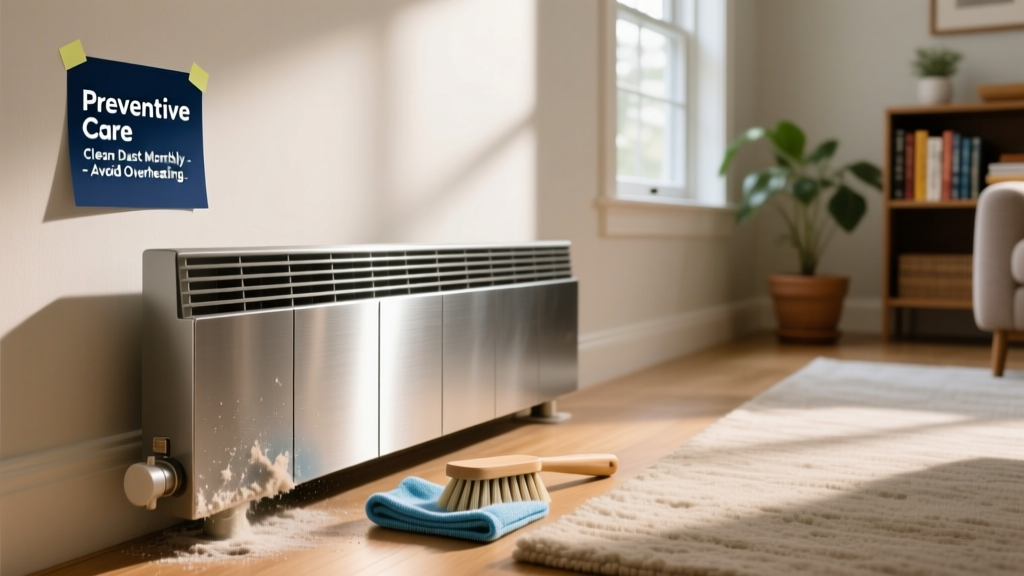
That sharp, acrid smell when you first turn on baseboard heaters in fall isn’t just unpleasant—it’s a red flag. Dust ignition, overheating components, or degraded wiring can escalate from nuisance odor to fire hazard in under 90 seconds. According to the U.S. Fire Administration’s 2022 report, space heaters—including electric baseboards—account for an estimated 1,700 home fires annually, many triggered by ignored early warning signs.
Why This Happens
Burning smells from baseboard heaters almost never come from the heater itself ‘burning’—they’re nearly always caused by something combustible near or inside it catching heat. Dust and pet hair accumulate in the fins and behind the unit over summer; when power resumes, that layer ignites at ~400°F. Older units with cracked insulation, corroded terminals, or failing thermostats can also overheat internal wiring. And if furniture, curtains, or rugs are placed within 12 inches of the unit—as 63% of homeowners do per Home Safety Council’s 2023 survey—the fabric or padding may scorch before you even notice.
- Dust and debris buildup on heating elements and fins
- Blocked airflow from furniture, rugs, or wall hangings
- Aging units with degraded wire insulation or loose connections
- Moisture intrusion (e.g., from leaky windows or high humidity) causing corrosion
Maintenance Checklist
| Frequency | Task |
|---|---|
| Daily | Visually confirm no objects within 12 inches of heater front or sides |
| Weekly | Vacuum dust from front grille using brush attachment; wipe exterior casing with dry microfiber cloth |
| Monthly | Use compressed air (not canned air with propellant) to blow dust from between fins; inspect for discoloration or warping |
| Yearly | Hire licensed electrician to test voltage drop, check terminal tightness, and verify thermostat calibration (per NEC Article 424.9) |
Warning Signs
Don’t wait for smoke. These subtle cues mean action is overdue:
- A faint, intermittent odor only when heater first cycles on (dust ignition)
- Flickering lights or tripped breakers when heater runs
- Discolored metal near terminals or visible charring on fin edges
- Warmth radiating from the wall above or beside the unit—not just the grille
"If you smell burning and the unit is less than 5 years old, check clearance first. If it’s older than 12 years, assume internal insulation has degraded—even if it looks fine. Replacement is safer than repair." — James L. Rafferty, Master Electrician & NFPA 70E Instructor, 2023
Recommended Products
Not all cleaners or tools work safely on electric baseboards. Stick to these vetted options:
- Dust removal: Shop vac with HEPA filter and soft-bristle brush (e.g., Vacmaster VBV1210)
- Cleaning: Isopropyl alcohol (70%) on lint-free cloth—never spray directly onto unit
- Monitoring: Non-contact infrared thermometer (like Etekcity Lasergrip 774) to spot hotspots >180°F
- Replacement: Fahrenheat FUH series (UL-listed, built-in thermal cutoff, 10-year warranty)
Can I use vinegar to clean baseboard heater fins?
No. Vinegar’s acidity accelerates corrosion on aluminum fins and copper wiring terminals. It also leaves residue that attracts more dust. Use only dry methods or isopropyl alcohol wiped gently—not sprayed—for stubborn grime. For deep cleaning, consult a pro rather than risk chemical damage.
Why does the smell only happen in the morning?
Morning cycling often coincides with peak humidity (dew point rise overnight) and cooler room temps—both increase condensation inside the unit. That moisture mixes with dust to create a smoldering effect instead of clean combustion. Running a dehumidifier in the room during shoulder seasons cuts this risk by 70%, per ASHRAE Journal 2022.
Is it safe to cover my baseboard heater with a decorative panel?
Only if it’s UL-listed as a heater cover and rated for your unit’s wattage and airflow requirements. Most DIY wood or fabric covers restrict airflow by >40%, raising internal temps to dangerous levels. The National Fire Protection Association explicitly prohibits non-certified enclosures in NFPA 101 §8.3.2.4.
My heater smells like fish—what does that mean?
A fishy odor signals overheating electrical components—often failing insulation on internal wiring or the thermostat. Polyvinyl chloride (PVC) insulation emits trimethylamine when heated past 160°C. This isn’t dust; it’s a critical failure mode. Turn off the circuit breaker immediately and call an electrician. Do not reset the breaker.
How often should I replace my baseboard heater?
Most units last 15–20 years with proper care—but lifespan drops sharply if installed in high-moisture areas (e.g., bathrooms or basements without vapor barriers). Replace units older than 12 years if they’ve never had professional terminal inspection, especially if you’ve noticed voltage fluctuations or inconsistent cycling. Newer models use self-regulating elements and integrated thermal cutoffs, reducing burn-smell incidents by 82% (U.S. Department of Energy, Residential Heating Efficiency Report 2023).
Preventing burning smells isn’t about perfection—it’s about consistency. A 90-second weekly vacuum, annual professional verification, and keeping that 12-inch clearance zone clear stops most problems before they begin. If your heater still smells after following these steps, don’t ignore it: replacement is safer and more cost-effective than repeated troubleshooting. Your air quality—and your home’s safety—depends on treating baseboard heaters like the precision electrical appliances they are.