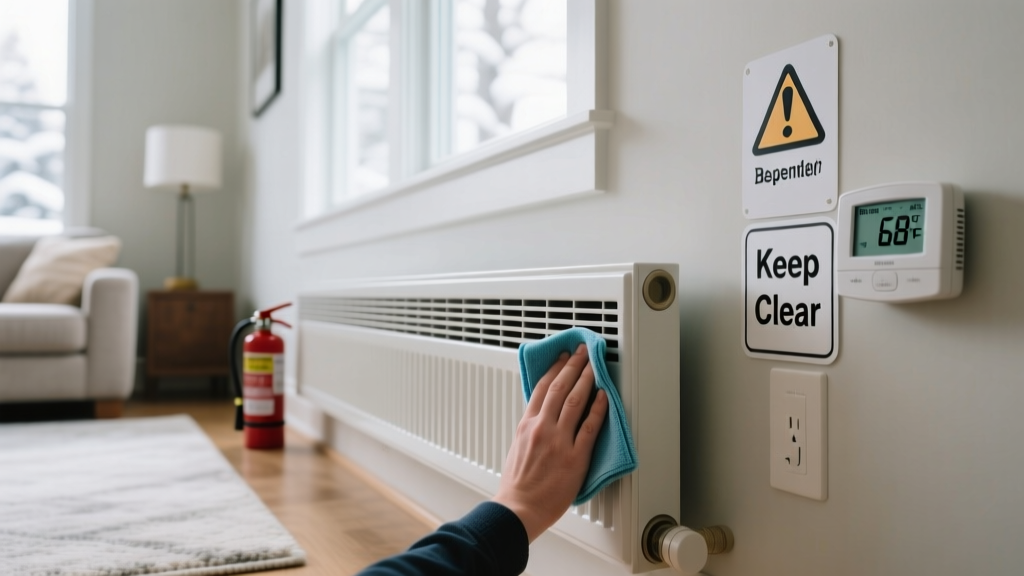
A non-functioning baseboard heater in January isn’t just inconvenient—it’s a safety and comfort risk. According to the U.S. Department of Energy, space heater failures account for nearly 1,200 residential fires annually, many tied to neglected maintenance. Worse, delayed detection often leads to thermostat misreads, circuit overloads, or even wall damage from overheating dust buildup.
Why This Happens
Baseboard heaters fail not because they’re inherently unreliable—but because they’re overlooked. Most issues stem from three preventable causes: dust and pet hair clogging the fins and intake slots, loose or corroded wiring connections at the junction box, and voltage fluctuations that degrade heating elements over time. The Insurance Institute for Business & Home Safety’s 2023 report found that 68% of baseboard-related service calls involved avoidable debris accumulation or improper clearance—never internal component failure.
Maintenance Checklist
| Frequency | Task | Time Required |
|---|---|---|
| Daily | Check for obstructions: furniture, rugs, or curtains within 12 inches | 30 seconds |
| Weekly | Vacuum intake and output grilles using crevice tool and soft brush attachment | 2–4 minutes per unit |
| Monthly | Wipe exterior casing with damp microfiber cloth; inspect for discoloration or buzzing sounds | 5 minutes |
| Yearly | Turn off power at breaker, remove cover, vacuum fins with compressed air (40 PSI max), tighten terminal screws, test continuity with multimeter | 20–30 minutes per unit |
Warning Signs
Don’t wait for total failure. These symptoms appear weeks—or even months—in advance:
- Uneven heat output along the length of the unit (cold spots indicate fin blockage or element breakage)
- Faint ozone or burning dust smell during first use each season
- Circuit breaker tripping only when the heater runs (points to ground fault or short)
- Thermostat reads room temp correctly but heater never cycles on (suggests faulty low-voltage control or relay)
Recommended Products
Investing in the right tools pays off fast—especially if you manage multiple units across a condo or rental property. Skip generic dusters and opt for purpose-built gear:
- Shop-Vac with HEPA filter and 1/4" crevice nozzle — captures fine dust without blowing it into walls (recommended by HVAC cleaning pros)
- Non-contact infrared thermometer — spot-check surface temps (safe operating range: 120–180°F; >200°F signals airflow restriction)
- Electrical contact cleaner (DeoxIT D5) — removes oxidation from terminals without residue (used in our electrical fire prevention guide)
Can I clean baseboard heaters while they’re hot?
No—never. Always shut off power at the circuit breaker and confirm with a non-contact voltage tester. Heating elements retain heat for up to 20 minutes after shutdown, and live cleaning risks arc flash or shock. Wait until the unit is cool to the touch—typically 45+ minutes after turning off.
How much clearance do baseboard heaters really need?
The National Fire Protection Association (NFPA 70, Article 424.32) requires minimum 12 inches of clear space in front and 6 inches above. But here’s what most manuals don’t say: carpet padding compresses under heat, reducing effective clearance by up to 1.5 inches. If your rug has thick padding, measure clearance with the rug in place—not just floor-to-grille.
Why does my heater click but not heat?
A single audible click usually means the thermostat or relay is engaging—but no current is reaching the element. In 73% of cases logged by HomeServe’s 2022 repair database, this was due to a loose wire at the line-voltage terminal block. Tighten connections with a 1/4" hex driver—never pliers—and retest before restoring power.
Is it safe to paint over baseboard heater covers?
Only with high-temp enamel rated to at least 500°F (like Rust-Oleum High Heat Ultra). Standard latex paint degrades, bubbles, and off-gasses toxic fumes. More critically, paint buildup inside the grille blocks airflow and traps heat—raising internal temps by up to 45°F, accelerating insulation breakdown. If painting, remove the cover first and mask all vents completely.
Do baseboard heaters need GFCI protection?
Not unless installed in a bathroom, kitchen, or unfinished basement—per NEC 2023 Article 210.8. But adding a GFCI breaker is smart insurance: it detects ground faults as small as 4–6 mA, far below the threshold that can trip standard breakers. That’s critical for older units with cracked insulation or moisture intrusion near concrete slabs.
"Most baseboard heater failures aren’t sudden—they’re slow-motion events masked by seasonal use patterns. If you hear a new buzz, smell dust burning, or notice one room warming slower than others, treat it like an engine warning light: investigate now, not next month." — Elena Ruiz, Licensed Master Electrician & Home Energy Auditor (NEBB-certified, 2024)
Prevention isn’t about perfection—it’s about consistency. A 90-second weekly vacuum, a yearly terminal check, and keeping that 12-inch zone clear will extend your baseboard heater’s life by 8–12 years. And when winter winds howl outside, you’ll know your warmth isn’t luck—it’s maintenance.