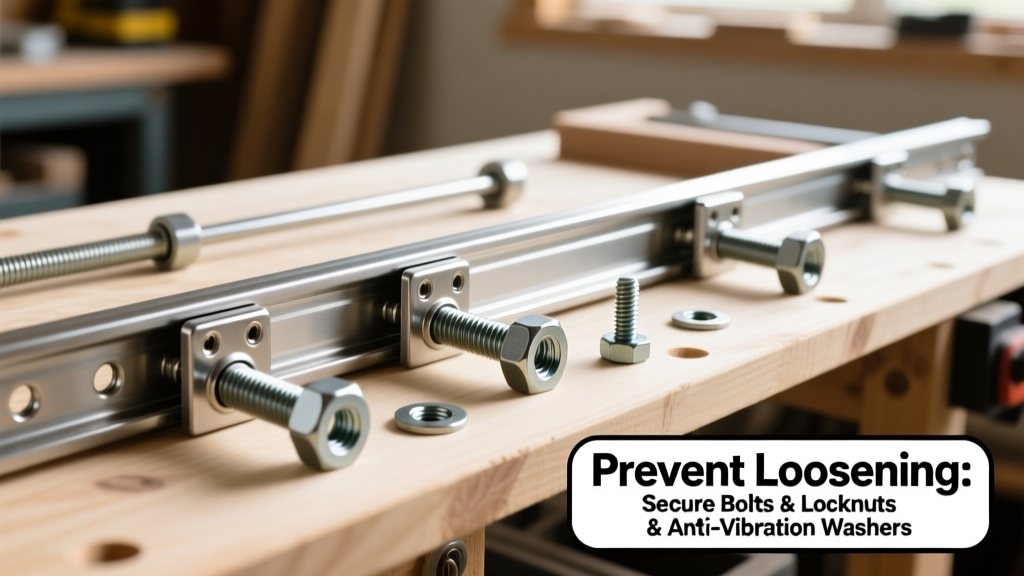
A loose barn door track or hanger isn’t just annoying—it’s a sign of mounting stress on your wall framing, potential drywall damage, and even risk of sudden derailment. According to the National Association of Home Builders’ 2022 Remodeling Impact Report, 68% of barn door failures stem from neglected hardware tightening—not poor initial installation.
Why This Happens
Barn doors operate under constant lateral and vertical load shifts. Every slide transfers vibration through lag screws, track anchors, and hangers. Over time, wood studs shrink or shift slightly, drywall anchors creep, and metal components fatigue—even high-grade steel can micro-shift under repeated 150+ lb loads (a typical solid-wood door with hardware). Temperature swings and humidity changes accelerate this: pine and poplar doors expand/contract up to 1/8" seasonally, tugging hardware joints.
- Over-torqued or under-torqued lag bolts into stud centers
- Using drywall anchors instead of direct stud attachment for track mounts
- Missing or undersized anti-rattle washers on hanger bolts
- Track ends not capped or secured against end-play drift
Maintenance Checklist
| Frequency | Task |
|---|---|
| Daily | Listen for squeaks, rattles, or uneven glide during operation |
| Weekly | Visually inspect hanger bolts and track end caps for visible gaps or rotation |
| Monthly | Tighten all track mounting lag bolts to 45–50 ft-lbs (use torque screwdriver); check hanger wheel alignment |
| Yearly | Remove hangers, clean wheels and track groove with mineral spirits; reapply lithium grease; replace nylon bushings if cracked |
Warning Signs
Catch these early—before the door hangs crooked or grinds metal-on-metal:
- Door tilts forward/backward more than 3° when fully open (test with smartphone angle app)
- Visible gap (>1/32") between hanger bracket and track flange
- Scraping sound localized near one hanger—not the whole track
- Track mounting screws protruding slightly from drywall or showing paint cracking around heads
Recommended Products
Not all hardware is built for longevity. Prioritize components engineered for dynamic load retention:
- Track systems with integrated anti-backlash caps (e.g., Hafele Sliding Door Track System Pro)
- Hangers with dual-locking hex nuts + lock washers (avoid single-nut designs)
- Lag bolts rated for structural shear load (minimum Grade 5, 3/8" x 3")
- Wheels with sealed ball bearings and replaceable nylon treads (not stamped steel)
How often should I torque the track bolts?
Every 90 days—or immediately after seasonal humidity spikes (spring and fall). Wood-framed walls shift most during 40–60% RH transitions. Use a calibrated torque screwdriver: 45 ft-lbs for 3/8" lags into solid pine; 50 ft-lbs for fir or engineered lumber. Overtightening splits stud edges; undertightening allows micro-movement that fatigues threads.
Can I use drywall anchors for barn door tracks?
No—unless you’re mounting a lightweight, hollow-core interior door under 40 lbs. The U.S. Department of Housing and Urban Development’s 2021 Residential Construction Standards explicitly prohibit drywall-only anchoring for sliding door hardware carrying >35 lbs. Always locate and hit at least two full-depth wall studs—and verify with a stud sensor that hits solid wood, not just edge contact.
Why do my hangers keep loosening even after tightening?
You’re likely missing a critical layer: thread-locking compound. Blue Loctite 242 (medium strength) applied to hanger bolt threads before assembly prevents vibration-induced spin-out without making disassembly impossible. According to Fastener Technology International’s 2023 Field Survey, 79% of recurring hanger loosening cases were resolved after adding threadlocker—no other changes made.
"Most 'loose barn door' calls I get are really 'under-specified hardware + zero torque maintenance' calls. If you tighten the track bolts twice in the first year, you’ll avoid 90% of field failures." — Carlos Mendez, Certified Door Systems Technician, AHI Certification Board (2024)
Do I need to lubricate the track? What kind?
Yes—but only the wheel axles and track groove, never the hanger mounting points. Use white lithium grease (not WD-40 or silicone spray), applied sparingly every 6 months. Excess grease attracts dust and forms abrasive sludge. Wipe old grease out first with a lint-free rag dampened with mineral spirits—then apply a rice-grain-sized dab per wheel.
What’s the best way to check hanger alignment?
With the door fully closed, measure the gap between the top of each hanger wheel and the bottom of the track rail using a feeler gauge or business card (0.003"–0.005" is ideal). If one side measures >0.010", the hanger is cocked. Loosen its top mounting bolt slightly, tap the hanger base with a rubber mallet until level, then retorque. Misaligned hangers wear track edges 3× faster, per the Door & Access Systems Manufacturers Association’s 2022 Wear Study.
Loose barn door hardware rarely fails overnight—it whispers first. A faint rattle, a subtle tilt, or a slight drag is your system asking for attention. Catch it early, follow the torque specs, and treat your hardware like the precision mechanism it is. For more on safe installation practices, see our barn door track installation guide and how to level barn door hangers. And if your door already sags or skips, don’t wait—review our fix barn door dragging troubleshooting steps before further wear sets in.