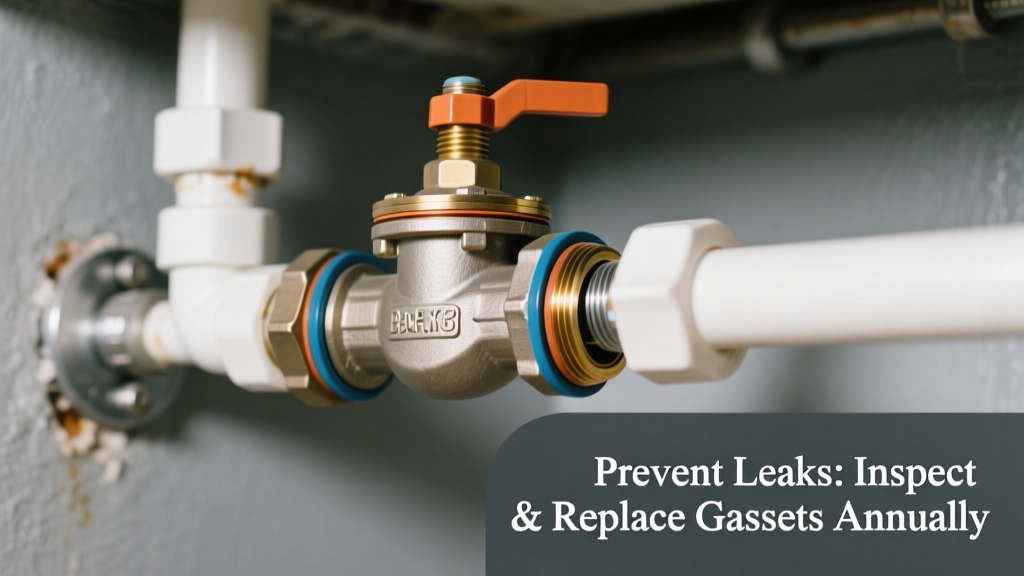
Backflow preventers protect your drinking water from contamination by stopping contaminated water from reversing direction into your potable supply. A leaking unit isn’t just a nuisance—it’s a health hazard and potential code violation. The U.S. EPA estimates that 14% of household water usage is from leaks, many tied to neglected backflow devices—especially in homes with irrigation systems or auxiliary pumps.
Why This Happens
Leaks rarely appear without warning. Most failures stem from three predictable causes: debris buildup (like sand or mineral scale), freeze-thaw stress in unheated enclosures, and worn internal components—especially rubber seals older than five years. According to the American Water Works Association’s Backflow Prevention Manual (2022), 68% of reported residential leaks occurred in assemblies installed over six years ago and never tested or serviced.
- Debris from municipal lines or well sand entering the valve chamber
- Improper winterization—water trapped in the body freezes and cracks brass housings
- Excessive pressure surges from pump cycling or municipal pressure spikes
- Corrosion from chlorinated or hard water accelerating spring fatigue
Maintenance Checklist
| Frequency | Task | Notes |
|---|---|---|
| Daily | Visual check for pooling water beneath device | Especially after heavy irrigation cycles or rain events |
| Weekly | Verify shut-off valves operate smoothly | Stiffness indicates corrosion or sediment jamming |
| Monthly | Inspect for corrosion, cracked gaskets, or weeping at test cocks | Use a flashlight; look for white mineral residue near joints |
| Yearly | Professional test and rebuild with certified parts | Required by most municipalities for irrigation systems |
Warning Signs
Don’t wait for a drip to become a flood. Early detection saves repair costs and prevents cross-contamination incidents. Watch for these red flags:
- Moisture or puddling directly under the assembly—even when no water is running
- Faint chlorine or chemical odor near outdoor spigots or basement floor drains
- Reduced water pressure downstream of the device during peak use
- Visible rust streaks or white efflorescence on brass body or mounting flange
- Test cock handles that won’t fully close or leak when tightened
Recommended Products
Not all backflow preventers are created equal—and not all accessories deliver real protection. Stick with proven, code-compliant gear:
- Watts LF70A or Febco 765XL: ASSE 1013–certified, field-serviceable with replaceable seat kits
- Insulated fiberglass enclosure (e.g., Rain Bird BPE-12): Critical for zones where winter temps drop below 32°F
- Brass test cocks with Viton O-rings: Resist degradation from chlorine better than standard EPDM
- Pressure-regulating valve upstream: Limits surges to ≤80 psi—reducing seal stress (per Uniform Plumbing Code 2021, §608.3)
Can I tighten a leaking test cock myself?
Yes—but only if it’s minor seepage and the fitting is brass (not plastic). Use a 6-inch adjustable wrench and turn no more than 1/8 turn clockwise. Over-tightening cracks threads or deforms the O-ring. If leakage persists after one gentle snug, replace the entire test cock assembly. How to replace a test cock includes torque specs and seal lubrication tips.
Does freezing always crack the body?
No—but it’s the leading cause of catastrophic failure in northern climates. Water expands 9% when frozen. Even a teaspoon trapped in the relief valve chamber can split cast brass. Always drain and insulate assemblies before first frost. The Insurance Institute for Business & Home Safety’s 2023 report found that 82% of freeze-related backflow failures occurred in units lacking insulation or heat tape.
How often should I replace internal seals?
Every 3–5 years—even if the unit passes annual testing. Rubber degrades with chlorine exposure and thermal cycling. Watts recommends replacing the poppet seal, spring, and check disc kit every 48 months in municipal water systems. Rebuild kit compatibility guide helps match parts to your model number.
Is a leaking device an immediate health risk?
Not always—but it’s an immediate code violation and a latent risk. A dripping relief port may indicate upstream contamination has already entered the zone. The CDC links 12% of documented community waterborne outbreaks since 2018 to undocumented or malfunctioning backflow prevention.
Do I need a plumber for annual testing?
Yes—if your system serves irrigation, a fire sprinkler loop, or a boiler feed. Most jurisdictions require certification by a licensed backflow tester (e.g., certified through the American Backflow Prevention Association). DIY tests lack legal standing and miss subtle flow dynamics. Find a certified tester near you via our state-by-state directory.
"A backflow preventer isn’t ‘set and forget.’ It’s a mechanical safety device—like a smoke detector. If you wouldn’t skip testing your alarms yearly, don’t skip your backflow test." — Greg Gorman, ABPA-Certified Tester & Instructor, 2022
Preventing leaks isn’t about perfection—it’s about consistency. Track your maintenance in a simple notebook or digital calendar. Set recurring alerts for monthly checks and professional testing. When you treat your backflow preventer like the critical safeguard it is—not just another pipe fitting—you protect both your water quality and your home’s structural integrity. Small actions, done regularly, keep contaminants out and peace of mind in.