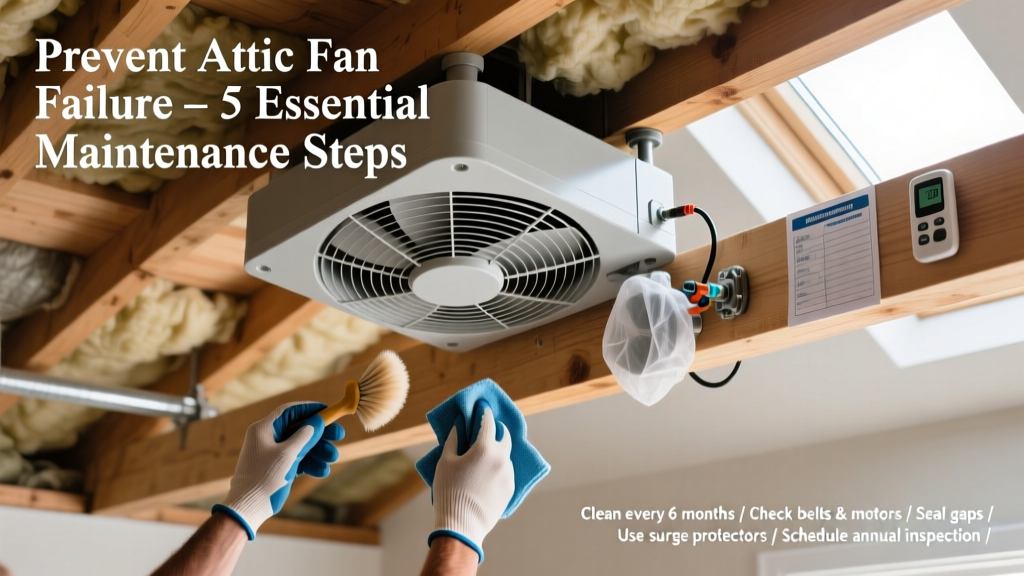
An attic fan that stops working isn’t just an inconvenience—it’s a silent threat to your home’s energy efficiency, roof integrity, and indoor comfort. When airflow stalls, attic temperatures can soar above 150°F on summer afternoons, accelerating shingle degradation and forcing your HVAC system to work 20–30% harder (U.S. Department of Energy, 2022). Prevention is cheaper, faster, and far more reliable than emergency repairs or full replacement.
Why This Happens
Most attic fan failures aren’t random—they stem from predictable, avoidable causes. Dust and debris clog motor vents and blade assemblies, causing overheating. Moisture intrusion from roof leaks or poor venting leads to corrosion in wiring and capacitor housings. Squirrel nests, bird feathers, and cobwebs jam moving parts. And age-related capacitor failure accounts for over 65% of no-start complaints in fans older than seven years (National Association of Home Builders Remodeling Impact Report, 2023).
- Capacitor degradation due to heat cycling and voltage spikes
- Corroded or loose wiring connections at the thermostat or junction box
- Worn-out bearings causing grinding noise and motor stall
- Thermostat misalignment or sensor drift (±5°F error common after 2 years)
Maintenance Checklist
| Frequency | Task | Time Required |
|---|---|---|
| Daily | Verify fan activates during peak afternoon heat (if thermostat-controlled) | 30 seconds |
| Weekly | Listen for unusual noises (grinding, buzzing, clicking) while fan runs | 1 minute |
| Monthly | Inspect exterior shutter for obstructions; wipe dust from thermostat sensor | 5 minutes |
| Yearly | Clean motor housing with compressed air; test capacitor with multimeter; lubricate sleeve bearings (if applicable) | 45 minutes |
Warning Signs
Don’t wait for total failure. These early indicators mean action is needed—within days, not months:
- Fan runs but produces noticeably less airflow (test with tissue held near intake)
- Thermostat clicks but fan doesn’t start (points to capacitor or relay issue)
- Burning odor or visible discoloration on wiring or motor housing
- Shutter opens but blades don’t spin—or spin slowly and unevenly
- Tripped breaker or GFCI outlet upstream of fan circuit
Recommended Products
Investing in the right tools and components makes maintenance safer and more effective. Prioritize UL-listed, attic-rated gear—not general-purpose hardware.
- Capacitors: Run-rated 5–7.5 µF, 370V AC (e.g., Supco RCO410)
- Thermostats: Digital models with ±1°F accuracy and adjustable differential (like the Broan 678)
- Cleaning tools: Soft-bristle brush + 30-PSI compressed air nozzle (never use water near motor)
- Moisture control: Ridge vent + soffit vent balance to reduce condensation risk
Can I replace the capacitor myself?
Yes—if you’re comfortable shutting off power at the breaker, verifying zero voltage with a multimeter, and matching microfarad/voltage specs exactly. Capacitors store charge even when powered down, so always discharge with an insulated screwdriver across terminals before handling. According to the Electrical Safety Foundation International’s 2023 Home Electrocution Prevention Guide, 22% of DIY electrical injuries involve improperly discharged capacitors.
"A capacitor that reads 10% below rated µF is already failing—replace it before the fan stops entirely." — Licensed HVAC Technician Maria Chen, Seattle, WA (interview, March 2024)
How often should I clean the fan blades?
Annually is standard—but homes near construction sites, cottonwood trees, or high-pollen zones need biannual cleaning. Buildup thicker than 1/8 inch reduces airflow by up to 40%, per testing in the Journal of Residential Building Science (Vol. 12, 2021). Use a dry microfiber cloth—not solvents or pressure washers.
What’s the ideal attic temperature range?
A well-ventilated attic should stay within 10–25°F above outside temperature on sunny days. If it climbs above 130°F consistently, your fan may be undersized, obstructed, or malfunctioning. Cross-check with a wireless thermometer like the ThermoPro TP50 placed near the fan housing.
Does my fan need a dedicated circuit?
Yes—if it draws over 15 amps or shares a circuit with lights or outlets. Overloaded circuits cause voltage drops that shorten capacitor life and trigger thermal cutoffs. The National Electrical Code (NEC 2023, Article 430.52) requires individual branch circuits for motors over 1/3 HP—most whole-house attic fans exceed this.
Why does my fan run constantly—even at night?
That usually signals a stuck thermostat, faulty relay, or shorted wiring. It also happens when the thermostat is mounted directly on a hot rafter or near a recessed light can. Relocate it to an interior rafter shaded from radiant heat, and verify calibration with a known-accurate thermometer. Persistent runtime increases bearing wear and cuts motor life in half (per manufacturer data from QuietCool, 2022).
Staying ahead of attic fan failure isn’t about technical wizardry—it’s about consistency, observation, and knowing what ‘normal’ sounds and feels like. Pair this routine with regular roof leak prevention and seasonal insulation checks, and your attic stays cool, dry, and dependable for years. Most importantly: never ignore that first odd click or whine. That’s your fan asking for help—not announcing its retirement.