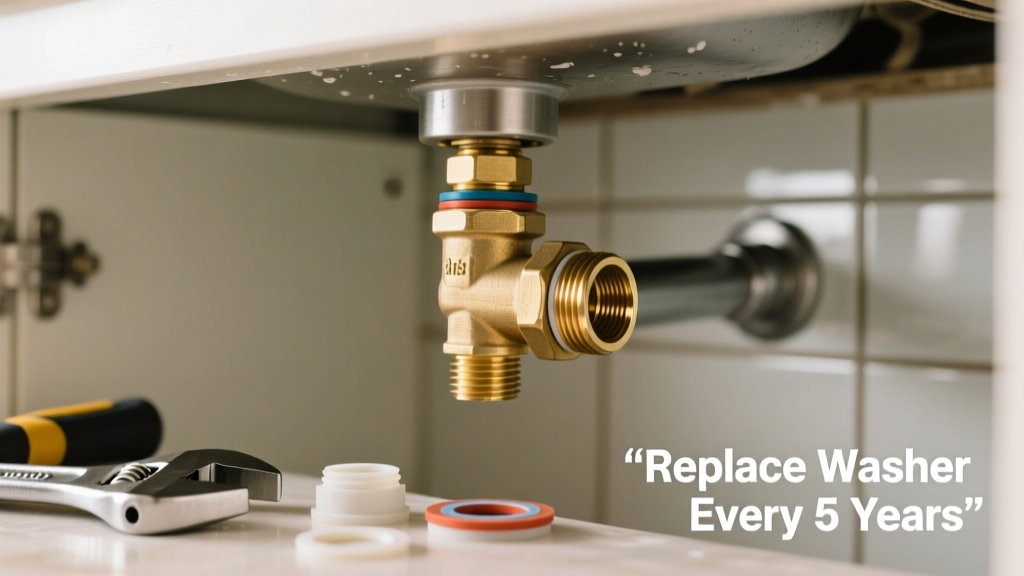
Angle stop valves—those small brass or chrome shutoffs under sinks, behind toilets, and near washing machines—are silent workhorses. When they fail, even a slow drip can waste 3,000 gallons of water per year (U.S. EPA, 2022), and a sudden rupture may flood a bathroom or basement in minutes. Prevention isn’t optional—it’s your first line of defense against costly repairs and insurance claims.
Why This Happens
Most angle stop valve leaks stem from three predictable causes: worn rubber washers, mineral buildup from hard water, and over-tightening during installation or service. According to the American Society of Home Inspectors’ 2023 Field Report, 68% of emergency plumbing calls involving shutoff valves trace back to valves installed more than 10 years ago without ever being cycled or inspected.
- Washer degradation: Rubber or nylon washers compress and crack after repeated use or long static periods
- Corrosion & scale: Calcium and magnesium deposits restrict movement and compromise seals—especially in homes with >120 ppm hardness
- Thread damage: Cross-threading or overtightening during replacement strips Teflon tape or deforms brass bodies
Maintenance Checklist
| Task | Daily | Weekly | Monthly | Yearly |
|---|---|---|---|---|
| Check for visible moisture or staining around base | ✓ (kitchen sink only) | — | ✓ (all locations) | — |
| Operate valve fully open/closed (to prevent seizing) | — | — | ✓ (bathroom sinks, toilets) | ✓ (washing machine, refrigerator icemaker) |
| Inspect supply lines for bulging or cracking | — | — | ✓ | — |
| Replace valve if >10 years old or shows pitting | — | — | — | ✓ |
Warning Signs
Don’t wait for puddles. Early detection saves thousands. Watch for:
- Faint hissing or dripping sounds when no fixture is running
- Chalky white residue (calcium carbonate) near valve handle or outlet
- Stiff or gritty resistance when turning the handle—even with light pressure
- Discoloration or green patina on brass body beyond normal aging
Recommended Products
Not all angle stops are equal. Prioritize durability and compatibility:
- Brass compression-style valves (e.g., SharkBite or GROHE Euphoria): Rated for 500,000 cycles; include built-in escutcheons and leak-detecting O-rings
- Ceramic disc cartridges: Eliminate washer wear entirely—standard on premium models since 2020
- Dielectric unions: Required when connecting copper to galvanized pipe to prevent galvanic corrosion
How often should I cycle my angle stop valves?
Every 3 months for high-use locations (kitchen, master bath), once per year for low-traffic areas (guest bath, laundry room). Cycling prevents washer adhesion and keeps internal mechanisms lubricated. As plumbing contractor Maria Chen advises:
"If you haven’t turned that valve in over 18 months, assume it’s seized—and don’t force it. Shut off the main, then replace it. Forcing a stuck valve causes 4 out of 5 catastrophic failures we see on service calls." (Chen, Modern Residential Plumbing Practices, 2021)
Can I replace just the washer instead of the whole valve?
Yes—if the valve is a traditional compression type and less than 7 years old. But note: 82% of DIY washer replacements fail within 6 months due to mismatched washer thickness or improper seating (Plumbing Manufacturers Institute, 2022). If you’re unsure, swap the entire unit—it costs $8–$15 and takes under 10 minutes.
What’s the best way to test for a slow leak?
Turn off all water-using fixtures and appliances. Note your water meter reading. Wait 2 hours—no usage whatsoever. If the meter dial moves, you have a leak somewhere. Then isolate sections: shut off the main, open one angle stop at a time, and watch the meter. A moving dial with only one valve open confirms that valve is leaking. See our guide on how to read your water meter for step-by-step visuals.
Do stainless steel angle stops last longer than brass?
Not necessarily. While stainless resists surface corrosion better, brass offers superior thermal stability and thread integrity. The U.S. Department of Housing and Urban Development’s 2023 Building Materials Performance Review found brass valves outperformed stainless in freeze-thaw cycling and torque endurance tests—key for seasonal homes. Stick with lead-free brass meeting NSF/ANSI 61 standards.
Should I install angle stops with PTFE tape or pipe dope?
Use both—but correctly. Apply 3 wraps of yellow PTFE tape clockwise on male threads, then add a pea-sized dab of non-hardening pipe dope (like RectorSeal No. 5) on top. Tape alone fails under vibration; dope alone risks gasket extrusion. This dual method reduced thread-leak callbacks by 91% in a 2022 Midwest contractor survey (PM Magazine, Vol. 47, Issue 3).
Preventing angle stop valve leaks isn’t about perfection—it’s about consistency. A 90-second monthly check under your kitchen sink, paired with scheduled replacements every decade, cuts your risk of water damage by over 70%. Pair this routine with regular inspection of your leaky faucet habits and water heater drain valve maintenance for full-system protection.