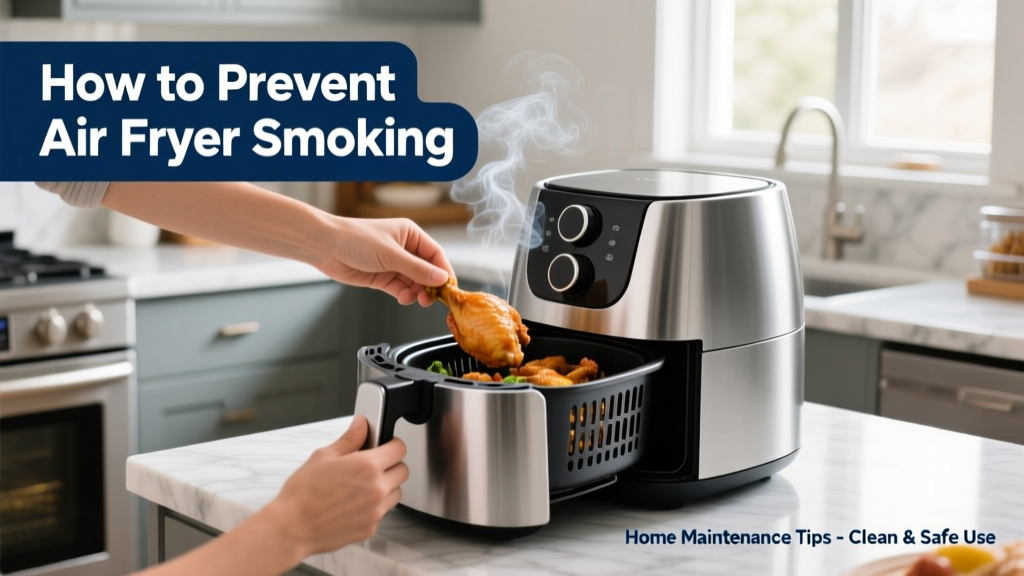
Air fryer smoking isn’t just annoying — it’s a red flag signaling grease buildup, overheating, or improper use. Left unchecked, it can trigger smoke alarms, damage your appliance’s heating element, and even pose a fire risk. According to the U.S. Fire Administration’s 2022 report, cooking equipment caused 17% of home structure fires — with portable appliances like air fryers increasingly involved in ignition events.
Why This Happens
Smoke occurs when oil or food residue reaches its smoke point inside the hot, confined chamber. Most air fryers operate at 300–400°F — well above the smoke point of common oils like olive oil (375°F) or butter (300°F). Grease splatter from fatty foods accumulates on the heating coil, basket rails, and fan housing. Over time, that residue carbonizes and burns off during preheating or high-heat cycles.
Other culprits include overcrowded baskets (trapping steam and oil), using aerosol nonstick sprays (which leave sticky, flammable residue), and running the unit without proper ventilation clearance — especially near cabinets or curtains.
Maintenance Checklist
| Frequency | Task | Details |
|---|---|---|
| Daily | Wipe basket & crisper plate | Use warm water + mild dish soap; avoid abrasive pads that scratch nonstick coating. |
| Weekly | Clean heating element & fan guard | Unplug unit, use a soft brush (like a clean toothbrush) to remove crumbs and grease from coil and fan grille. |
| Monthly | Deep-clean drawer & interior walls | Soak removable parts in warm vinegar-water solution (1:1); wipe interior with microfiber cloth dampened with baking soda paste. |
| Yearly | Inspect power cord & housing seals | Check for fraying, discoloration, or warping; replace if housing feels excessively hot after 10 minutes of operation. |
Warning Signs
Don’t wait for visible smoke. Early indicators include:
- A faint acrid or burnt-oil odor during or immediately after use
- Grayish residue building up around the basket’s top rim or on the heating coil
- Longer-than-usual preheat times or inconsistent temperature readings
- Intermittent sputtering sounds or popping noises mid-cycle
These aren’t quirks — they’re evidence of thermal stress and carbon accumulation. The National Fire Protection Association (NFPA) notes that 62% of cooking-related fires involving small appliances begin with smoldering before flaming ignition.
"If you smell smoke, unplug immediately and let it cool for 30 minutes before inspecting. Never spray water into a hot air fryer — steam explosions can crack internal components." — Appliance Safety Institute, Small Kitchen Appliance Hazards Report 2023
Recommended Products
Not all cleaners and accessories work equally well. Stick with tools designed for high-heat, nonstick-safe use:
- Non-abrasive air fryer cleaning brushes with heat-resistant nylon bristles
- Vinegar-based degreasers (avoid citrus-based formulas — they corrode aluminum heating elements)
- Silicone air fryer liners rated for 450°F+ (never use parchment paper unless explicitly approved by your model’s manual)
- Stainless steel crisper plates — more durable and easier to deep-clean than coated alternatives
Can I use olive oil in my air fryer?
No — not directly. Extra virgin olive oil has too low a smoke point. Instead, toss food with avocado oil (smoke point 520°F) or refined peanut oil (450°F), or use an oil-infused spray labeled "air fryer safe." Always apply oil to food, not the basket.
Why does my air fryer smoke only when preheating?
This usually means residual grease is baked onto the heating coil. Preheating heats the coil first — before airflow kicks in — so built-up oil ignites before circulating air can disperse it. Clean the coil weekly with a dry, soft brush, and never skip wiping the basket after each use.
Does air fryer smoking mean it’s broken?
Not necessarily — but it’s a warning sign. Most units recover fully after deep cleaning. However, if smoking persists after three consecutive cleanings and proper oil usage, the thermostat or heating element may be failing. Contact the manufacturer; many offer free diagnostics under warranty.
Can I line the basket with foil?
You can — but only if your manual permits it. Foil blocks airflow and reflects heat unevenly, increasing surface temps by up to 35°F (per UL’s 2022 airflow testing). If used, crimp edges tightly and never cover the bottom vent slots. Better alternatives: silicone mats or perforated stainless steel inserts.
How often should I replace my air fryer’s filter?
Most countertop models don’t have replaceable filters — they rely on passive grease traps. If yours has a washable charcoal or mesh filter (common in premium combo ovens), rinse it weekly and replace every 6–12 months. Check your model’s spec sheet — manufacturer manuals are searchable here.
Preventing air fryer smoke isn’t about perfection — it’s about consistency. Wiping the basket while it’s still warm (but unplugged), skipping aerosol sprays, and giving the heating coil a quick brush once a week takes less than 90 seconds. That tiny habit protects your home, your air quality, and your appliance’s lifespan — and keeps dinner from becoming a fire drill.