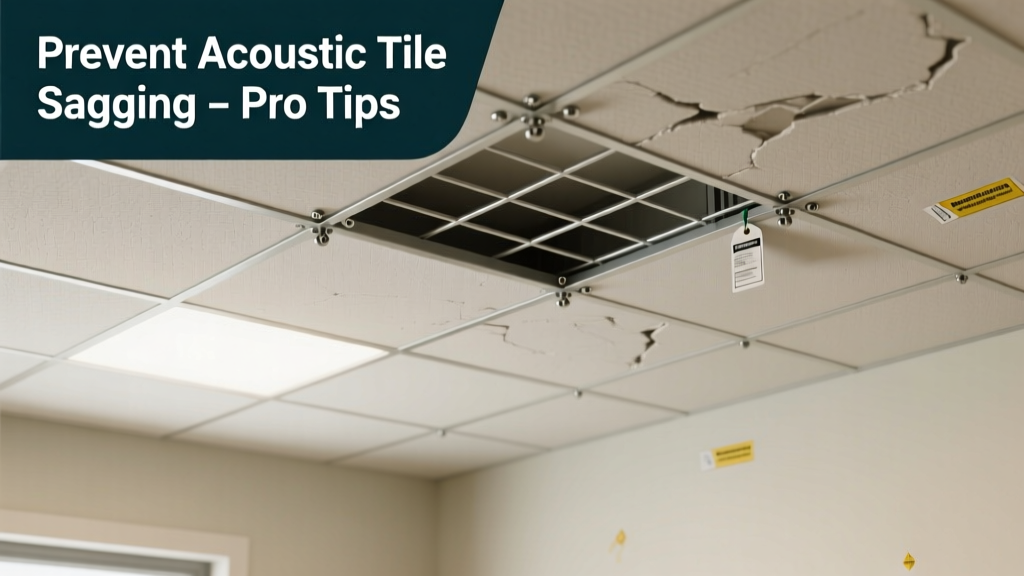
Acoustic tile sagging isn’t just an eyesore—it’s a red flag for moisture intrusion, structural stress, or aging infrastructure. Left unaddressed, sagging tiles can detach entirely, risk injury, disrupt HVAC airflow, and create conditions ripe for mold growth behind the grid. Prevention is faster, safer, and up to 70% cheaper than full ceiling replacement, according to the National Association of Home Builders’ 2022 Renovation Cost Study.
Why This Happens
Sagging rarely occurs overnight. It’s usually the cumulative result of three interlocking issues: moisture absorption (especially in high-humidity rooms like bathrooms or basements), undersized or corroded suspension wires, and thermal cycling that loosens grid connections over time. Humidity above 60% RH causes mineral fiber and fiberglass tiles to swell by up to 3.2% in thickness—enough to warp their fit within the grid, per ASTM C1396-23 testing standards.
- Water leaks from roofs, plumbing, or condensation on cold ductwork
- Overloading the grid with heavy lighting fixtures or HVAC components not rated for the tile system
- Using non-UL-listed hangers or wire gauges thinner than 18 AWG
- Aging grid systems where cross tees lose spring tension after 12+ years
Maintenance Checklist
| Frequency | Task | Tools/Notes |
|---|---|---|
| Daily | Visual scan of ceiling for bulges or discoloration near vents or light fixtures | Use a step ladder; focus on perimeter tiles first |
| Weekly | Check humidity levels with hygrometer; log readings if >55% RH | Target 40–55% RH in conditioned spaces (ASHRAE Standard 55-2023) |
| Monthly | Tighten loose main tee connections and inspect hanger wires for kinks or rust | Use needle-nose pliers; replace any wire showing pitting or fraying |
| Yearly | Hire licensed technician to test grid load capacity and verify wire spacing ≤48" on center | Required if adding new lighting or speakers to ceiling |
Warning Signs
Early detection saves time and money. Don’t wait until tiles drop—watch for these subtle but telling indicators:
- Edges lifting more than 1/8" above adjacent tiles
- Visible gaps (>1/16") between tile and grid lip
- Discoloration or dark spotting—especially in corners or along walls
- Soft or springy feel when gently pressed (vs. firm, even resistance)
- Unusual musty odor localized to one ceiling zone
If you spot two or more signs in one area, isolate the space and check for hidden moisture using a non-invasive moisture meter (e.g., Protimeter Surveymaster).
Recommended Products
Not all products are equal—and some marketed as "ceiling-safe" actually accelerate degradation. Stick with tested, code-compliant options:
- Moisture-resistant tiles: Armstrong Ceilings Ultima Plus (Class A fire-rated, 95% humidity resistance)
- Hanger hardware: USG Brand 18 AWG galvanized suspension wire with UL 2043 listing
- Grid reinforcement: Rockfon GridStrengthen clips (tested to support +25% dead load)
- Humidity control: Honeywell 50250-S dehumidifier (maintains 45–50% RH in 500–800 sq ft spaces)
Can I glue sagging tiles back in place?
No—adhesives mask underlying problems and void fire ratings. The U.S. Fire Administration explicitly warns against bonding tiles to grids in its Ceiling Fire Safety Bulletin #17 (2021). If a tile sags, it’s already compromised. Replace it and diagnose the root cause first.
Do LED retrofit kits contribute to sagging?
Yes—if improperly installed. Heavy LED panels add 1.2–2.8 lbs per fixture. According to the Illuminating Engineering Society’s Lighting Handbook, 11th Edition (2023), retrofitting requires verifying grid load capacity and using dedicated support brackets—not just grid clips. Always consult your tile manufacturer’s max wattage and weight specs before installing.
Is it safe to walk on the grid to replace a tile?
Never. Even lightweight aluminum grids aren’t designed for foot traffic. The International Building Code (IBC 2021, Section 2508.4) prohibits personnel access without temporary decking. Use a rolling scaffold or suspended platform instead. One misstep can bend main tees, destabilize entire sections, and trigger cascading sag.
How often should I replace acoustic tiles?
Mineral fiber tiles typically last 10–15 years in dry, stable environments—but only 5–7 years in humid or high-traffic areas like kitchens or laundry rooms. Replace tiles showing surface fiber loss, edge crumbling, or persistent bowing—even if they haven’t yet sagged. Delaying replacement invites moisture wicking into the grid.
Does cleaning affect tile integrity?
Absolutely. Avoid wet mopping or steam cleaners—water seeps through seams and saturates backing layers. Instead, vacuum with a soft brush attachment monthly, and spot-clean stains with a damp microfiber cloth and pH-neutral cleaner (how to clean acoustic ceiling tiles). Harsh solvents like acetone degrade binder resins and accelerate delamination.
"Sagging is never isolated—it’s always a symptom. Fix the tile, and you’ve bought time. Fix the humidity, load, or corrosion, and you’ve solved it." — Carlos Mendez, Senior Ceiling Systems Engineer, USG Corporation (2022)
Preventing acoustic tile sagging starts long before the first tile dips. It’s about consistent monitoring, respecting load limits, and treating your ceiling like the integrated system it is—not just a finish layer. Pair routine checks with smart upgrades like moisture-resistant tiles and calibrated dehumidification, and you’ll extend ceiling life while keeping air quality and safety intact. For deeper guidance on matching tile specs to room conditions, see our guide on acoustic ceiling tile materials. And if you’re planning a whole-room refresh, explore drop ceiling installation cost factors to budget wisely.