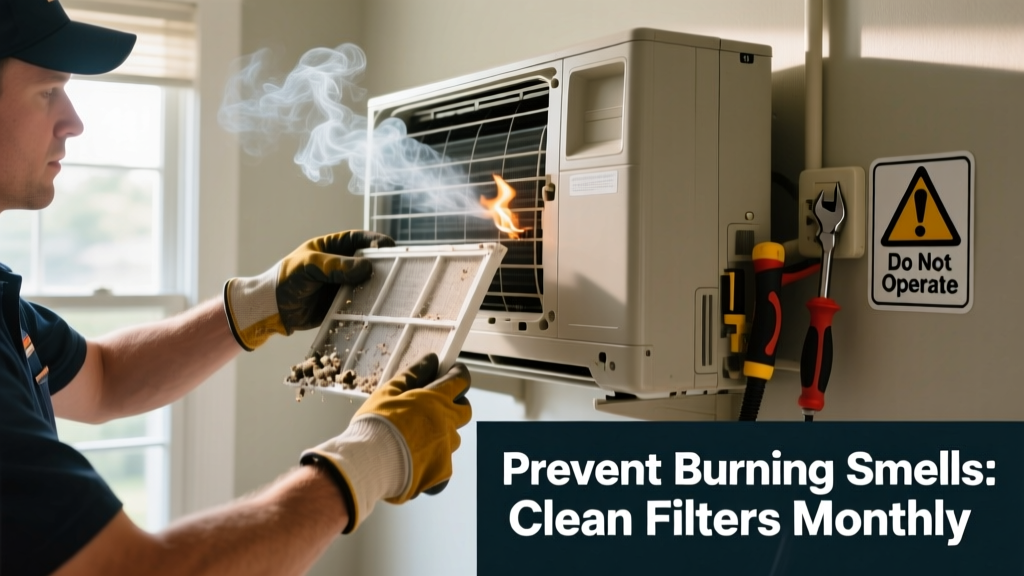
A burning smell from your air conditioner isn’t just unpleasant—it’s a red flag signaling potential electrical failure, overheating components, or combustible debris near hot parts. According to the U.S. Fire Administration’s 2022 report, HVAC equipment accounts for nearly 7% of home structure fires caused by mechanical failure—many preceded by telltale acrid odors. Ignoring it risks system damage, fire, or exposure to toxic smoke.
Why This Happens
Burning smells originate from three primary sources: dust accumulation on hot surfaces (especially after seasonal startup), failing electrical components like capacitors or contactors, and degraded insulation on wiring exposed to heat cycling. Mold or rodent nests inside ductwork can also char when airflow heats them unexpectedly. The EPA estimates that 30% of HVAC-related odor complaints stem from neglected coil cleaning and filter changes—both preventable with routine care.
Maintenance Checklist
| Frequency | Task | Notes |
|---|---|---|
| Daily | Check for unusual noises or smells during operation | Stop system immediately if burning odor occurs |
| Weekly | Inspect air filter for visible dust buildup | Replace if grayed or clogged—don’t wait for monthly |
| Monthly | Clean condenser coil fins with soft brush & water | Avoid bending fins; use fin comb if bent |
| Yearly | Professional inspection of capacitor, contactor, and wiring insulation | Require licensed HVAC technician—schedule pre-summer |
Warning Signs
Don’t wait for full-blown smoke. Early warnings include:
- A faint, sharp “hot plastic” scent only when the system first kicks on
- Intermittent buzzing or clicking from the outdoor unit
- Discoloration or bubbling on wire insulation near the compressor or control board
- Tripped breakers or flickering lights when AC starts
These indicate thermal stress or arcing—both precursors to combustion. The National Fire Protection Association’s Fire Loss in the U.S. 2023 notes that 62% of HVAC fires begin with observable warning signs ignored for more than 48 hours.
Recommended Products
Prevention relies less on gimmicks and more on precision tools and consumables designed for HVAC safety:
- Electrical contact cleaner (non-residue, non-conductive) — for safely cleaning terminals without residue buildup
- MERV 11 pleated filters — trap fine dust before it coats coils and blower motors
- UV-C coil sanitizing light — reduces organic buildup that chars under heat (installed by pro)
- Condensate pan tablets — prevent algae/mold that can dry and smolder near drain lines
Can a dirty filter really cause burning smells?
Yes—absolutely. A clogged filter forces the blower motor to work harder, raising its surface temperature by up to 25°F (per ASHRAE Technical Bulletin #45-2021). That excess heat can bake accumulated dust into a brittle, smoldering crust on the motor housing or nearby wiring insulation. Replace filters every 30 days in dusty homes or high-use seasons.
Is it safe to clean the condenser coil myself?
It is—if done correctly. Use only a garden hose on low pressure and a soft nylon brush. Never use a pressure washer: it bends delicate aluminum fins, restricting airflow and causing the compressor to overheat. Bent fins reduce efficiency by up to 22%, increasing thermal load on internal components (common coil cleaning mistakes). If fins are severely damaged, call a technician for a fin comb realignment.
Why does the smell happen only at startup?
That’s when dust baked onto the evaporator coil or blower wheel ignites briefly as temperatures spike. It’s not actual flame—but pyrolysis of organic matter. This “first-blast” odor usually fades after 5–10 minutes. If it persists beyond two cycles, shut down the system and inspect wiring near the indoor air handler.
"A persistent startup burn smell almost always points to compromised wire insulation—not just dust. Don't reset the breaker repeatedly; that's how arc faults escalate." — HVAC Safety Task Force, NFPA 90A Handbook 2022
Should I replace my thermostat if I smell burning?
Not automatically—but outdated programmable thermostats (pre-2015) often lack proper relay protection and can over-cycle compressors. Smart thermostats with adaptive recovery and voltage monitoring (like the Nest Learning Thermostat Gen 4) help prevent short-cycling that stresses components. However, if the smell originates near the thermostat wiring, inspect low-voltage connections for scorch marks before assuming the device itself is faulty.
What’s the safest way to test for electrical issues?
Never open panels while powered. Instead, use an infrared thermometer to scan the outdoor unit’s contactor, capacitor, and disconnect box for hotspots above 140°F. Compare readings across similar components—if one is 30°F hotter, it’s likely failing. For indoor units, check the air handler’s control board and blower motor housing. Any reading above 160°F warrants immediate professional evaluation. Always verify power is off using a non-contact voltage tester before touching anything.
Preventing burning smells isn’t about reacting—it’s about respecting the physics of heat, airflow, and electricity in your system. Consistent filter changes, annual electrical inspections, and early response to odd sounds or scents keep your AC running safely for years. For deeper guidance, see our seasonal AC maintenance schedule and HVAC electrical safety checklist.