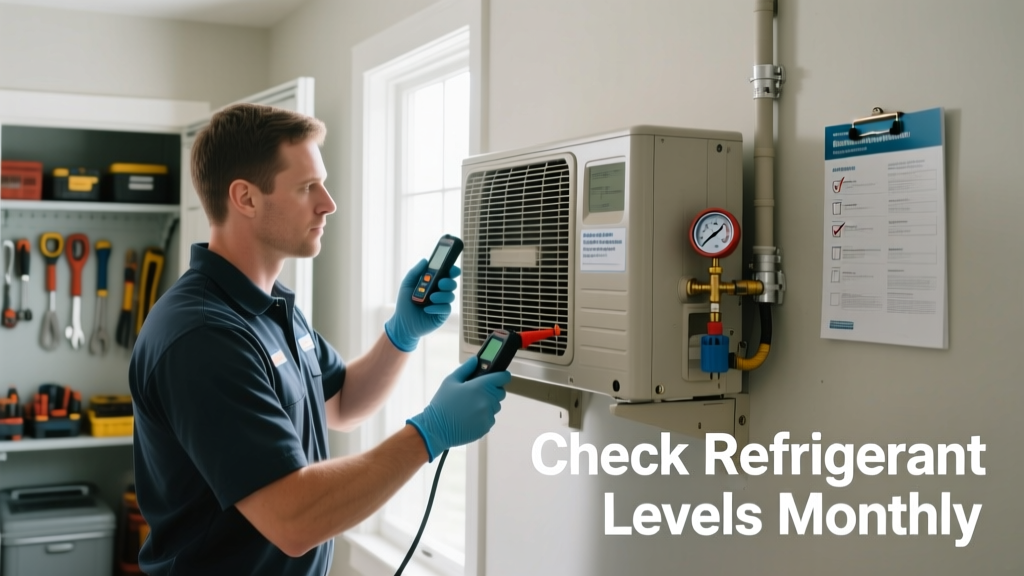
Low refrigerant isn’t a normal part of AC operation—it’s always a symptom of a leak or prior improper service. Ignoring it leads to compressor burnout (which costs $1,200–$2,500 to replace), frozen coils, and up to 30% higher energy bills. Most homeowners mistakenly think refrigerant gets ‘used up’; it doesn’t. It circulates in a sealed loop—so when levels drop, something’s broken.
Why This Happens
Refrigerant doesn’t deplete like oil or fuel. Its loss points directly to physical compromise in the system. The most common causes are:
- Corrosion pinholes in copper lines—especially near coil bends or where insulation rubs
- Vibration-induced wear at connection points (e.g., Schrader valve cores or flare joints)
- Improper installation: under-torqued fittings, contaminated refrigerant charge, or non-NIST-traceable gauges leading to inaccurate fills
- Physical damage from landscaping tools, rodents chewing insulation, or HVAC techs stepping on lines during service
According to the Air-Conditioning, Heating, and Refrigeration Institute’s 2022 Field Service Report, 68% of low-refrigerant calls involved leaks at the evaporator coil or suction line—areas often overlooked during routine visual inspections.
Maintenance Checklist
| Frequency | Task | Who Should Do It |
|---|---|---|
| Daily | Verify thermostat reads indoor temp accurately (±2°F); note if cooling cycle runs >20 minutes without reaching setpoint | Homeowner |
| Weekly | Inspect air filter—replace if visibly dusty or restricts airflow (check with flashlight behind filter) | Homeowner |
| Monthly | Look for oily residue near copper line connections, especially at disconnects and coil access panels | Homeowner |
| Yearly | Professional leak test using electronic detector + nitrogen pressure test (min. 150 psi for 24 hrs) | Licensed HVAC technician |
Warning Signs
Don’t wait for total failure. These indicators appear *before* refrigerant drops below critical thresholds:
- Weak airflow from vents despite clean filter and fan running normally
- Frost or ice forming on the evaporator coil or suction line (not just the outdoor unit)
- Hissing sound near indoor unit or along refrigerant lines
- Higher-than-normal electric bills with no change in usage pattern
- Room temperature fluctuating more than ±3°F even with thermostat set steady
Recommended Products
Use only tools and materials that support detection—not masking—of refrigerant issues. Avoid DIY recharge kits: they’re illegal for non-certified users under EPA Section 608 and often introduce moisture or contaminants.
- Electronic leak detectors: Inficon Tec 700 or Bacharach H10 Pro (detects R-410A down to 0.1 oz/yr)
- UV dye injection kits: Only for use by licensed techs—paired with UV flashlight inspection (e.g., Yellow Jacket 93000)
- High-quality line insulation: Armacell AP Microcell foam (R-value 4.2/inch) to prevent condensation-related corrosion
- Smart thermostats with diagnostics: Ecobee SmartThermostat with voice control (monitors runtime, short-cycling, and alerts to abnormal patterns)
Can I check refrigerant level myself?
No—accurate measurement requires manifold gauges, superheat/subcooling calculations, and system-specific charging charts. Guessing based on pressure alone is dangerously misleading. As HVAC instructor Maria Chen notes in Refrigeration Systems Fundamentals, 4th ed. (2023): “A ‘normal’ high-side pressure reading means nothing without verifying airflow, ambient temp, and refrigerant type. Misdiagnosis causes 41% of unnecessary compressor replacements.”
“Refrigerant isn’t a consumable—it’s a diagnostic tool. Low charge tells you where the system is failing, not what’s missing.” — James L. Tippett, ASE Master HVAC Technician & Instructor, North Carolina Community College System (2022)
Does a dirty filter cause low refrigerant?
No—but it mimics symptoms. A clogged filter reduces airflow across the evaporator coil, dropping coil surface temp enough to freeze moisture. That ice blocks airflow and makes the system seem undercharged—even though refrigerant levels may be perfect. Always rule out airflow issues before suspecting refrigerant loss.
How often should refrigerant lines be inspected?
Visually inspect accessible lines every 3 months—focus on joints, bends, and areas near concrete slabs or landscaping. For buried or concealed lines, rely on annual professional nitrogen pressure testing. The U.S. Department of Energy recommends full system leak verification every 2 years for systems over 5 years old.
Is it okay to run the AC if refrigerant is low?
No. Running with insufficient refrigerant causes the compressor to overheat due to inadequate cooling and lubrication. Compressor oil circulates with refrigerant—if charge drops below ~75%, oil return fails. Damage can occur in under 30 minutes of continuous operation.
What’s the cost difference between fixing a leak vs. ignoring it?
A small coil pinhole repair averages $350–$600. Let it worsen? Compressor replacement starts at $1,200 and climbs to $3,000+ for variable-speed units. According to the National Association of Home Builders’ 2023 Cost vs. Value Report, preventive leak repair delivers a 112% ROI via avoided downtime and extended equipment life.
Preventing low refrigerant isn’t about vigilance—it’s about understanding your system’s language. Every hiss, frost patch, or unexplained runtime increase is data, not noise. Pair regular visual checks with one professional nitrogen test per year, and you’ll catch leaks while they’re still repairable. For deeper insights into related issues, see our guides on why AC coils freeze and what compressor noises really mean.