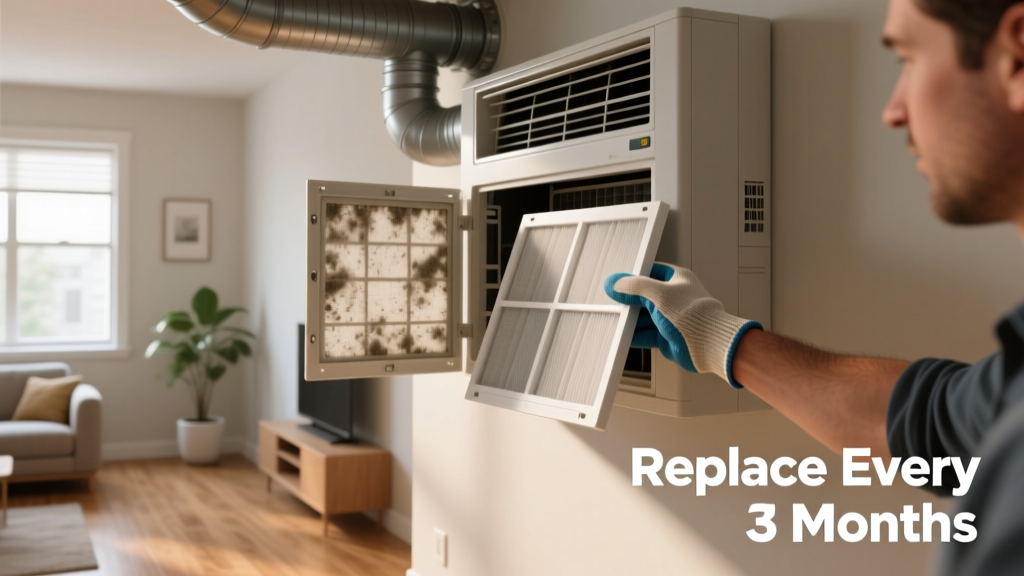
Low airflow from your AC isn’t just annoying—it’s a red flag that your system is working harder, wasting energy, and risking freeze-ups or compressor failure. According to the U.S. Department of Energy, restricted airflow contributes to nearly 30% of premature HVAC breakdowns—and can increase cooling costs by up to 15% annually.
Why This Happens
AC low airflow almost always traces back to physical obstructions or mechanical wear—not mysterious failures. The most common culprits are clogged air filters, blocked return vents, dirty evaporator coils, and undersized or collapsed ductwork. Less obvious but equally damaging: blower motor degradation, refrigerant undercharge (which reduces coil efficiency and airflow perception), and mismatched indoor/outdoor unit sizing.
- Air filter saturation—especially pleated filters left in place beyond 90 days
- Furniture, rugs, or curtains covering return grilles (reducing effective return area by 40–60%)
- Outdoor condenser coil debris buildup (leaves, grass clippings, pet hair)
- Duct leaks or kinks in flexible duct runs—common in attics and crawlspaces
Maintenance Checklist
| Frequency | Task | Notes |
|---|---|---|
| Daily | Verify all supply registers and return grilles are unobstructed | Check for closed dampers, furniture placement, or dust-caked grilles |
| Weekly | Inspect visible duct connections for gaps or sagging | Focus on attic runs near air handler and main trunk lines |
| Monthly | Replace or clean air filter (MERV 8–11 recommended) | Keep spare filters on hand; mark calendar or use smart filter alerts |
| Yearly | Professional coil cleaning + blower wheel inspection | Technicians should measure static pressure across the coil (ideal: ≤0.5" WC) |
Warning Signs
Don’t wait for total failure. These early indicators mean airflow is already compromised:
- Supply vents blowing noticeably weaker than usual—even with fan set to "High"
- Warm air coming from vents while AC runs continuously
- Frost or ice forming on copper lines or the indoor coil
- Unusual whistling or rattling near the air handler during startup
- Thermostat struggling to reach setpoint despite long run times
Recommended Products
Not all products help airflow—and some make it worse. Stick with these proven categories:
- Washable metal mesh filters (e.g., Filtrete™ Reusable) — avoid fiberglass; they capture too little and let debris accumulate on coils
- Static pressure test kits (like Testo 510i) — used by pros to quantify restriction; helpful if you DIY often
- Flexible duct sealant (mastic) — not duct tape — for sealing joints and preventing air loss before it reaches vents
- Grille-mounted airflow deflectors — only if you’ve confirmed duct balance issues, not as a band-aid for low flow
Can a dirty evaporator coil cause low airflow?
Yes—absolutely. When the coil gets coated in dust, pet dander, and mold spores, it acts like a filter itself. Air literally can’t pass through the finned surface efficiently. Over time, this leads to frost buildup, reduced heat exchange, and increased static pressure. According to the Air Conditioning Contractors of America’s 2022 Field Guide, coils cleaned annually maintain 92% of original airflow capacity versus 67% after two years without service.
Does closing vents improve efficiency?
No—it does the opposite. Closing more than one or two supply vents increases static pressure in the duct system, forcing the blower to work harder and potentially causing duct leaks or coil freeze-up. The EPA’s ENERGY STAR program explicitly warns against vent closure as an energy-saving tactic.
How often should ducts be inspected for airflow issues?
Every 3–5 years for visual inspection, especially if you notice dust buildup around registers, inconsistent room temperatures, or a musty odor when the system starts. If your home has flex ducts installed in unconditioned spaces (attics, garages), inspect them annually for kinks or compression—these reduce effective diameter by up to 50%.
Will upgrading to a higher-MERV filter fix low airflow?
Not unless your current filter is severely undersized. MERV 13+ filters restrict airflow in most residential systems unless the air handler is rated for them. Always check your furnace/air handler manual—most standard units max out at MERV 11. Installing MERV 13 without verifying compatibility can drop airflow by 20–30%, triggering safety cutoffs.
What’s the ideal static pressure reading for residential AC?
Target total external static pressure (TESP) should be ≤0.5 inches water column (" WC) for most single-stage systems. Higher readings indicate resistance somewhere—filter, coil, ducts, or dampers. As HVAC technician Maria Chen notes in Refrigeration & Air Conditioning Engineer Magazine (2023): "If TESP exceeds 0.65" WC, don’t just replace the filter—diagnose the entire air path. That number is your system’s early warning siren."
If TESP exceeds 0.65" WC, don’t just replace the filter—diagnose the entire air path. That number is your system’s early warning siren.
Preventing low airflow starts long before the first warm day—it’s built into how consistently you clear paths for air, monitor components, and respect your system’s design limits. Pair routine filter changes with seasonal duct checks and professional coil cleanings, and you’ll extend equipment life while keeping rooms evenly cool. For related guidance, see our how to clean ac evaporator coil tutorial and how to seal leaky ducts step-by-step guide.