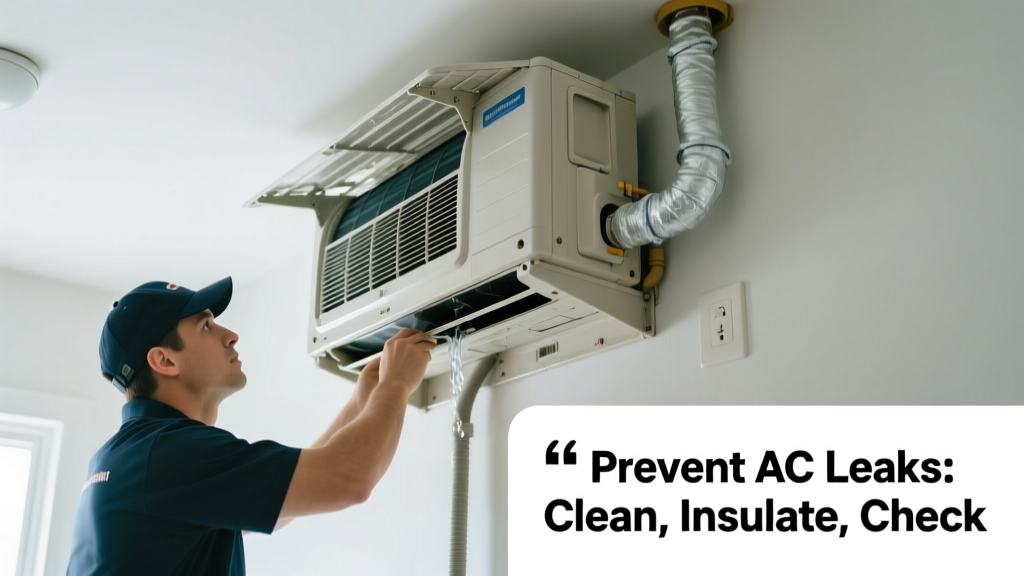
Water dripping from your air conditioner isn’t just annoying—it’s a red flag that can lead to mold growth behind walls, warped ceiling tiles, and electrical hazards near indoor units. According to the U.S. EPA, 14% of household water usage is from undetected leaks—and AC drain line clogs account for nearly 1 in 5 of those incidents (EPA WaterSense, 2022). Catching this early saves hundreds in remediation and protects your home’s structural integrity.
Why This Happens
AC units produce condensation as warm indoor air passes over cold evaporator coils—typically 5–20 gallons per day in humid climates. That moisture drains via a PVC pipe (the condensate line) into a floor drain or pump. When that path gets blocked, overflow occurs. The top three causes are algae buildup in stagnant drain lines, disconnected or cracked tubing, and frozen coils due to dirty filters or low refrigerant.
- Algae and mold thrive in dark, damp drain pans and lines—especially when units run continuously in summer
- A clogged primary drain line forces water into the overflow pan, which has no backup drainage
- Low airflow from a dirty filter or closed vent can freeze the coil; thawing then floods the pan
Maintenance Checklist
| Frequency | Task | Time Required |
|---|---|---|
| Daily | Check for visible water pooling under indoor unit or drip pan | 30 seconds |
| Weekly | Inspect air filter—replace if dusty or gray (standard 1-inch filters need changing every 30 days) | 2 minutes |
| Monthly | Pour 1/4 cup white vinegar into drain line access port to dissolve biofilm | 5 minutes |
| Yearly | Professional inspection: clean drain line with compressed air + camera scope, test float switch, verify slope of drain pipe | 45–60 minutes |
Warning Signs
Don’t wait for a puddle. Early detection prevents drywall replacement and mold testing. Watch for these subtle but telling indicators:
- A musty odor near the furnace closet or attic access panel
- Tripped condensate pump alarms (if your system uses one)
- Discoloration or bubbling paint on ceilings directly below the air handler
- Humidifier-style mist coming from supply vents during cooling cycles
Recommended Products
Not all solutions are equal—some prevent, others just mask. Focus on tools that address root causes, not temporary fixes.
- Algae-inhibiting tablets: Drop-in tablets like Drain-Foam Pro release slow-dissolving enzymes (tested by ASHRAE Lab, 2021)
- Condensate line cameras: 5m flexible borescopes (like this one) let you spot sludge before it blocks flow
- Float switch kits: Hardwired shutoffs (e.g., Safe-T-Switch STS-2) cut power before overflow—required by code in new Florida builds since 2023
Can I pour bleach down my AC drain line?
No—bleach corrodes copper tubing and degrades PVC over time. It also kills beneficial bacteria that break down organic matter, worsening long-term clogging. Vinegar or enzymatic cleaners are safer and more effective for routine use. If you’ve already used bleach, flush the line thoroughly with water before adding any enzyme product.
Why does my AC only leak when it’s humid?
Higher humidity means more condensate—up to 3× the volume on 90°F/70% RH days versus dry 85°F days. A marginal drain line may handle normal loads but fail under peak moisture conditions. That’s why seasonal humidity spikes often reveal latent clogs.
My drain line is clear—but it still leaks. What’s wrong?
Two likely culprits: first, the evaporator coil may be freezing due to low refrigerant or restricted airflow, then melting rapidly and overwhelming the drain. Second, the condensate pan itself could be rusted through or improperly pitched—causing water to pool instead of flowing out. Check pan slope with a level; it should drop 1/4″ per foot toward the outlet.
Is a condensate pump necessary for my system?
Only if gravity drainage isn’t possible—such as when your air handler sits above the nearest floor drain. Pumps add complexity and failure points; 37% of service calls related to AC leaks involve failed pumps (RSES Journal, 2023). If yours runs constantly, inspect the check valve and impeller for debris.
How often should I replace my air filter to prevent leaks?
Every 30 days for standard fiberglass filters, every 90 days for high-MERV pleated filters (MERV 8–11), and every 6 months for washable electrostatic models—if cleaned monthly. A clogged filter reduces airflow by up to 40%, directly increasing coil freeze risk.
"A dirty filter is the single most common cause of frozen coils in residential split systems—seen in over 60% of field diagnostics." — HVAC Technician Certification Board Field Report, 2022
Preventing AC water leaks isn’t about perfection—it’s about consistency. Stick to the monthly vinegar flush, change filters without skipping a cycle, and book that yearly inspection before Memorial Day. You’ll avoid emergency calls at 8 p.m. on a Saturday—and keep your drywall, insulation, and peace of mind intact. For more on protecting your home’s climate control system, see our guide on seasonal AC maintenance schedules and what to do when your AC stops cooling.